
Most people picture Texas as a place of longhorn cattle, armadillos along rural roads, and white-tailed deer slipping through mesquite brush. The state’s wildlife image feels settled and familiar. Yet Texas quietly supports animals many people never associate with it at all: badgers, ringtails, and mink. These species live largely unnoticed, even in places where people least expect them.
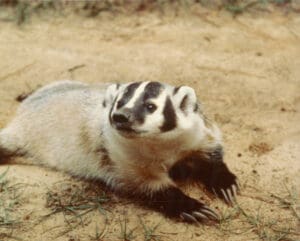 The American badger is perhaps the biggest surprise. Often thought of as a creature of northern plains or western prairies, badgers are well established across much of Texas. They occur not only in the Panhandle and Hill Country, but deep into South Texas as well. Badgers inhabit rangelands, coastal prairies, and even barrier islands. Tracks and burrows have been documented on Padre Island, where the animals adapt to sandy soils much like they do in deserts and grasslands elsewhere. Powerfully built with long claws, badgers are exceptional diggers that prey on rodents, reptiles, and ground-nesting animals. Their mostly nocturnal habits and solitary nature keep them out of sight, allowing them to exist even near populated areas without drawing attention.
Even more mysterious is the ringtail, the official state mammal of Texas and one of its least recognized residents. About the size of a house cat, ringtails are slender and agile, marked by a long black-and-white ringed tail that gives them a striking appearance. They are not cats, but relatives of raccoons. Ringtails favor rocky canyons, limestone outcrops, hollow trees, and old buildings, particularly in the Hill Country, Big Bend region, and parts of West Texas. Strictly nocturnal, they hunt insects, rodents, birds, and fruit under cover of darkness. Early settlers frequently mistook them for cats living in cabins and barns, earning them the nickname “miner’s cats.” Today, they remain largely unseen, even where populations are stable.
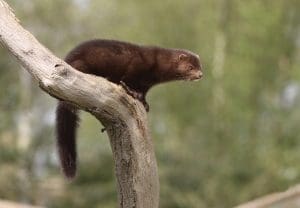
Mink are another animal rarely linked with Texas in popular thought. Most people imagine them along icy northern rivers, yet mink are native to Texas waterways. They inhabit creeks, rivers, marshes, and coastal wetlands, especially in East Texas and along the Gulf Coast. Sleek, semi-aquatic, and highly territorial, mink are aggressive predators that feed on fish, frogs, crayfish, birds, and small mammals. They move easily between water and land, often leaving behind little more than tracks along muddy banks.
What ties these animals together is how quietly they fit into Texas landscapes. From South Texas brush country and coastal islands to rocky hills and forested creeks, they occupy niches most people overlook. Badgers dig beneath pastures and dunes, ringtails slip through shadows of cliffs and old structures, and mink patrol waterways at dawn and dusk.
Their presence is a reminder that Texas is far more ecologically complex than its stereotypes suggest. Even in a state people think they know well, there are animals living just beyond notice, shaping the land in subtle ways and proving that Texas wildlife still holds surprises for those willing to look closer.