
Organize Your Fishing Gear: Essential Home Storage Tips and Tricks
Home storage for fishing gear is one of those things we tend not to think about, until it’s too late.
Chaotic reels, tangled rods, and loose lures. It’s a scenario far too many anglers are all too familiar with.
However, the good news is that home storage for fishing gear doesn’t need to be complicated.
With a few smart storage strategies, you’ll keep your tackle organised, protected, and ready for that next trip…
In This Article
- Why Proper Storage Matters for Your Gear
- The Best Storage Solutions for Different Equipment
- How to Protect Your Gear from Damage
- Simple Organisation Hacks That Work
Why Proper Storage Matters for Your Gear
2024 looks to be a record year for angling participation. In the US alone, the latest stats show a new high of 57.9 million Americans fishing. That’s a huge number of anglers, and a heck of a lot of tackle to store!
Here’s the problem…
Most fishing gear isn’t cheap. Quality rods, reels, and tackle bags represent a serious investment. Without proper home storage for fishing gear, that investment will degrade quickly.
Rust from moisture. Warped rod blanks from heat. Mangled, tangled lines from improper storage. These are all issues we see all the time. They’re also completely preventable with the right storage mindset and solutions.
Investing in a quality garden shed or outdoor storage building from waltons.co.uk is a great start. With a dedicated space for fishing gear, everything can be kept protected from the elements.
Dry, sheltered, and organised. That’s the key to proper home storage for fishing gear. A large storage shed or garden building ensures that everything is protected, but also easily accessible when you need it.
Pretty simple, right?
The Best Storage Solutions for Different Equipment
The one size does not fit all when it comes to fishing gear storage. Different pieces of equipment have different needs.
Rod Storage
Fishing rods are one of the most vulnerable pieces of equipment. Left on their own, they can warp, crack, or break when stored incorrectly.
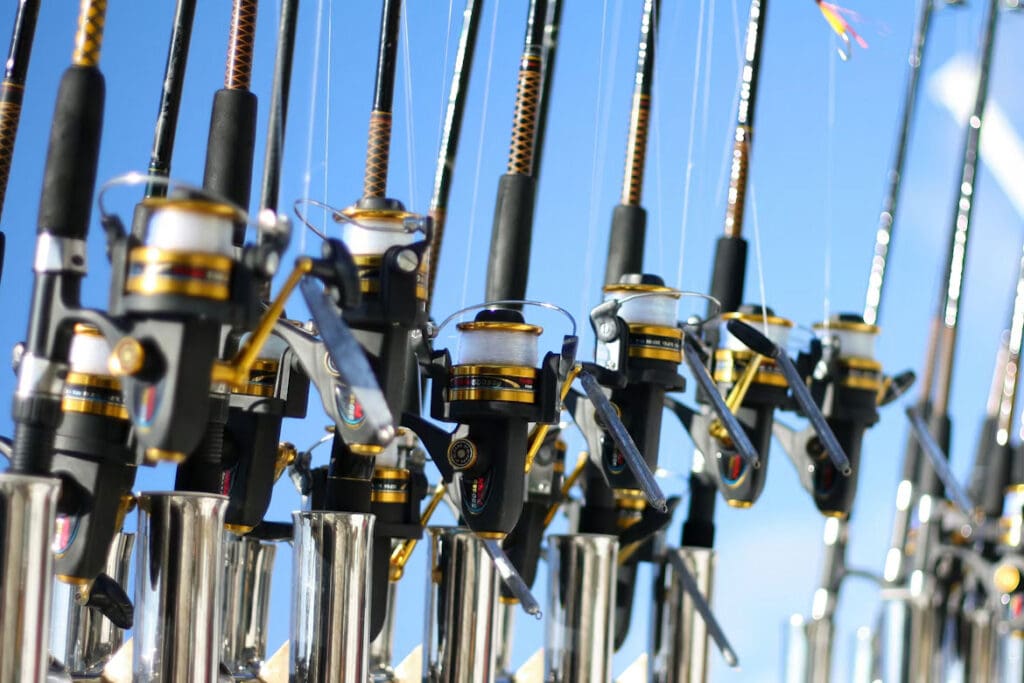
Vertical storage is the way to go. Wall-mounted rod racks are a fantastic solution. They keep rods separated and off the ground so there’s no leaning against each other.
Keep in mind:
- Store rods tip-upward
- Away from direct sunlight
- Never fully assembled
- Avoid placing heavy objects nearby
Horizontal rod storage is a good option too. Ceiling-mounted racks make use of overhead space and can be ideal for garages and sheds with little floor space.
Reel Storage
Fishing reels need a bit more love than most anglers give them. Cleaning and oiling a reel before storage is an often overlooked necessity.
Cleaning removes corrosion and keeps the drag system in working order. Storing reels in padded bags or original boxes keeps them protected.
Here’s the thing…
Temperature changes are the number one enemy of fishing reels. Ultra-hot conditions will damage lubricants, while freezing temps can crack seals. Climate controlled space is best, but even a good insulated shed will do the job.
Tackle and Lure Organisation
Did you know the tackle box market is valued at $25.74 billion globally? That should tell you just how seriously anglers take tackle organizations.
Tackle boxes and bags are essential, but utilising them correctly is where the real value lies. Sort tackle by type, size, or application. Clear plastic containers allow for easy identification without having to open every box.
Here are some organisation tips that work:
- Use drawer organisers for small items
- Label, label, label
- Store soft plastics separately from hard baits
- Keep frequently used tackle near the front
Systems like these save time on the water, and also helps to protect expensive lures and baits from premature damage.
How to Protect Your Gear from Damage
Protection from damage is not just about putting it away. Where you store your gear is just as important as how you store it.
Moisture Control
Moisture is the number one enemy of all fishing equipment. Even a little humidity in the air can cause corrosion and mold growth.
Silica gel packets are magic in tackle boxes and storage containers. Dehumidifiers are worth considering for larger sheds or garages. The goal is to keep relative humidity under 50% at all times.
Temperature Management
Extreme temperatures are another major cause of equipment damage. The mono line gets brittle in the cold. Soft plastics can melt together in high heat.
Temperature sensitive items are best stored inside the house. For sheds and dedicated outdoor storage buildings, insulation will help maintain a more stable temperature all year round.
Pest Prevention
You’d be surprised how quickly mice and insects can destroy fishing gear. They chew through lines, nest in tackle boxes, and contaminate soft baits.
Keep storage areas sealed off, and store soft plastics in airtight containers. Routine inspections allow you to spot and fix problems before they become expensive.
Simple Organisation Hacks That Work
Sometimes the simplest solutions are the most effective.
The Zone System
Divide your storage space into zones. Day-to-day tackle and equipment stays at the front, with seasonal or less used items in the back.
Less rummaging through storage to find what you need. Everything has a home and returns there when you’re back from fishing.
Wall Space Utilisation
Wall space is often underutilised in storage areas. Pegboards, hooks, and shelving units can turn empty vertical space into valuable storage real estate.
Hang nets, waders, and bags on the wall. Mount rod holders at a convenient height. Shelving is perfect for tackle boxes and equipment cases.
Maintenance Scheduling
Don’t think of organisation as a one-off event. Routine maintenance is the key to keeping everything organised and in good condition.
Schedule regular time for reel cleaning, line inspection, and tackle checks. A post-trip clean will remove dirt and salt water before it causes long-term damage.
Seasonal Storage Considerations
Seasonal storage is a bit different. Off-season storage requires a bit more care and attention.
Equipment gets a deep clean before being put away. Broken lines are replaced, and tackle is inventoried and restocked.
Off-season gear is stored in protective cases and covers to keep dust and moisture out during the long summer or winter months. When the season rolls around, everything gets checked and repaired before the first trip. This avoids nasty surprises when the fish are biting.
Wrapping It Up
In summary, there are a few key principles that should be followed with home storage for fishing gear:
- Store rods either vertically or horizontally with proper support
- Clean and protect reels before storage
- Organise tackle in a systematic manner
- Control moisture and temperature levels
- Make use of wall and ceiling space
- Schedule regular maintenance checks
The best storage system is one that actually gets used. Keep it simple at first, develop good habits, and add on as needed.
Gear is an investment, and one worth protecting. A little effort up front and with organisation really pays off every time that rod goes back in the water.