
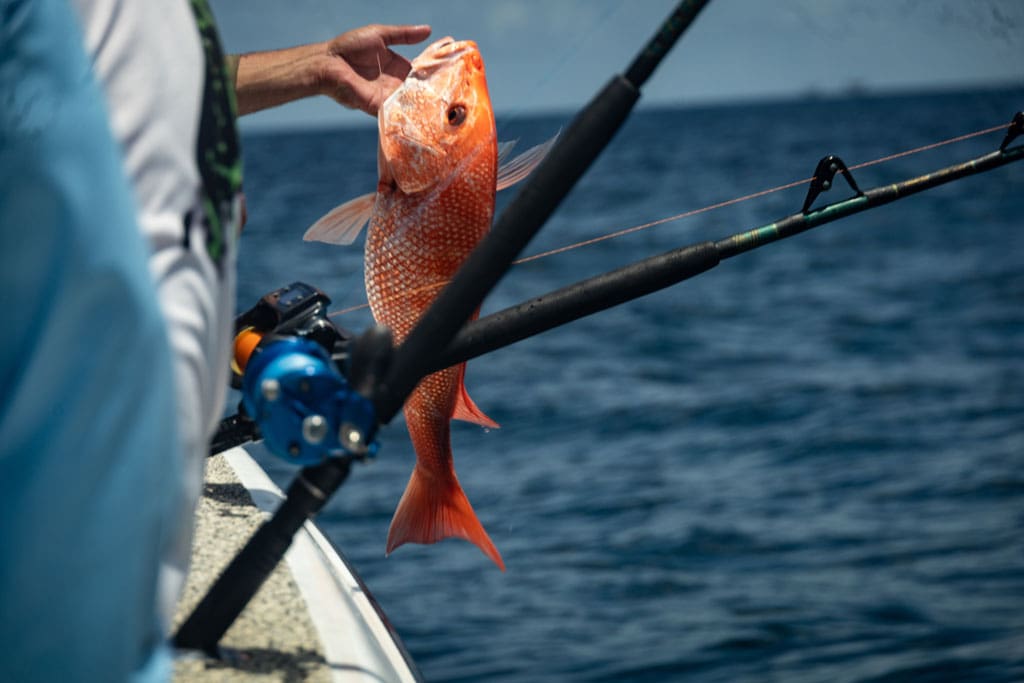
Winter red snapper fishing in Texas state waters doesn’t get the attention it deserves, but for anglers willing to brave cooler weather, it can be one of the most reliable times of year to put quality fish in the boat. While summer crowds focus offshore, winter offers quieter seas, less pressure, and snapper that hold tight to structure inside nine nautical miles.
Most winter snapper trips begin close to home. State-water reefs, nearshore rigs, rock piles, artificial reefs, and old debris fields scattered along the upper and middle Texas coast all hold fish year-round. Areas off Galveston, Freeport, Port O’Connor, Port Aransas, and down toward the Lower Coast consistently produce during the colder months. Depths typically range from 40 to 80 feet, shallow enough to fish comfortably on smaller boats when conditions allow. Winter cold fronts can limit windows, but when seas settle, snapper fishing can be excellent.
Cold water changes snapper behavior, but it doesn’t shut them down. In winter, red snapper tend to hold tighter to structure and feed more deliberately. They’re less likely to roam, which means once you find fish, they’re usually stacked up. Electronics become critical. Side-scan and down-scan sonar help identify vertical relief, bait concentrations, and snapper holding just off the bottom. Often the fish appear as arches or clusters close to the structure rather than suspended high in the water column.
Tactics in winter lean toward simplicity and precision. Anchoring or spot-locking directly over structure is often more productive than drifting. Heavy enough weight to keep baits pinned to the bottom is essential, especially in winter currents. Standard snapper rigs with circle hooks and 6- to 10-ounce sinkers are common, though lighter setups can work on calm days. Natural baits dominate in cold water. Fresh-dead sardines, cut menhaden, squid, and cut bonito are reliable choices. Smaller baits sometimes outproduce larger ones, especially when fish are less aggressive.
Patience matters. Winter snapper bites can be subtle at first, a slow pull rather than a sharp thump. Let the fish load the rod before engaging the reel to ensure solid hook-ups with circle hooks. Once hooked, snapper still fight hard, using structure to their advantage, so steady pressure is important.
Timing also plays a role. Midday trips often outperform early mornings in winter, as sunlight slightly warms surface layers and can trigger feeding. Stable weather patterns between fronts are ideal. Even a few days of calm conditions can turn on a strong bite, while falling barometers ahead of fronts sometimes spark short feeding flurries.
One advantage of winter fishing is fish quality. Red snapper caught this time of year are often thick, healthy, and less stressed than summer fish. With fewer boats on the water, reefs experience less pressure, allowing snapper to feed more naturally.
Catching red snapper in Texas state waters during winter feels different from summer runs. The air is crisp, the Gulf quieter, and the pace slower. It’s a season where preparation, attention to detail, and respect for conditions pay off. For anglers willing to wait for the right weather and fish methodically, winter snapper trips can be some of the most rewarding days of the year.
TF&G Staff