
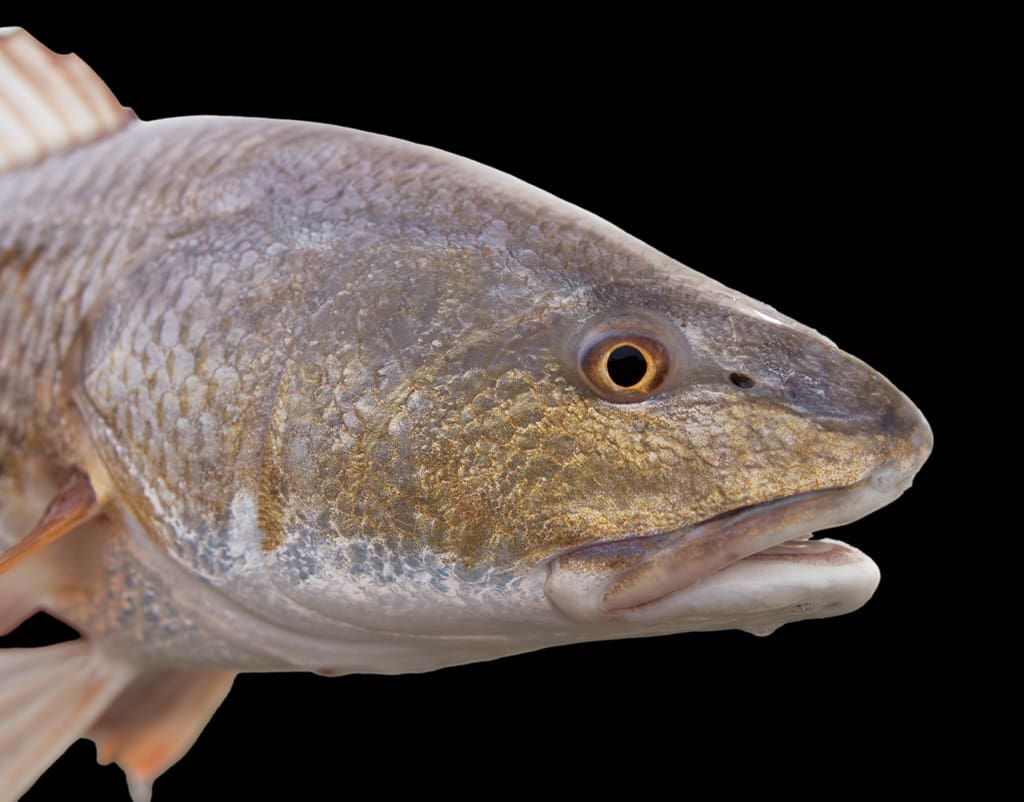
Winter along the Texas coast strips fishing down to fundamentals, and nowhere is that more apparent than fishing from the bank along ship channels. There’s no boat to reposition, no trolling motor to save a bad decision. You pick a stretch of concrete, rock, or shell and let the water come to you. In winter, that’s exactly what redfish want.
As shallow bays cool, redfish abandon back lakes and flats and slide toward deeper, more stable water. Ship channels hold heat longer, especially along steep drop-offs right off the bank. From shore, the key is recognizing that reds don’t roam aimlessly. They move with the tides, often pushing tight to the edge when current starts and easing back when it slows. A rising tide can bring fish surprisingly close to your feet, while an outgoing tide pulls them slightly deeper but still within casting range if you’re positioned near a bend or current break.
Bank anglers need to pay close attention to water movement. If the tide isn’t moving, bites are rare. When it begins to flow, reds set up behind structure—riprap corners, eroded concrete, bulkhead transitions—anywhere the current softens just enough to let them hold without working. From shore, casting parallel to the bank often outproduces casting straight out, keeping your bait in the strike zone longer.
Ship traffic plays a bigger role than many shoreline anglers realize. When a tanker or tug moves through the channel, it pulls water hard along the edges. That sudden surge dislodges crabs and stuns baitfish right where bank anglers are standing. Often the best shoreline bite comes minutes after a ship passes, when reds reposition and feed aggressively before things settle again.
Cold-water redfish want easy meals, and from shore, natural bait shines. Dead shrimp fished on bottom is hard to beat when water temperatures drop. Quartered or cracked blue crab can be even better around rocky banks, where reds naturally root. The bait doesn’t need to move much. Let it sit, occasionally shifting it just enough to stay natural in the current.
Artificial lures can work, but they need to be fished slowly and deliberately. Smaller soft plastics dragged along bottom, cast up-current and allowed to sweep naturally, will outproduce faster presentations. Winter bites are subtle, often just pressure or a slow pull.
Shore fishing ship channels in winter isn’t pretty, but it’s effective. You’re fishing where reds have to be, matching their movements instead of chasing them. When everything lines up—moving tide, passing ships, cold clear air—the concrete bank becomes a front-row seat to some of the most dependable redfish fishing Texas has to offer.
TF&G Staff