
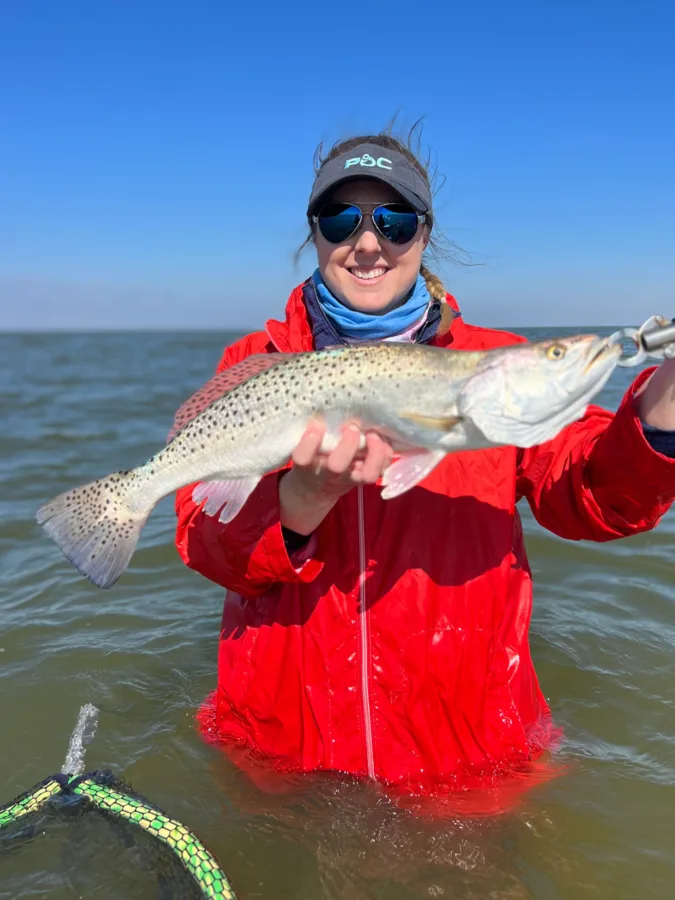
Winter speckled trout fishing in Texas can be highly productive if anglers adjust tactics to changing weather patterns. Trout behavior in winter is driven largely by water temperature, and short warm spells versus prolonged cool spells require different approaches. Understanding where trout position themselves and how they feed during each condition is key to consistent success.
During winter warm spells, which often occur after several sunny days with light winds, water temperatures in Texas bays can rise several degrees, especially in shallow areas. Speckled trout respond quickly to these changes. As water warms into the upper 50s and low 60s, trout become more active and move out of deep winter refuges. They often push onto shallow flats, shorelines, and grass beds to feed, particularly in the afternoon when water temperatures peak.
In warm spells, anglers should focus on shallow water near deeper access. Areas such as mud flats adjacent to channels, protected coves, and south-facing shorelines warm fastest. Soft plastics on light jigheads, slow-sinking twitch baits, and suspending plugs are effective. Trout may still feed deliberately, so slower retrieves are best, but fish are more willing to chase than during cold conditions. Wading anglers should move quietly and make long casts, as trout may spread out over large areas. Topwaters can even produce during extended warm spells, especially late in the afternoon.
Cool spells, particularly following cold fronts, push trout into survival mode. Water temperatures in the low to mid-50s or colder cause trout to seek stable conditions. They concentrate in deeper water such as channels, drop-offs, guts, and basins where temperature changes are less dramatic. Movement is limited, and feeding windows are shorter.
During cool spells, presentation becomes critical. Trout are unlikely to chase fast-moving lures. Slow-sinking soft plastics, suspending twitch baits with long pauses, and lightly weighted jigs fished near the bottom are most effective. Anglers should work lures painfully slow, often allowing several seconds between movements. Strikes may feel subtle, like extra weight or a slight tap.
Timing matters more during cold conditions. The best bite often occurs during the warmest part of the day, typically early afternoon. Sunny days with light winds are ideal, even if air temperatures remain cool. Focusing on deep structure near shallow feeding areas increases the chance of intercepting trout as they move short distances to feed.
In both warm and cool spells, water clarity and wind direction play important roles. Cleaner water generally improves trout activity, while strong north winds can quickly undo warming trends. Safety is also important during winter fishing, as cold water presents risks if anglers fall in.
Successful winter speckled trout fishing in Texas comes down to reading conditions and adjusting expectations. Warm spells offer opportunities to cover water and fish shallow, while cool spells demand patience, precision, and slow presentations. By matching tactics to temperature trends, anglers can enjoy some of the most rewarding trout fishing of the year.
TF&G Staff