
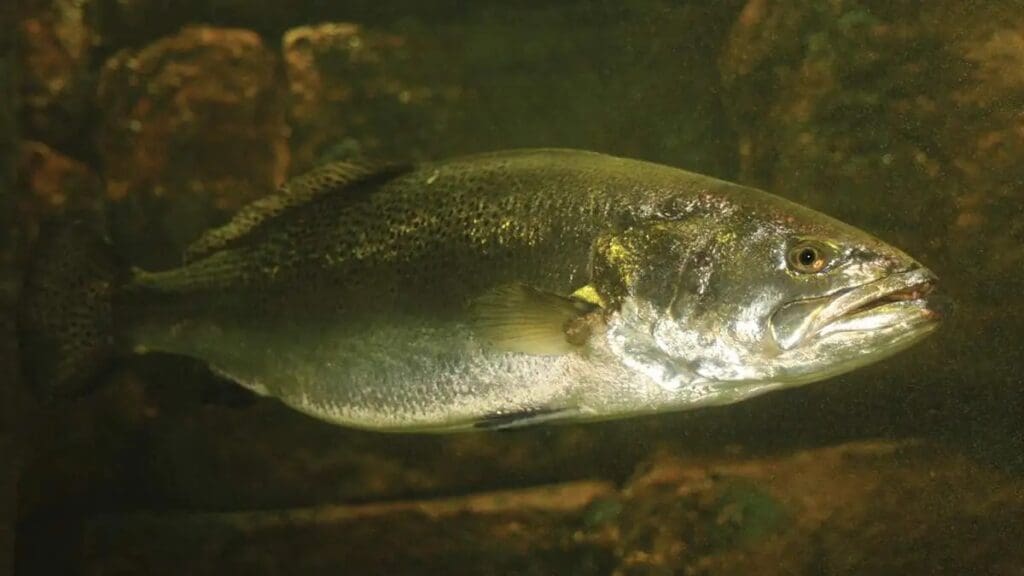
When anglers debate where the next Texas state-record speckled trout will come from, the discussion often centers on personal experience or recent hot bites. A more reliable way to approach the question is to look at historical records, long-term production of trophy-class fish, and the environmental factors that allow trout to reach extreme size.
The current Texas state-record speckled trout weighed 15.93 pounds and was caught in 2002 from the Lower Laguna Madre on fly tackle. That fish remains the largest verified speckled trout ever recorded in Texas. The previous record, a trout weighing 13.4 pounds, was caught in Baffin Bay in 1996. These two facts alone place the Lower Laguna Madre and the Baffin Bay system at the center of any statistical discussion.
While many Texas bays have produced trout over ten pounds, only a small number of systems have demonstrated the ability to grow trout approaching or exceeding the 14- to 16-pound range. From a probability standpoint, that distinction matters.
Historically, the Lower Laguna Madre stands out as the single most likely location for the next record fish. It is the only Texas bay system to have produced a trout near 16 pounds, and it continues to offer conditions that favor long-term trout survival and growth. The system experiences relatively mild winters compared to the Upper Coast, reducing the frequency of freeze-related fish kills. It also features expansive shallow flats with abundant forage such as mullet and shrimp, allowing large trout to feed efficiently. Fishing pressure, while present, is generally lower than in more densely populated bay systems farther north. Taken together, these factors give the Lower Laguna Madre the strongest statistical case.
The Baffin Bay and Upper Laguna Madre complex ranks a close second. Baffin Bay has a long-standing reputation for producing oversized speckled trout and remains one of the few Texas systems with a documented history of record-class fish. Although it has not produced a fish approaching the current record in recent decades, it continues to yield trout in the 8- to 10-pound range on a fairly regular basis. This suggests that the growth potential still exists, even if extreme outliers are rare.
Large, highly productive bays such as Galveston Bay and Corpus Christi Bay fall into a secondary probability tier. These systems have produced trout exceeding 12 pounds in the past, proving that record-class growth is biologically possible. However, higher fishing pressure, greater freshwater variability, and colder winter impacts reduce the likelihood of a trout surviving long enough to reach true record size. While a record fish from these systems cannot be ruled out, history suggests the odds are lower compared to the Laguna Madre region.
Other Texas bays, including Sabine Lake and Matagorda Bay, have documented big trout but show less consistency in producing fish beyond the low-teens range. Nearshore Gulf environments may occasionally hold large trout, but there is currently no verified Texas state record trout caught offshore, making this scenario statistically unlikely.
From a statistical perspective, record-class speckled trout are most likely to come from systems that combine long growing seasons, minimal winter mortality, abundant forage, and relatively lower exploitation of older fish. When those criteria are applied to Texas waters, the Lower Laguna Madre remains the most probable source of the next state-record speckled trout, with Baffin Bay and the Upper Laguna Madre close behind.
While any single fish is ultimately an outlier, history strongly suggests that the next record trout will come from the same region that has already produced the largest trout Texas has ever documented.
TF&G Staff