
Before you read any further, watch the video below. It breaks down one of the strangest trail-camera captures to surface in recent memory — a hog that doesn’t look like what most Texas hunters expect to see roaming the brush.
➡️ [Watch the video analysis here]
Now for the backstory.
The trail-camera image was sent in by Raul Alcocer, a Texas landowner who, like many hunters and wildlife managers, regularly checks cameras to keep tabs on deer, hogs, and everything in between.
But when Raul pulled this card, one image stopped him cold.
The animal in the frame was massive, light-colored, and covered in thick, almost wool-like hair. At first glance, it didn’t resemble the dark, bristly feral hogs Texans are used to seeing tear up fields and senderos.
In fact, when the image was shown to an experienced hog hunter and trapper, his first reaction wasn’t scientific — it was visual.
“It looks like a polar bear.”
The nickname “polar bear hog” stuck.
Not Your Average Feral Hog
Feral hogs are one of the most familiar — and destructive — invasive species in Texas. But they’re also far from genetically uniform. Today’s feral hogs are a mix of escaped domestic pigs, Eurasian wild boar, and generations of uncontrolled breeding.
That genetic cocktail means old traits can resurface — including unusual coat colors, body size, and hair texture. Occasionally, it produces animals that look nothing like the textbook version hunters have in their heads.
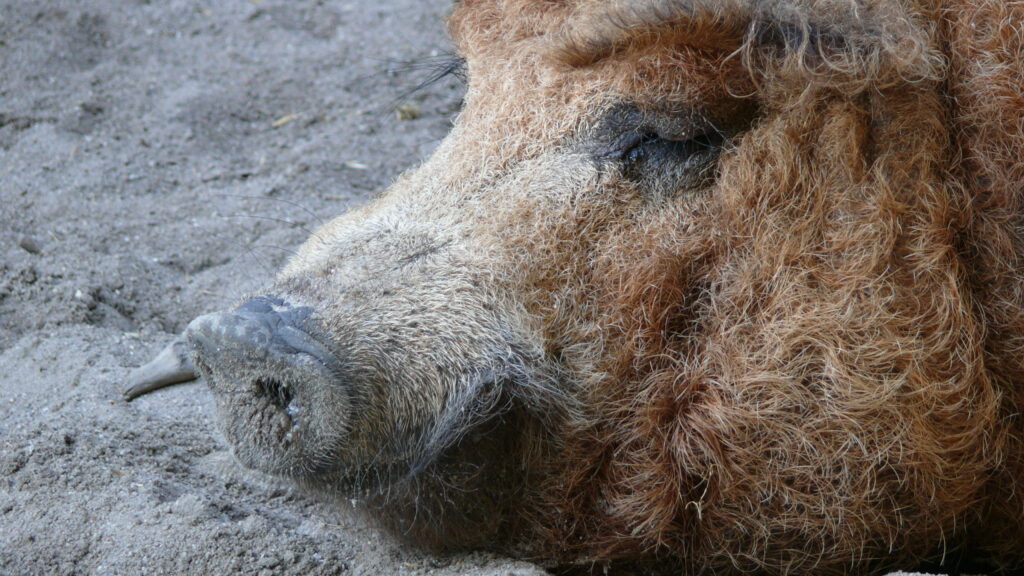
This hog appears to be one of those rare throwbacks. In my opinion it looks like a Mangalica hog, a strange Hungarian breed that has wooly like hair, a blocky build and gets big. Since I posted the video I have had several people sending in photos of what looks like at least a descendant of this breed.
Its pale coloring, heavy build, and thick coat give it an almost unrecognizable appearance — especially when caught in a single frame on a trail camera with no scale or context.
Why Trail Cameras Still Matter
Trail cameras have changed how we understand wildlife. They don’t just help us pattern deer or locate hog sounders — they reveal the unexpected.
Sometimes that surprise is a giant buck.
Sometimes it’s a predator you didn’t know was there.
And sometimes, it’s a feral hog that looks more at home on Arctic ice than in Texas brush.
➡️ Watch the video above to see the actual image, hear the expert breakdown, and decide for yourself whether this is simply a rare genetic hog — or one of the most unusual feral pigs caught on camera in recent years.
Chester Moore