
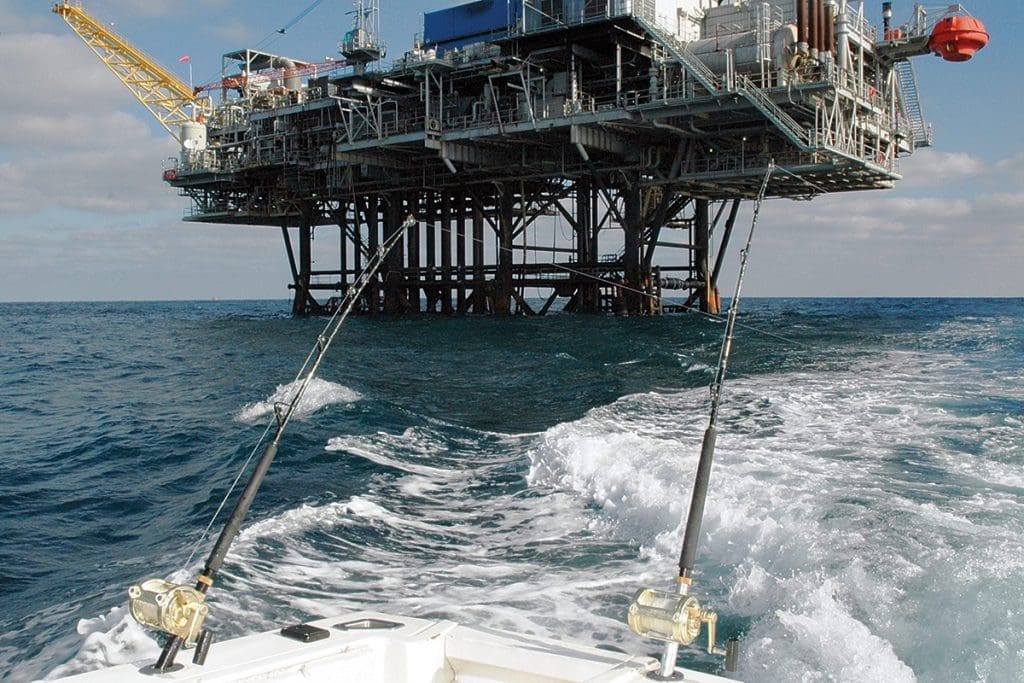
Winter fishing around short rigs off the Texas and Louisiana coast is about stability. When bay temperatures drop and fronts cycle through, many game fish move just offshore to find consistent water temperatures and dependable structure. Short rigs in 20 to 60 feet of water provide exactly that, concentrating sand trout, speckled trout, sheepshead, and black drum in predictable places throughout the winter months.
Boat control is the foundation of successful winter rig fishing. Position the boat based on current first and wind second. Approach from up-current and keep enough distance to fish vertically without drifting into the structure. Use short bumps of the motor to hold position or allow a slow, controlled drift. Anchoring can work on calm days, but drifting often keeps baits moving naturally and reduces hang-ups.

For sand trout and speckled trout, vertical presentations produce the most consistent results. These fish commonly suspend on the down-current side of the rig, using the structure to break current while waiting for bait to drift past. A ½- to 1-ounce jig head is standard, adjusted for depth and current strength. Soft plastics with subtle action work well, but winter is also an excellent time to incorporate dead shrimp.
Dead shrimp are often overlooked offshore, but they can be extremely effective in cold water. Thread a fresh dead shrimp onto a jig head or use it on a simple drop rig. Lower the bait straight down until it reaches the desired depth, then keep it hovering just above the fish. Sand trout, in particular, respond well to dead shrimp fished slowly and vertically.
Retrieve speed should remain slow. Lift the bait gently, pause, and let it fall on controlled slack. Many winter trout bites occur during the pause or fall. Speckled trout may feel like nothing more than added weight, while sand trout often produce a light thump. Any change in pressure warrants a hookset.
Sheepshead and drum are best targeted tight to the structure, and this is where dead shrimp truly shine. These fish feed heavily on crustaceans during winter, making shrimp a natural choice. A drop rig with small hooks baited with dead shrimp allows precise placement along rig legs and crossmembers. Lower the bait until it touches structure, then lift slightly to avoid constant hang-ups. Bites are subtle—often a tap or steady pressure—and quick hooksets help prevent bait theft.
When sheepshead dominate the bite, backing the presentation a few feet away from the rig often produces drum. Dead shrimp on a jig head or Carolina-style rig can be especially effective here, drifting naturally with the current. Drum bites tend to be more aggressive than sheepshead but still require patience.
Tackle selection should prioritize sensitivity and control. Medium to medium-heavy rods with fast tips help detect subtle winter bites while providing enough backbone to pull fish away from steel. Braided line with a fluorocarbon leader offers excellent feel for vertical fishing, though straight fluorocarbon works well in clear water. Smooth drags are essential, as winter fish are often hooked close to structure.
Commitment is critical in winter. Fish stack tightly, and a productive rig can continue producing if worked thoroughly. Rotate between soft plastics and dead shrimp, vary depth, and adjust distance from the structure before moving on. Short rigs remain some of the most dependable winter fishing spots along the Texas and Louisiana coast, and slow, deliberate presentations—especially with dead shrimp—consistently put fish in the boat when other patterns fall apart.