
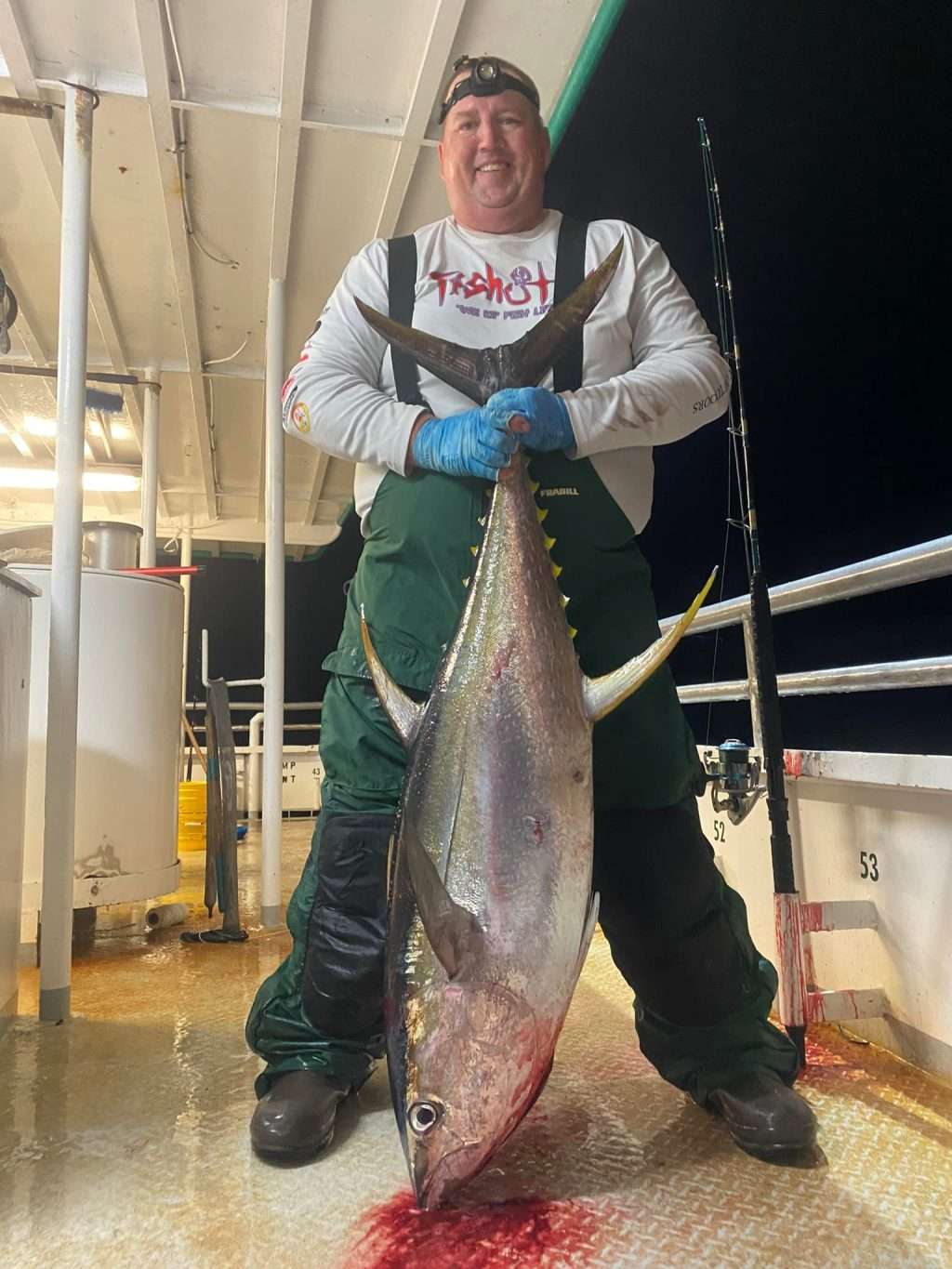
Winter is one of the most overlooked but productive seasons for tuna fishing in the Texas Gulf. While many anglers focus on summer runs, experienced offshore crews know that colder months often bring less pressure, stable fish, and aggressive bites when conditions align. Success depends on preparation, timing, and the right mix of techniques.
When and Where to Fish
Winter tuna trips typically run from December through February, with the best action occurring during calm weather windows between cold fronts. Ideal conditions include light winds, moderate seas, and stable barometric pressure following a front rather than during it.
Most winter tuna are found 80 to 120 or more miles offshore, commonly around floating oil platforms, deepwater rigs, weed lines, current edges, temperature breaks, and clean color changes. Water temperatures in the mid-60s offshore are prime. Tuna remain pelagic but often hold deeper than summer fish, which influences lure and bait selection.
Trolling to Locate Fish
Trolling is the most efficient way to locate winter tuna, especially when fish are scattered across large areas.
Boat speeds of 6 to 8 knots are typical, using 30- to 50-pound class conventional or heavy spinning tackle. Productive trolling lures include skirted ballyhoo in dark or natural colors, bullet-style trolling lures, cedar plugs, and deep-diving plugs. Diving plugs are particularly useful in winter because tuna often hold below the surface.
Set a staggered spread using flat lines, outriggers, and a shotgun bait to cover multiple depths. When a strike occurs, continuing to troll briefly can trigger additional hookups before stopping to fish the area.
Chunking and Chumming at Structure
Once tuna are located around rigs or floaters, many crews switch to a drift or slow idle and establish a chum line.
Common chunk baits include cut bonita, skipjack tuna, sardines, or hardtails. Chum should be released steadily but sparingly to keep fish interested without overfeeding them. Winter tuna can be line-shy, so lighter leaders in the 60- to 80-pound fluorocarbon range often produce more bites.
Free-line chunks naturally down the chum line using circle hooks, allowing the bait to drift with minimal resistance. This method is especially effective during low-light periods and at night.
Live Bait Techniques
Live bait can be extremely effective on winter tuna when available. Flying fish are one of the best baits, particularly at night near rig lights, while hardtails and blue runners also work well.
Rig live baits on circle hooks with little or no added weight and allow them to swim freely away from the boat. Tuna often pick up the bait and run before swallowing it, so anglers should allow the line to come tight before engaging the reel.
Vertical Jigging for Deep Fish
When tuna appear on sonar but ignore surface offerings, vertical jigging is often the best option.
Heavy spinning or jigging rods paired with braided line in the 65- to 80-pound range are standard. Metal jigs in the 150- to 300-gram range work well in deeper water and strong currents.
Drop jigs to the depth where fish are marked and retrieve with fast, erratic lifts followed by controlled drops. Many strikes occur as the jig falls back through the water column.
Surface Lures During Active Feeds
On calm days when tuna push bait to the surface, topwater lures can be highly effective even in winter. Poppers, stickbaits, and pencil plugs are common choices.
Cast beyond breaking fish and retrieve aggressively through the feeding zone. Surface activity can be short-lived in winter, so being ready to cast quickly is critical.
Night Fishing Considerations
Winter tuna often feed at night around oil rig lights that attract baitfish. Drifting or slow idling up-current of the structure allows baits to move naturally through the strike zone.
Chunk baits and live baits are both effective at night. Careful line management and situational awareness are essential to avoid tangles and hazards around structure in the dark.
Final Tips for Winter Tuna Success
Winter offshore trips require close attention to weather windows, as conditions can change quickly. Fluorocarbon leaders generally outperform monofilament in clear winter water. Sonar is often more reliable than surface signs, and anglers should be prepared to rotate techniques until fish respond.
Winter tuna fishing off Texas rewards anglers who fish methodically, adapt to conditions, and take advantage of quieter offshore waters. When everything lines up, it can be one of the most consistent and productive tuna fisheries of the year.