
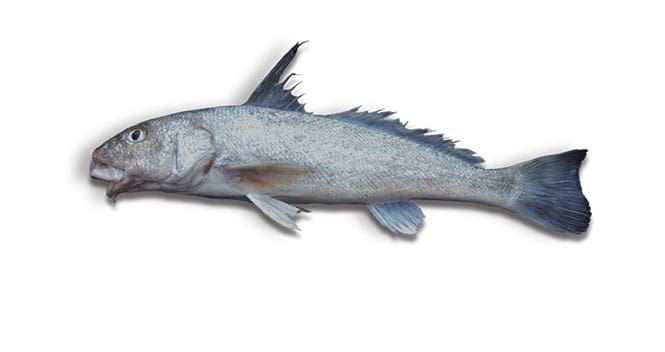
Winter surf fishing on the Texas coast rewards anglers who understand that cold water doesn’t shut fish down—it simply concentrates them. Whiting, sand trout, Gulf trout and black drum all remain active in the surf zone through the colder months, and on the Lower Coast an occasional pompano shows up as a welcome surprise.
Whiting are the most reliable winter target and provide steady action when conditions line up. As water temperatures fall, these fish stack into tight schools in the first and second guts, often within easy casting range. They feed heavily on small crustaceans and worms, rooting along the sandy bottom.
The most effective rig for winter whiting is a simple double-drop bottom rig tied with 20- to 30-pound mono leader and small No. 2 to No. 4 kahle or circle hooks. Pyramid sinkers from 2 to 4 ounces are usually sufficient unless current is strong. Fresh dead shrimp remains the gold standard bait, but tipping the hook with shrimp-flavored Fishbites adds durability and keeps bait fishing longer in cold water. Small strips of squid or cut shrimp will also catch fish when whiting are thick.
Sand trout and Gulf trout are often mixed in with whiting schools, especially in deeper guts or near passes and jetties. These species are more tolerant of cold, turbulent water than speckled trout and remain aggressive throughout winter.
While they will take shrimp on bottom rigs, artificials allow anglers to target them more deliberately. Soft plastics such as paddle tails or shrimp imitations fished on 1/8- to 1/4-ounce jigheads work well. The key is a slow presentation—short hops along the bottom with frequent pauses. Natural colors like bone, chartreuse, or translucent patterns tend to produce best in winter’s clearer water.
Black drum round out the winter surf lineup and often move shallow following cold fronts. These fish cruise the guts and shoreline structure looking for crabs and shrimp dislodged by wave action. Drum fishing requires heavier gear, as even modest-sized fish pull hard in current.
A fish-finder rig or single drop rig with a 4/0 to 6/0 circle hook and 30- to 50-pound leader is ideal. Fresh shrimp will catch drum, but cracked blue crab or cut crab is often more selective for larger fish. Drum bites can be subtle in cold water, often feeling like steady pressure rather than a sharp tap. Patience is critical—let the fish load the rod before setting the hook.
On the Lower Texas Coast, winter also brings the chance of catching pompano in the surf. While not abundant, these fish show up often enough to keep anglers attentive. Pompano favor cleaner water and sandy bottoms, feeding on small crustaceans similar to whiting.
The same rigs used for whiting will catch pompano, but downsizing hooks and using small pieces of shrimp, sand flea imitations, or orange-colored Fishbites can improve odds. When targeting them specifically, lighter sinkers and longer leaders help keep bait moving naturally in the wash.
Timing plays a major role in winter success. The best fishing often occurs a day or two after a front, once winds relax and water clarity improves. Midday and early afternoon trips are usually more productive as sunlight slightly warms the shallows. Paying attention to beach structure—cuts, troughs, and subtle depth changes—makes a significant difference.
Winter surf fishing demands preparation. Layered clothing, wind protection and awareness of changing conditions are essential. For those willing to adapt, the cold months offer quiet beaches, dependable action and a chance at a mixed bag rarely seen during warmer seasons.