
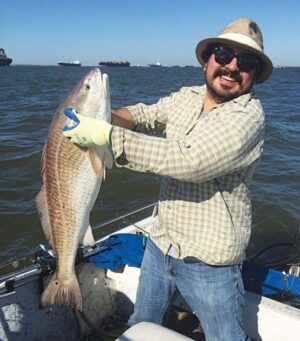
Winter is when jetties separate the hopeful from the committed. Cold fronts, gray water, and shorter days push plenty of anglers off the coast, but the bull redfish don’t disappear. In fact, some of the largest redfish of the year are caught during the coldest months, tight to rock and current. Along the Texas coast—from Sabine Pass to Port Mansfield—jetties remain consistent producers all winter long if you understand how tide, depth, and structure come together.
Jetties are built to control water, and that’s exactly why they hold fish. They create hard edges where current accelerates, slows, and swirls. Those changes concentrate bait, and bull reds position themselves where food comes to them with minimal effort. Winter redfish are not roamers. They are efficiency feeders, sitting deep and close to structure, waiting for the tide to deliver the next opportunity.
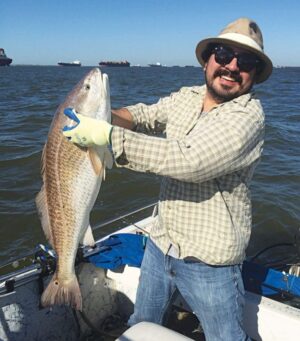
Tide movement is the single most important factor in winter jetty fishing. You can catch redfish in very cold water if it’s moving. You can struggle in warmer water if it’s not. The first half of an incoming or outgoing tide is usually the most productive window. That’s when bait begins moving with purpose and predators respond.
Incoming tides often push bait along the Gulf side of the rocks, especially near subtle bends, points, or uneven rock piles that break the flow. Outgoing tides can be just as good, particularly after a front, when cold bay water drains through passes and funnels bait along the jetty edges. In both cases, bull reds commonly hold on the down-current side of structure, facing into the flow.
Winter redfish behavior is deliberate. These fish aren’t looking to chase fast-moving prey across open water. They stay close to the bottom, often in deeper holes adjacent to the rocks, and feed when something comes within easy reach. Because of that, presentation matters more than speed or flash. Slow, natural offerings fished near the bottom consistently outperform aggressive techniques in cold water.
Natural bait is hard to beat in winter. Fresh cut mullet, shad, or menhaden create a scent trail that bull reds can track even in dirty water. Cracked blue crab can be deadly when reds are keyed in on bottom forage. The key is keeping the bait in the strike zone long enough for fish to find it. That often means adjusting weight so your offering moves naturally with the tide without tumbling uncontrollably or sitting dead-still.
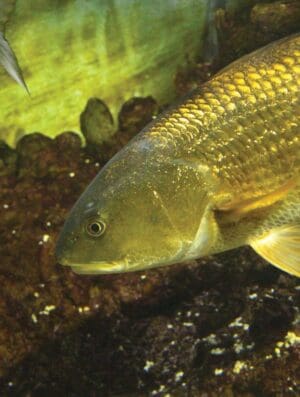
Circle hooks are a smart choice around jetties. Winter bites can be subtle—often nothing more than steady pressure or a slight line movement. Circle hooks allow fish to take the bait and turn, resulting in solid hook-ups and fewer break-offs when a big red surges toward the rocks. Use abrasion-resistant leader and check it frequently. Jetty fishing is unforgiving on terminal tackle.
Gear selection should focus on control rather than brute force. Medium-heavy to heavy rods paired with smooth-drag reels give you the ability to apply steady pressure and steer fish away from structure. Bull reds aren’t especially fast, but they are powerful, and the first few seconds after the hook-up are critical. Apply pressure early and keep fish moving toward open water.
Positioning is just as important as bait choice. From the rocks, fish parallel to the jetty as much as possible, working baits along seams and drop-offs rather than casting blindly into open water. If you’re fishing from a boat, anchoring or holding position up-current and casting back toward structure allows your bait to sweep naturally into holding areas. Small adjustments—sometimes just a few yards—can make a dramatic difference.
Patience is part of winter jetty fishing. There may be long stretches without action, but when a bite comes, it’s often from a fish worth waiting for. Stay alert and watch your line closely. Many winter bull reds pick up a bait and simply lean on it. Let the rod load before applying pressure rather than swinging aggressively.
Bull reds are rarely scattered in winter. When you find one, there are often others nearby. If conditions are right—moving water, proper depth, and bait present—give an area time to produce before moving on. Winter success comes from trusting the process and fishing methodically.
Yamaha Power for Winter Jetty Runs
For anglers who regularly run passes, jetties, and nearshore structure, the Yamaha Outboards V6 4.2L Offshore outboards are engineered specifically for saltwater performance and reliability. This platform includes the 300 HP, 250 HP, and 225 HP models and has become a proven choice on bay boats and center consoles that operate in demanding coastal conditions.
Built around a 4.2-liter, naturally aspirated V6, these four-stroke engines are designed to deliver strong mid-range torque without excessive weight. That balance matters when maneuvering near jetties, pushing through tidal flow, or maintaining precise boat control around rock structure.
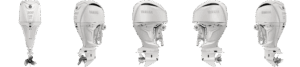
The V6 4.2L Offshore series is intended for full-time saltwater use, featuring Yamaha’s corrosion-resistant construction, internal freshwater flushing capability, and proven electronic fuel injection. Cold-weather reliability is a key advantage for winter anglers, with consistent starting and smooth idle performance during early launches and short fishing windows.
Another strength of this platform is rigging flexibility. The V6 4.2L outboards are compatible with mechanical controls, digital electronic controls, and Yamaha’s Helm Master® EX system, allowing them to fit a wide range of boats without forcing unnecessary complexity at the helm. That versatility is especially valuable for anglers who demand precise positioning while fishing structure.
Fuel efficiency and durability round out the package. These engines are built to cruise efficiently while still providing the power needed to run safely through passes and return confidently when conditions change.
For coastal anglers focused on reliability, saltwater durability, and balanced performance—not just maximum horsepower—the Yamaha V6 4.2L Offshore (300 / 250 / 225 HP) lineup remains one of the most trusted platforms on the water.