
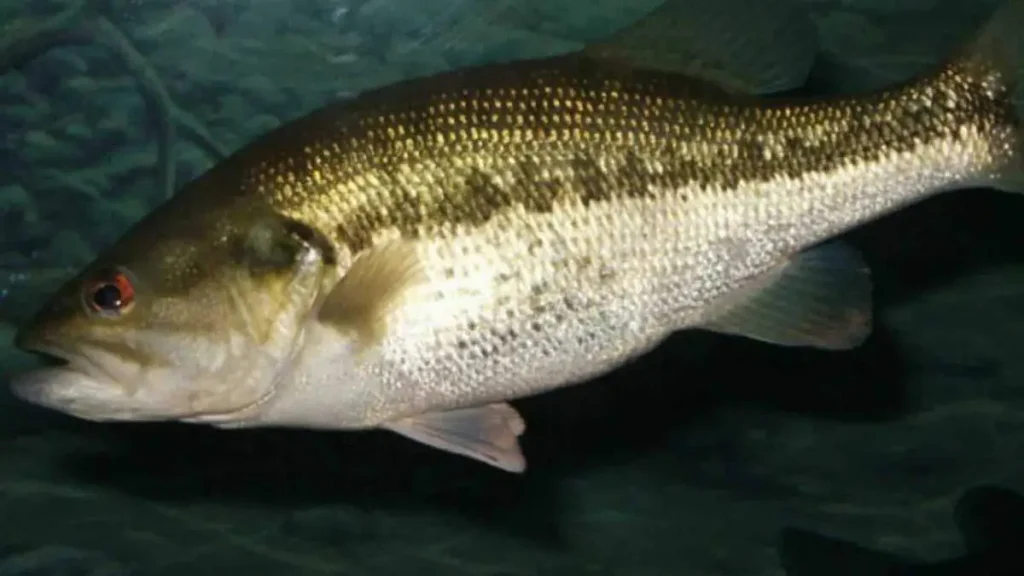
When late winter sunlight starts warming the shallows, Lake Conroe shifts gears. Big female largemouth leave their deeper winter timber and begin sliding into the creeks and pockets to stage for the spawn. With miles of standing timber, defined creek channels, and forested shoreline tied into the Sam Houston National Forest, Conroe offers textbook pre-spawn structure—and real trophy potential.
On the north and northwest ends of the lake, creeks like Little Caney Creek, Caney Creek, Cagle Branch, Stewart Creek, and the smaller pockets around the FM 830 and Seven Coves area consistently warm early and hold moving fish. You don’t have to fish one specific creek. Any creek arm with a defined channel, adjacent flats, and protected spawning pockets can load up this time of year.
The key is understanding the transition.
Pre-Spawn: Staging on Structure
When water temperatures hit the mid-50s to low-60s, bass aren’t on beds yet—but they’re thinking about it. On Conroe, they stage along secondary points inside the creeks, channel swings that touch shallow flats, and timber edges bordering 6–12 feet of water.
You’re looking for areas where the creek channel bends close to spawning flats. Conroe’s standing timber is a huge advantage here. Big females use those trees as vertical cover while they feed up.
This is when reaction baits shine.
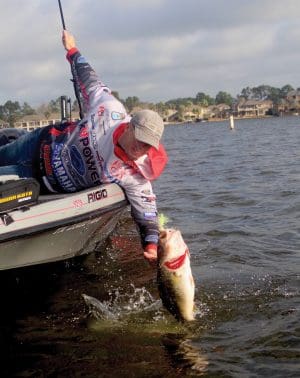
A red or craw-colored lipless crankbait ripped across shallow flats can trigger violent strikes. A spinnerbait slow-rolled through timber lanes is deadly when wind pushes into a creek arm. If conditions are calm, pitch a 3/8- to 1/2-ounce jig to isolated trees along channel edges and let it fall naturally.
The pattern is simple: find 8-10 feet next to 3–6 feet. That transition zone is your sweet spot.
The north-end creeks often hold the highest concentration of staging fish, but mid-lake protected creeks can be just as productive—especially if pressure builds up north.
Spawn: Moving Shallow
Once water temperatures stabilize in the low-60s and climbing, bass push into the backs of creeks and protected pockets to spawn. On Lake Conroe, you’ll find beds on sandy patches, gravel stretches, and subtle hard-bottom areas tucked away from heavy wind.
The forested shoreline near the national forest areas helps block wind and maintain stable water conditions, which is why those protected creek pockets are so reliable.
At this stage, slow down.
A white creature bait or tube helps you see the bait disappear when a fish inhales it. A wacky-rigged stick worm dead-sticked in the bed zone can draw strikes from cautious females. If a fish is stubborn, a compact jig placed right in the nest often flips the switch.
Long casts matter. Stay off the bed. Let the fish commit.
Lake Conroe consistently produces 7–9 pound fish during the pre-spawn and spawn, and double-digit bass are not out of the question. The combination of fertile water, abundant forage, standing timber, and clearly defined creek systems creates ideal conditions for growing heavy females.

What makes Conroe special is how predictable those transitions are. The fish move from main-lake timber to creek channels, then from staging points into protected flats. If you stay on that progression, you stay around big fish.
Pre-spawn is your best shot at a true trophy. Those big females are aggressive, feeding heavily, and grouped up before they scatter onto beds.
Start your day in the creeks working staging structure. As the sun climbs, adjust based on water temperature and clarity. If a cold front hits, don’t panic—just back out slightly to the first channel edge and slow down. When the big girls start sliding into those Conroe creeks, everything lines up. And when it happens on Lake Conroe, it can happen fast—and it can absolutely be the fish of a lifetime.