
Spend enough time in the hunting world and you’ll learn something pretty quickly: the woods don’t just grow animals—they grow stories.
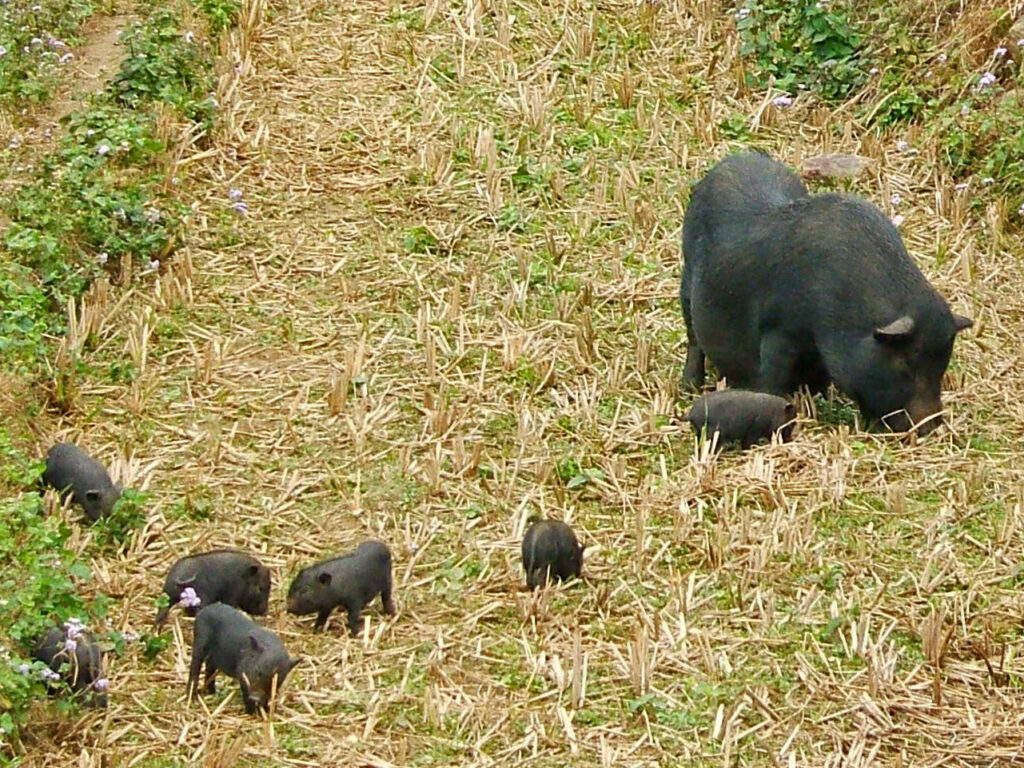
Over the years, I’ve seen and heard just about everything. Hunts advertised for “Vietnamese mountain hogs.” Rumors of exotic animals roaming ranches that seemed too good to be true. Stories told with complete confidence, repeated enough times that nobody thinks to question them anymore. And the thing is—at first glance, a lot of these claims don’t sound that far-fetched.
The animals often look unusual. The locations don’t seem impossible. And once a story starts circulating, it takes on a life of its own.
Watch the video investigation here.
One experience that really stuck with me happened years ago when I personally ran into what people were calling an “Asian mountain buffalo.” The explanation sounded convincing. The animal looked out of place. More than one person insisted it was something rare and exotic, and nobody seemed willing to slow down and ask the obvious questions.
But the longer I looked, the more the mystery unraveled.
There was nothing Asian about it. Nothing wild or undocumented. It wasn’t some lost species or imported oddity. It was a domestic animal—one that simply didn’t match what most folks expected to see. Once the word “exotic” got attached to it, common sense quietly stepped aside.
That moment stuck with me because it showed just how quickly ordinary animals can turn into mystery species when assumptions replace observation.
The same thing happens with so-called “Vietnamese mountain hogs.” In reality, most of these animals turn out to be feral hogs with mixed genetics, escaped livestock, or hybrids that picked up some unusual traits along the way. Different body shape, odd coloring, strange hair—nothing supernatural, nothing foreign. But give them an unfamiliar name, and suddenly they’re something else entirely.
This isn’t about calling people out. Hunters are observant by nature. We notice when something looks different. But we’re also storytellers, and stories grow fast when they aren’t checked by basic biology and a little skepticism.
In the hunting world, not everything strange is rare, and not everything unusual is exotic. Sometimes the simplest explanation really is the correct one.
And that brings me to one last example—one you still hear from time to time.
Every so often, someone claims there are mountain goats living in places like North Carolina. Usually, it’s based on a sighting of a white, goat-shaped animal high up in rough terrain. By the time the story spreads, it’s no longer a goat—it’s a mountain goat, out of place and unexplained.
But once again, slow the story down and it falls apart. What people are almost always seeing are domestic goats—escaped, released, or intentionally placed—that adapted well enough to survive in rugged country. Familiar animals, unfamiliar setting. Same pattern, different story.
In this video, I take a closer look at several cases where animals were believed to be something they weren’t—and how quickly myths can take hold once people stop asking basic questions.
Because the truth is, the woods are interesting enough on their own. They don’t need help inventing new creatures to live in them.
Chester Moore