
Most anglers picture redfish waving copper tails across a flooded marsh or cruising a knee-deep flat under a summer sun. But when winter settles in and north winds start stacking water out of the bays, a different opportunity quietly develops upriver. In the freshwater stretches north of major bay systems, redfish slide into tidal rivers and bayous, following bait and stable conditions. For anglers willing to adjust their thinking, these river fish can provide some of the most consistent cold-season action of the year.
This can last into the early stage of spring.
In places like the Sabine River and other coastal drainages, winter redfish often push miles upstream. The water may technically be “fresh,” but tidal influence and bait movement still shape fish behavior. Instead of roaming vast flats, these reds settle into defined areas—deep channel bends, bayou mouths, bridge pilings, and current breaks where food is funneled right to them.

One of the biggest clues is bait. Mullet are a driving force in winter river systems. When cold weather pushes bait out of exposed shallows, schools of mullet often stack in deeper, slower river stretches. Redfish won’t be far away. If you find mullet flipping along a drop-off or suspended over a channel edge, it’s worth slowing down and fishing thoroughly. Those fish aren’t randomly scattered; they’re set up where the groceries are easiest to catch.
River reds in winter aren’t typically in a chasing mood. Water temperatures are lower, and fish conserve energy. That means presentations should match their pace. Deep-diving crankbaits worked slowly along channel edges can be deadly. The key is keeping the lure in the strike zone as long as possible. Instead of burning it back, let it grind along bottom or deflect off submerged wood and rock. Many bites feel like the lure simply stops.
That is until the “bottom” pulls back.
Soft plastics on jigheads are another reliable option, especially around deeper holes and current seams. Cast upstream, let the bait sink, and work it naturally with the flow. Subtle hops and slow drags imitate injured baitfish or small crabs drifting with the current. In colder water, that natural movement often outperforms aggressive retrieves.
Current matters in river systems more than many anglers realize. Redfish don’t want to sit in the strongest flow; they prefer edges, just outside the main push of water where they can ambush prey without fighting the current. Look for eddies behind pilings, slack pockets along outside bends, or the soft water just off a main channel drop. Those transition areas are classic winter holding spots.
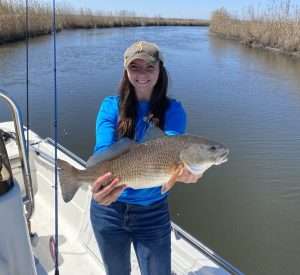
Depth is another factor. River systems typically offer more consistent depth than shallow flats, and that stability is important during cold fronts. A deep bend that drops from six feet into fifteen may hold fish day after day, particularly if it’s close to a flat or marsh drain. These deeper areas also tend to retain slightly warmer water during extended cold spells, giving redfish a comfortable place to settle.
As winter begins easing toward early spring, fish behavior shifts again. Rising water temperatures and lengthening days trigger more movement. Redfish start pushing closer to bay systems, staging along lower river stretches and feeding more aggressively. That’s when moving baits can shine. A crankbait bumped along a drop-off or a paddle tail swum steadily through a current seam can trigger reaction bites from fish that were sluggish just weeks earlier.
Wind can either help or hurt in these systems. A steady breeze blowing into a shoreline or pushing water into a bayou mouth often concentrates bait. Position the boat to work with the wind instead of fighting it. Controlled drifts along channel edges allow you to cover water naturally and keep your lure moving the same direction as the current and forage.
One of the advantages of winter river fishing is reduced pressure. While many anglers focus on the bays, these upriver fish can go relatively untouched. When you find them, they’re often grouped tightly. It’s not uncommon to catch multiple redfish from the same stretch of bank or channel edge once you dial in the pattern.
Electronics can also play a role. Even in stained water, side imaging and sonar can reveal bait schools, submerged timber, and depth changes that aren’t visible from the surface. If you mark bait stacked near bottom along a bend, there’s a good chance redfish are nearby.
To get the best in electronics check out the latest from Humminbird here.
Winter river redfish aren’t flashy. There are no tailing schools in ankle-deep water or explosive topwater strikes at sunrise. Instead, the bites are deliberate, often heavy and surprising. You feel weight, lean into the fish, and suddenly the rod loads as copper flashes roll in darker water.
Fishing freshwater rivers north of bay systems requires patience and attention to detail—watching bait, reading current, and adjusting retrieves to match water temperature. But when conditions line up, these rivers can offer steady action and solid fish at a time of year when many anglers assume redfish have vanished.
They haven’t. They’ve just moved upriver, where the water slows, the bait gathers, and the opportunity waits for those willing to follow.
Chester Moore