
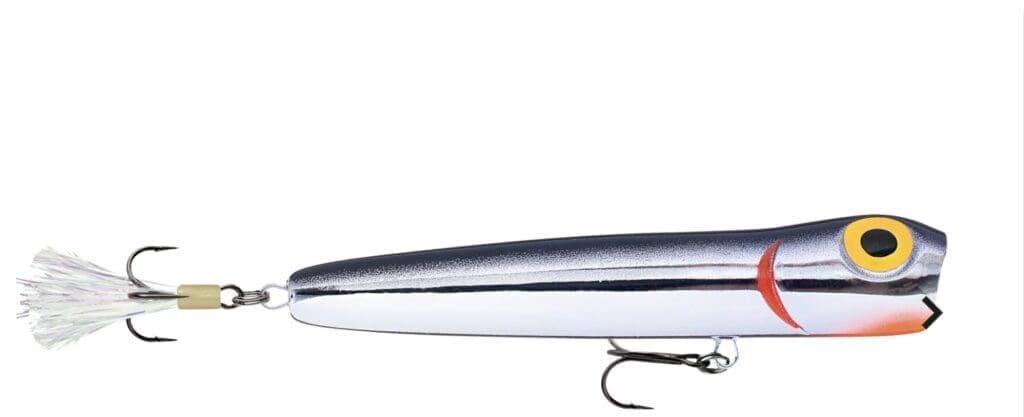
Late winter and early spring can be some of the most productive times of year to catch speckled trout along the Texas coast. Water temperatures are still cool, bait is beginning to move back into the bays, and trout are often feeding heavily during warming trends. One of the most effective lures during this period is the chugging-style topwater plug. Chuggers are highly underrated on the Texas Coast.
Chuggers are different from walking baits because they create a loud “pop” or “bloop” when worked properly. That sound and surface disturbance can draw strikes even when trout are sluggish in cooler water. These plugs imitate injured baitfish and can trigger reaction bites from larger fish.
The key to success with chugging topwaters in late winter is adjusting your retrieve to match conditions. In colder water, trout typically will not chase fast-moving lures for long distances. A slow, deliberate presentation is usually best.
Start by casting the plug near shallow flats, grass edges, or drop-offs where trout stage during temperature changes. Early spring trout often hold in slightly deeper water but move shallow to feed when the sun warms the flats. Target areas with dark mud bottoms, which heat up faster than sandy areas.
Once the plug lands, let it sit for several seconds. That pause is important, especially in water below 65 degrees. After the pause, give the lure a short, sharp pop with the rod tip. The goal is to make the plug chug water without pulling it too far forward.
A productive cadence is pop…pause…pop…pause. Many strikes happen during the pause, when the plug is sitting still. Trout will often rise slowly and inhale the lure rather than exploding on it like they do in warmer months.
It’s also important to use the right tackle. A medium-action rod with a quality reel and 10- to 15-pound braided line allows solid hooksets at long distances. Many anglers add a 18- to 24-inch fluorocarbon leader for abrasion resistance and better stealth in clear water.
Color selection matters, but action is usually more important. Natural mullet and shad patterns work well in clear water, while louder colors like chartreuse or bone can help in stained conditions. On cloudy days or in off-colored water, a plug with a louder pop can help fish locate it.
Wind is another factor. A slight chop on the water can improve the bite by breaking up light penetration and making trout less cautious. Chugging plugs perform well in these conditions because they create extra noise and vibration.
Late winter and early spring trout fishing often rewards patience. A slow topwater approach with a chugging plug can produce some of the biggest specks of the year, especially during warming trends and stable weather patterns.
For anglers willing to work a surface lure slowly, chuggers remain an excellent option when the season is transitioning and trout are ready to feed.