
This year marks more than 30 years since one of the most celebrated catches in Texas saltwater fishing history, 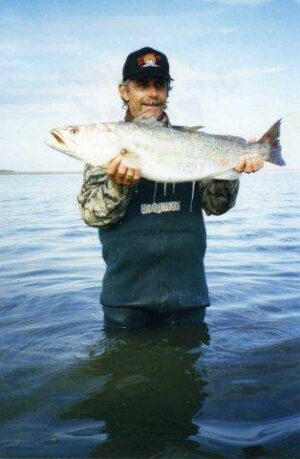 the day Jim Wallace forever changed the way anglers viewed speckled trout in the Lone Star State.
On February 6, 1996, Wallace waded into the legendary waters of Baffin Bay and connected with a fish that would ripple through Texas angling culture for decades. The trout was an absolute monster — a sow that measured 33.13 inches and weighed 13 pounds, 11 ounces, the largest ever certified in Texas at the time.
That single catch didn’t just set a record.
It set a season.
From that moment on, the Wallace trout placed big February speckled trout squarely in the crosshairs of every serious angler on the Texas coast. February, once simply another winter month, became something else entirely — the month of giants. The month when legends might slide across a cold flat in knee-deep water. The month when one bite could change history.
Wallace’s trout wasn’t just large — it was a symbol. It proved beyond doubt that Texas bays were capable of producing true trophy-class speckled trout, elevating coastal trout fishing from a beloved pastime into an obsession for anglers chasing the fish of a lifetime.
For years afterward, that Baffin Bay sow became the benchmark — the Holy Grail of Gulf Coast trout fishing. It was talked about on docks, retold at tackle shops, and replayed in the minds of wade fishermen with every winter sunrise.
Nearly six years later, the record would eventually be surpassed when Carl “Bud” Rowland landed an even larger trout on May 23, 2002, in the Lower Laguna Madre, a fish that weighed 15 pounds, 6 ounces and stretched 37¼ inches.
But Wallace’s February giant remains one of the defining catches in Texas history, and made anglers focus on the late winter period more than ever.
Which leads to the question every angler asks when February rolls around: how do you catch your own Wallace-class sow?
Catching big trout in February isn’t about numbers — it’s about patience, confidence, and throwing the kinds of baits that appeal to a true trophy fish. Cold water slows everything down, and the biggest speckled trout in the system often feed selectively, preferring slow, easy meals.
That’s why February trophy trout fishing comes down to one key word: slow.
Ask any Texas big-trout hunter what lure defines winter speckled trout fishing, and one name comes up immediately: the Paul Brown Corky. Corkys and other slow-sinking twitchbaits imitate an injured baitfish better than almost anything else, and in cold water, that subtle wounded action is deadly.
The key is working it painfully slow — twitch, pause… twitch, long pause… letting the bait suspend and sink naturally. Most bites won’t feel like a strike at all, just extra weight or a faint tick. Trophy trout often inhale these baits softly.
Other winter staples in the same category include Fat Boys, MirrOdine XLs, and similar slow-sinking plugs designed to stay in the strike zone.
Soft plastics still have a place in February too, especially when trout slide into slightly deeper water. The adjustment is simple: lighter jigheads, slower retrieves, and more time near the bottom. Paddle tails and straight-tail plastics in natural winter colors can be deadly when crawled slowly across potholes, shell, and drop-offs.
Hard suspending jerkbaits also shine this time of year because they hang in place, right in front of fish that don’t want to chase. Sharp twitches followed by long pauses often trigger the biggest bites.
And while some anglers pack away their topwaters in winter, big trout will still crush one under the right conditions — especially on calm afternoons during warming trends. The trick isn’t speed but patience. Walk it slowly, let it sit, and give those giant sows time to track it.
Of course, lures are only part of the equation. February trout are rarely random. They relate to structure: deep edges near flats, potholes in grass, shell and rocks, and the warmest shallow zones during the afternoon.
Wallace was famous for being a wade-fishing machine, and that approach still holds true. Get out, move quietly, and fish methodically where giants live.
In February, conditions matter more than the calendar. After a hard front, fish deeper and slower. During a warming trend, check shallow mud and dark bottoms. Stable weather creates feeding windows, and the best trophy anglers don’t chase fish — they chase conditions.
Thirty years after Jim Wallace’s record trout, February remains the month when Texas anglers believe again. The month when cold water and giant sows intersect. The month when every Corky twitch carries possibility.
Because somewhere out on a flat in Baffin, the Laguna, or any bay in between, the next legend might already be swimming.