
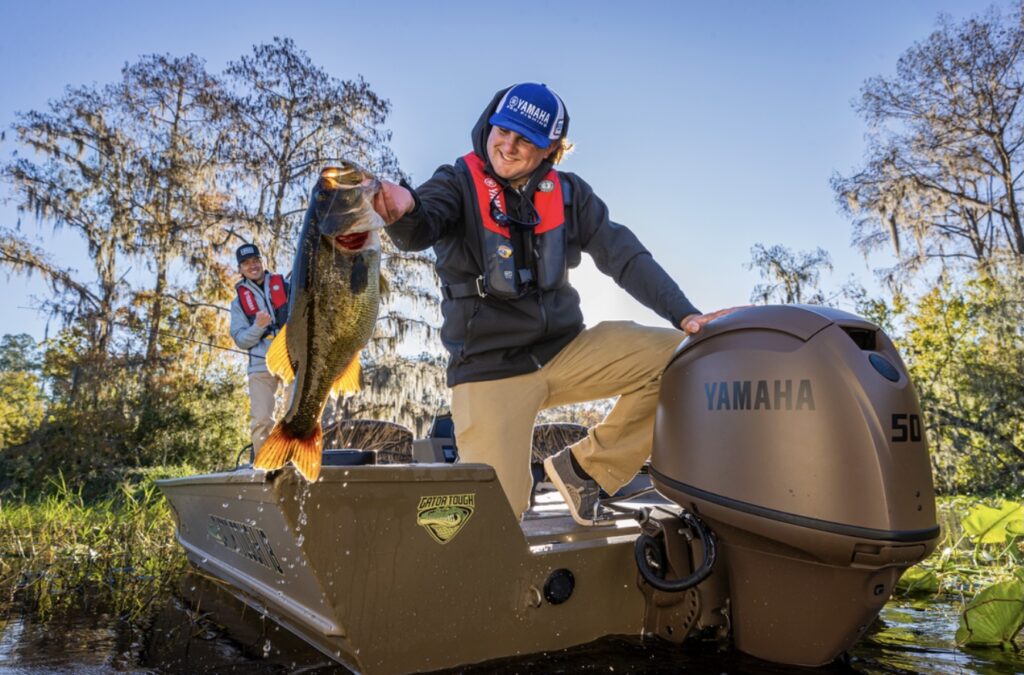
Straddling the Sabine River along the Texas-Louisiana line, Toledo Bend Reservoir remains one of the most consistent big-bass lakes in the nation. At roughly 186,000 acres with more than 1,200 miles of shoreline, it has the size to intimidate newcomers and the structure to reward anglers who do their homework.
Right now, the lake is in its most dynamic period of the year. Late winter has given way to warming trends, redbuds are starting to show along the banks, and water temperatures are climbing into that upper-50s to low-60s range that triggers movement. Bass are transitioning, and Toledo Bend’s network of creeks, points, and timbered flats is coming alive.
The backbone of the fishery is structure. The old Sabine River channel winds through the lower lake, intersected by major creek arms such as Housen, Six Mile, and Indian Mounds. Inside those creeks are secondary drains, channel swings, and tapering points that serve as staging areas every spring.
Prespawn largemouth are pulling off deeper winter structure and positioning along creek channels that swing tight to shallow flats. The most productive areas are those where a defined drop of 10 to 15 feet comes within easy reach of a protected spawning pocket. Bass don’t rush the bank all at once. They move in waves, holding on wood, brush, and subtle contour changes before sliding up when conditions stabilize.
Channel bends with standing timber are especially strong right now. A jig, Texas-rigged creature bait, or suspending jerkbait worked slowly along the break can draw reaction strikes from fish that are feeding up before the spawn. On warmer afternoons, bass are already nosing into 3 to 6 feet of water in the backs of protected coves, particularly where spring rains have put fresh water into the system.
Water level plays a role every year on Toledo Bend. When the lake rises and floods shoreline brush, bass will push into newly covered willows and buckbrush. Flipping and pitching tight to that cover can produce some of the heaviest fish of the season. If the lake remains closer to normal pool, expect fish to relate more to the first available cover off the bank—isolated laydowns, stumps, and small drains feeding into larger pockets.
The spawn is either beginning or imminent in many mid-lake creeks. Firm bottom—sand, clay, or light gravel—near wood is prime real estate. Protected pockets out of the north wind warm fastest, and that slight temperature edge can concentrate fish. Not every bass is shallow yet. Some of the better females are still holding on secondary points and channel edges, waiting on a stable warming trend before committing.
Toledo Bend’s forage base supports this seasonal push. Shad are beginning to move shallow, and bream will follow as water temperatures continue to rise. That combination keeps bass feeding aggressively during the prespawn window. It’s a time when a single bite can be a heavy one.
While largemouth drive most of the attention, spring crappie fishing in Toledo Bend’s creeks deserves mention. The same defined creek channels bass use as migration routes are lined with submerged timber and brush that hold staging crappie. In 8 to 15 feet of water along channel swings, anglers are finding solid numbers of fish suspended around wood.
As water temperatures reach the low 60s, crappie slide into protected pockets with firm bottom in 1 to 3 feet of water, often close to visible timber. Long jig poles and precise vertical presentations shine in the tight cover Toledo Bend is known for. Stained water in many creeks allows crappie to remain shallow during daylight hours, making them accessible throughout the day rather than just at dawn and dusk.
The overlap of bass and crappie patterns makes this time of year unique. An angler can spend the morning targeting prespawn bass along secondary points and channel swings, then ease farther back into a creek and find crappie staging on timbered bends. Both species are keyed on structure, depth transitions, and warming water.

Toledo Bend’s scale means patterns develop in stages. Fish in the southern end of the lake may be slightly ahead of those farther north. Clearer water on one side of a creek can produce a different bite than stained water just a few miles away. Paying attention to water temperature, clarity, and wind protection is critical.
What sets Toledo Bend apart is not just size, but diversity. River ledges, flooded timber, creek channels, and shallow flats all play a role in the spring transition. Anglers willing to adjust between staging structure and emerging spawning areas are finding consistent action right now.
In the coming weeks, more fish will commit to the bank. For the moment, though, Toledo Bend is in that productive in-between phase—when heavy prespawn bass are feeding along channel edges and the first wave of spawners is easing into protected pockets. It is one of the most dependable windows of the year on this border reservoir, and it rewards anglers who understand how fish move through its creeks each spring.