
There’s something exciting about launching into a stretch of water you’ve never fished before. It might be a windswept flat along the middle coast, a tannin-stained East Texas reservoir, or a winding river channel that disappears around a bend you’ve never seen. That sense of discovery is part of what keeps us coming back. But with modern technology, it doesn’t have to mean simply guessing.
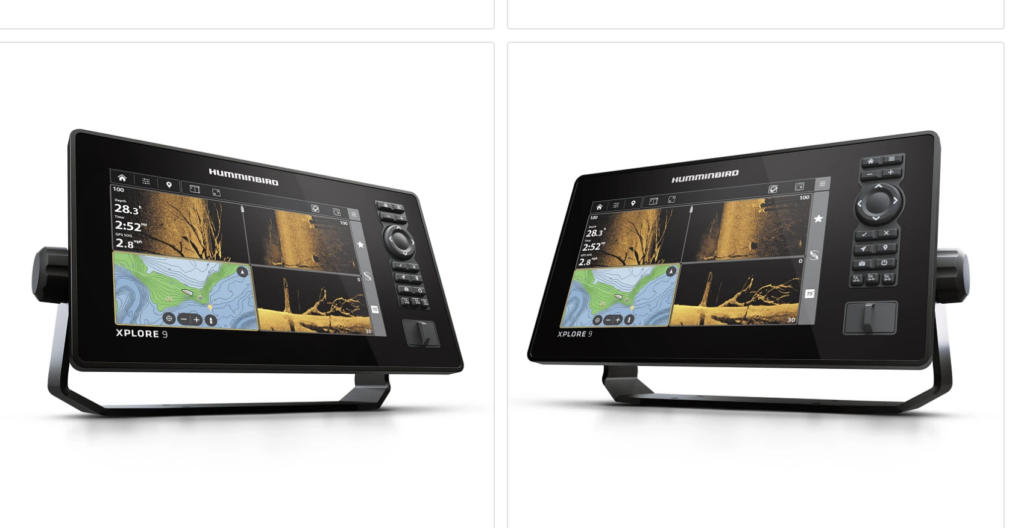
Modern electronics like the Humminbird XPLORE fish finder series have changed how anglers approach unfamiliar water—not by taking away the mystery, but by helping make sense of it quicker.
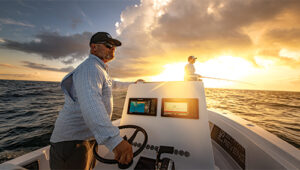
The first thing I do when I hit new water is resist the urge to fish. That might sound backwards, but time spent idling and scanning is rarely wasted. With mapping and sonar working together, you can rule out unproductive water before you ever make a cast. What used to take several trips can now happen in a single morning if you pay attention.
On freshwater lakes, that often means following contour lines until you find a point, ditch, or ledge that concentrates fish. Along the coast, it might be something as subtle as a slight drop across a flat or a drain feeding into a bay. These aren’t always things you can see on the surface, but they show up clearly on a good unit.
Side Imaging® is where it really starts to come together. Instead of only seeing what’s under the boat, you get a look at what’s off to either side. Shell, scattered rock, brush, even bait will show up once you learn what you’re looking at. It doesn’t tell you everything, but it tells you enough to decide whether to stop or keep moving.
That’s the difference. If an area looks empty, you move on. If it shows structure and life, you slow down and work it. Over time, that cuts out a lot of wasted casts.
Still, it’s not about running all over the place. Efficiency comes from fishing with purpose. When you can idle through an area and quickly see whether it has what you’re looking for, you spend more time fishing the right water instead of just hoping something happens.
On freshwater lakes, that often means following LakeMaster® contour lines until you find a point, ditch, or ledge that concentrates fish. Along the coast, it might be something as subtle as a slight drop across a flat or a drain feeding into a bay, easily identified on CoastMaster®. These aren’t always things you can see on the surface, but they show up clearly on a good unit.
Electronics, however, don’t replace judgment. Wind, tide, season, water clarity still matter.
A spot can look perfect on the screen and still not produce. But the more time you spend matching what you see on the unit with what actually happens, the better your decisions get.
One mistake a lot of anglers make is staring at the screen too much. It’s a tool, not the whole picture. Use it to find the right areas, then put it down and fish.
Breaking down new water has always been part art, part experience. What units like the XPLORE do is speed things up. They help you sort through water faster and focus on the places that give you a real chance.
And that’s really the goal—not just catching fish, but understanding why you’re catching them.
That’s where a unit like the XPLORE earns its keep. With MEGA Side Imaging and standard CHIRP sonar, it lets you cover water and pick out the kind of structure that tends to hold fish (shell, brush, and drop-offs) without a lot of guesswork. The side imaging shows you what’s off to either side of the boat, while traditional sonar keeps track of what’s directly below.
It doesn’t replace time on the water. You still have to make decisions and adjust to conditions. What it does is shorten the process. It helps you rule out water that doesn’t look right and spend more time fishing the areas that do.
TF&G Staff