
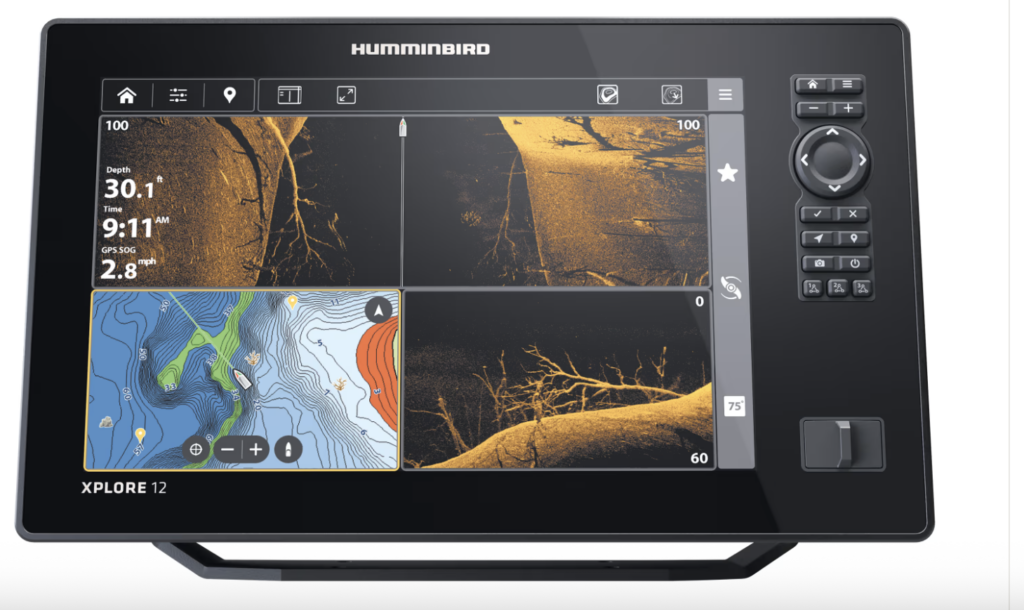
During the prespawn period, bass begin transitioning from deeper wintering areas toward shallow spawning flats. Finding these fish consistently often comes down to understanding their migration routes and using modern fishing electronics to identify the key stopping points along the way.
Start by studying detailed lake maps to locate likely travel routes. Bass rarely move straight to the bank. Instead, they follow structure such as creek channels, secondary points, submerged roadbeds, and underwater ridges as they move shallower. Areas where deeper water swings close to flats or spawning pockets are especially important, as bass frequently stage there before pushing up to spawn. Many anglers use depth highlighting on their electronics to focus on productive prespawn depths, typically between 6 and 15 feet depending on water temperature and lake structure.
As you move through these areas, mark p
otential staging spots with waypoints. Channel bends, rock transitions, grass edges, and isolated cover near spawning flats are all common places where bass pause during the transition. Organizing these spots allows you to quickly return to productive areas throughout the prespawn season.
Forward-facing sonar has also become a major advantage during this time of year. Scanning ahead of the boat allows anglers to see bass relating to structure in real time, whether they are holding along a drop-off, suspended near brush, or grouped along a transition line leading toward shallow water.
Electronics like the XPLORE Series bring these tools together in one system. With built-in LakeMaster and CoastMaster charts, strong waypoint management, and compatibility with advanced sonar like MEGA Live 2, the XPLORE Series helps anglers quickly identify staging areas and track bass as they move along their migration routes toward spawning grounds.