
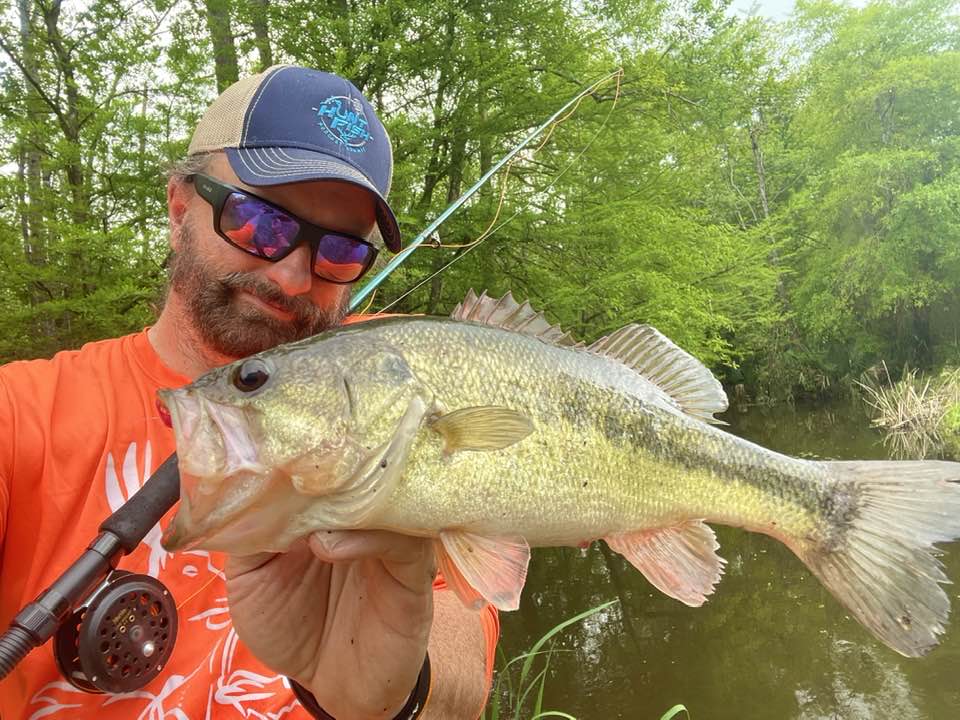
Whether it’s throwing deer hair bugs tight to cover or drifting small flies through pressured water, the whole idea is trying new things until something clicks.
Largemouth bass are fascinating on the fly for the same reason a lot of other species are—there’s a ton of tradition behind how we fish for them. Big poppers, loud strikes, aggressive eats. That’s the image most of us have, and most of the time, it’s exactly how it plays out. Big bass are built to attack, and when they’re in that mode, nothing beats a properly presented surface bug.
But there are plenty of days when that version of bass fishing just doesn’t show up.
Flat water. High pressure. Fish that roll on a fly but won’t commit. You know they’re there—you can see them—but they’re just not buying what you’re selling.
That’s what got me thinking differently.
Instead of going bigger or louder, I started wondering what would happen if I went smaller—but kept the surface element that draws them up in the first place.
This year, I’m planning to experiment with a fly setup built around a small, subtle popper—something trimmed down, not overly bulky, in a bone or natural color. Nothing that screams for attention, just enough to make a presence.
Behind it, I’ll tie a short fluorocarbon dropper and add a much smaller fly. A bead head, a sparse little baitfish pattern, something that actually matches the size of what I often see in the water—tiny fry, little shad, insects stuck in the film.
The idea is simple.
Let the popper do what it’s always done—get noticed. Make a little noise, move a little water, bring fish up from below. But instead of asking the bass to fully commit to that surface bug, give it an easier option trailing just behind.
Because if you watch bass long enough, especially in pressured water, you’ll notice something. They don’t always miss by accident. Sometimes they’re just checking something out. Sometimes they swipe, boil, or nudge without ever really trying to eat.
That trailing fly becomes the real target in that moment.
It’s the thing that looks right after the fish has already been pulled into range.
I think this setup could really shine on those tough days—post-front conditions, clear water, or anywhere fish are getting a lot of pressure. Situations where they’re aware, cautious, and just a little off.
Instead of forcing a reaction, you’re letting curiosity do the work.
It’s not exactly standard fly fishing for bass. Most of us are used to tying on one fly and committing to it. But the more I think about it, the more it makes sense. Bass aren’t always locked into one type of movement or one size of prey. They adjust constantly, and sometimes what they want is just… smaller.
This is just another way to meet them there without giving up the surface bite entirely.
That’s the kind of thing I find myself thinking about when I’m on the water.
If you’ve messed around with anything similar—or have your own off-the-wall fly ideas—I’d be interested