
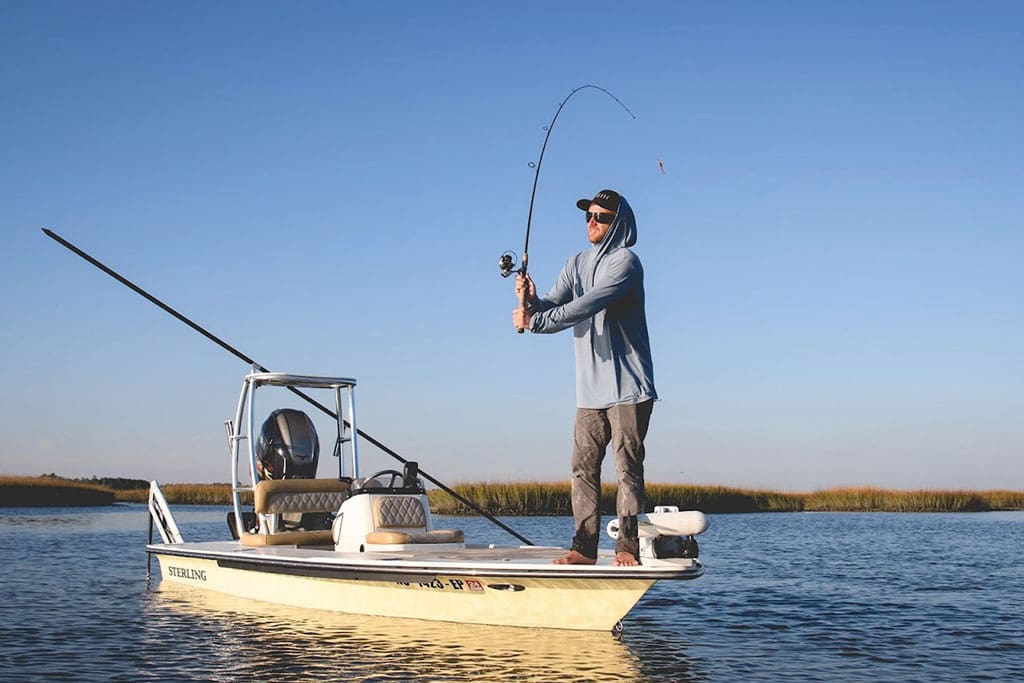
Spring on the Texas coast doesn’t tiptoe in quietly. It barrels in on a stiff south wind that rattles marsh grass, stacks waves across the bays and makes many anglers think twice about launching the boat. Twenty-mile-per-hour winds are common this time of year, and stronger gusts aren’t unusual. And windy days are not easy to fish.
But here’s the truth seasoned coastal anglers understand: if you wait for calm days in the spring, you’ll spend a lot of time at the dock.
Redfish, speckled trout and flounder don’t stop feeding because the wind is blowing. In many cases, they actually feed harder. The trick is learning how to fish around the wind instead of fighting it.
Wind pushes water, and pushed water moves bait. That simple reality reshapes the entire bay system during spring cold fronts and strong southerlies.
(Photo: St. Croix Rod)
One of the first places to look when winds climb over 20 mph is protected shorelines. These are the leeward sides of bays where landmasses, barrier islands, peninsulas or marsh systems block the brunt of the wind. These protected zones often hold cleaner water while still receiving steady tidal flow.
Channels leading into bays along those protected shores can become absolute fish magnets during windy spring days.
When the wind drives water through these funnels, baitfish, shrimp and small crabs get swept along like groceries on a conveyor belt. Redfish line up along the edges waiting for the buffet. Speckled trout hold slightly deeper in the channel guts, and flounder position themselves along the sandy drop-offs ambushing anything that drifts past.
Fishing these areas requires slowing down and working structure carefully.
A popping cork rig with a shrimp imitation or paddle-tail soft plastic is deadly when drifted along channel edges. The noise from the cork helps fish locate the bait in choppy water while the current keeps everything moving naturally.
For trout holding deeper in the channel, suspending twitch baits or heavier jigheads bounced along the slope can trigger aggressive strikes. Let the lure sweep with the current rather than dragging it against the flow.
Flounder anglers should focus on the down-current sides of drains and channel mouths. These flatfish love to sit in the calm pocket just outside the main current where they can dart forward and grab passing bait.
Another overlooked tactic during heavy winds is fishing small cuts and drains along marsh shorelines on protected sides of bays. These narrow openings act like funnels when wind-driven tides push water in and out of the marsh.
When the water begins moving through these drains, predators stack up quickly. Redfish often cruise just outside the mouth of the cut, while trout and flounder settle along the nearby drop-offs.
Cast slightly up-current and allow your lure to sweep naturally past the drain opening. Many strikes happen as the bait swings across the mouth of the current line.
Boat control becomes critical when the wind is howling. Instead of burning up your trolling motor trying to hold position, set up controlled drifts parallel to shorelines or channels. A drift sock can help slow the boat and keep your presentation in the strike zone longer.
And don’t overlook the value of slightly dirty water. When the wind muddies the bay just enough to reduce visibility, predator fish gain an advantage over bait. Reds especially thrive in that off-colored water and will often push shallow along protected banks looking for shrimp and crabs stirred up by the chop.
The biggest mistake anglers make on windy spring days is staying home.
Some of the most productive fishing of the season happens when whitecaps roll across open water and the marsh grass bends in the breeze. The wind concentrates bait, positions predators and creates feeding lanes throughout the bay system.
The anglers who learn to fish protected shorelines, channels and marsh drains when the wind is pushing past twenty miles per hour discover something important.
On the Texas coast, the wind isn’t just something to tolerate.
It’s something to use.
TF&G Staff