
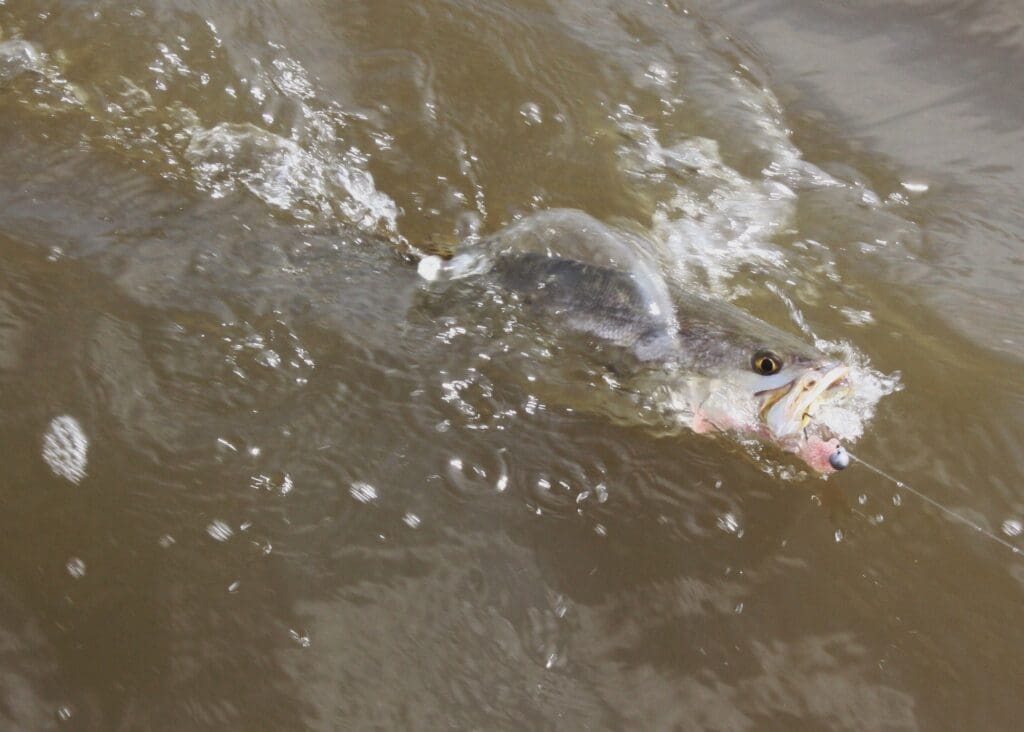
If you’re chasing speckled trout (spotted seatrout), you probably already look for the obvious stuff—bait flipping, birds working, or fish blowing up on the surface. But a lot of times, trout don’t make it that easy. Some of the best clues are subtle, even a little strange, and easy to pass right by if you’re not paying attention.
Here are three signs that don’t always look like much at first, but can mean trout are close.
One thing to watch for is what anglers call “nervous water.” It’s not big splashes or obvious feeding—just little ripples, flickers, or patches of water that look unsettled for no clear reason. A lot of times, that’s trout moving just under the surface, picking off small bait like shrimp or tiny minnows. They’re feeding, just not aggressively. If you see that kind of movement, it’s worth slowing down and making a few casts instead of running past it.
Another clue is sound. Early in the morning or right at dusk, you might hear light popping or ticking noises on the water. It’s easy to ignore, especially if you don’t see anything, but that’s often trout feeding. Unlike some fish that smash bait, trout will just sip it in with a quick motion, which makes that soft popping sound. If you hear it happening in the same area more than once, there’s a good chance fish are there.
The last one is probably the strangest—slicks on the water that have a smell to them. You’ll sometimes see small, oily-looking patches on the surface that show up out of nowhere. When you drift through them, they can have a faint sweet smell, almost like watermelon. Those are often feeding slicks, created when trout crush baitfish and release oils into the water. If you find a fresh slick like that, you’re usually close to where fish are actively feeding.
Speckled trout don’t always give themselves away in obvious ways. A lot of the time, it’s these small, easy-to-miss signs that tell the real story. Paying attention to them can make a big difference, especially on days when the bite seems slow.
TF&G Staff