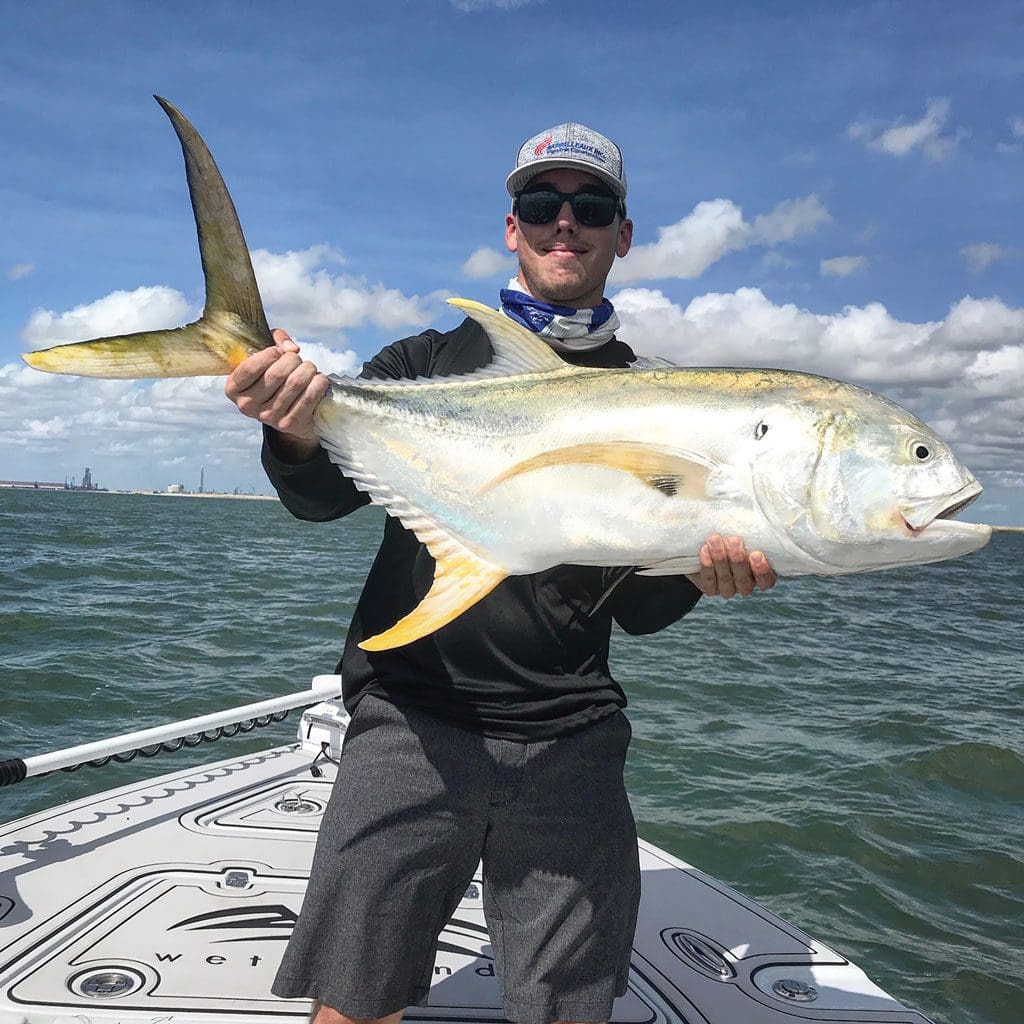
The first time I saw a jack crevalle hit a topwater, it was in the Chandeleur Islands, and it left an impression that still sticks with me.
The water was slick calm that morning, with nervous schools of mullet flipping across the surface. I made a long cast with a topwater plug and started working it back, slow and steady. Then, out of nowhere, the water detonated.
At first, I thought it was a big shark because it hit so hard!
The strike was violent—way more than I expected. Mullet sprayed everywhere, and for a second it didn’t even seem real. Then the line tightened and started ripping off the reel, and it became clear this was something else entirely. That was my introduction to jack crevalle on topwater, and it showed me just how intense these fish can be.
Along the Texas coast, especially this time of year, jacks begin running the surf in small packs, chasing bait right up against the shoreline. They’re constantly on the move, and that’s something to remember—you won’t always find them in one spot for long. A lot of times you’ll actually see them pushing bait fast, like a wave of nervous energy moving down the beach. Mullet will start jumping in a straight line, water will bulge or churn, and if you’re paying attention, you can track the fish just by watching that movement.
In the bays heading into early summer, they feed heavily on mullet and cutlassfish, hitting with the same kind of speed and aggression. They don’t ease into a meal very often.
That’s part of what makes topwater fishing for them so fun.
You don’t need a complicated approach. A basic walking bait or popping lure works well. Just keep a steady retrieve and let the lure make some noise. These fish are aggressive feeders, so getting their attention isn’t usually the hard part.
One key tip: when a jack blows up on your lure, don’t try to set the hook right away. The strike can be so explosive that it makes you react too fast. Give it a second and wait until you feel the weight of the fish and then set the hook. That simple pause can help you hook up more consistently.
Also, be ready for the fight. Jacks are powerful and don’t give up easily. Even a moderate-sized one will make long, strong runs and test your gear.
If you’re fishing the surf, keep moving and keep scanning. Look for birds, bait activity, or that fast-moving push of water that signals feeding fish. In the bays, focus on areas where bait gets concentrated, like points or channels.
Matching your lure to the bait helps too. Bigger mullet calls for a larger topwater, while slimmer bait like cutlassfish might mean using something more narrow and flashy.
That morning in the Chandeleurs taught me when a jack crevalle decides to hit, it does it with speed and force. And when it happens on topwater, it’s loud, sudden, and a whole lot of fun.
Chester Moore