
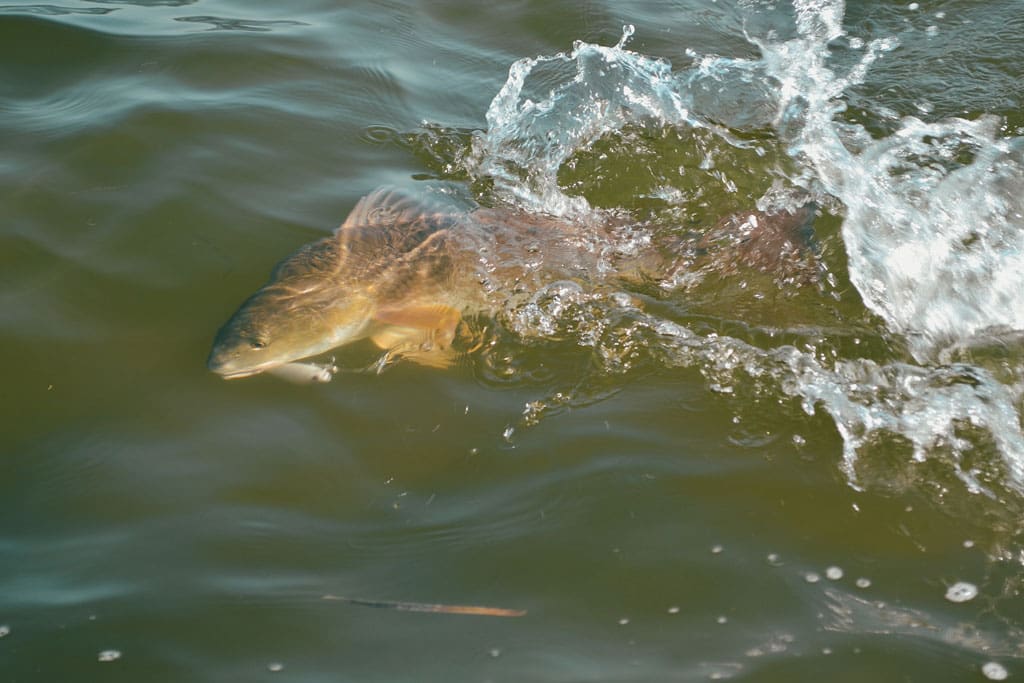
On a warm spring day, my friend Thad Daly and I headed out to the Sabine River and surrounding marshes in search of flounder and redfish, planning to cover both the brackish Louisiana side bayous and a few stops on the Texas side before heading home.
We picked up a few fish in one of the larger bayous across the line—mostly flounder with a red or two mixed in—before making a last stop at the Dupont Outfall Canal on the Texas side of the Sabine. That’s where things got interesting.
There were shad everywhere, and something had them extremely nervous. At first glance it looked like trout feeding, though it seemed a bit early for that area. Once we spotted needlefish in the mix, however, it became clear the salinity was high enough to support a variety of species.
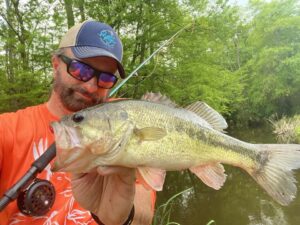
Some of the strikes looked more like bass than trout, and after a few minutes I hooked into a solid one on a Gulp! Swimming Mullet. It hit hard enough that I initially thought it was a redfish. Not long after, Thad stuck a nice red on a soft plastic tipped with shrimp. After that, though, it was mostly bumps and short strikes despite all the activity.
Given what we were seeing, there should have been a lot more catching going on.
Over the years I’ve learned that brackish water can make fish behave in unpredictable ways. You might have redfish cruising, flounder staging nearby, bass blowing up on shad, and small trout mixed in—all in the same stretch. Sometimes bass will be aggressively feeding but refuse anything you throw unless you match the hatch perfectly in both size and color.
There were a few larger shad in the mix, which likely explains the bass I caught. The smoke-colored lure matched the general tone of the bait, and the metal flakes helped with visibility. Downsizing to something closer to the exact size of those smaller baitfish probably would have produced more bites.
We also noticed a lot of small speckled trout under the shad—five- and six-inch fish, likely mixed with sand trout. These smaller fish can create a lot of surface activity, making it look like quality trout are feeding. In reality, you end up with the kind of light taps and short strikes we experienced.
It’s a good reminder that when you’re fishing brackish river systems, things aren’t always what they seem. Redfish and flounder may be the primary targets, but the mix of species can complicate the pattern. Adjusting your approach—downsizing lures, matching bait more precisely, and staying observant—can make all the difference.
And when you do connect with those target species, especially redfish and flounder, it’s worth taking a moment to check for tags. Photograph the tag, clip it if necessary, and report the information. Those few extra steps help biologists better understand how these fish move through systems like the Sabine and ultimately lead to better management.
Find much more with Humminbird XPLORE
As Texas Fish & Game boating editor Lenny Rudow says, “These programs are important for gathering information about fish stocks, catch rates, growth rates, and more.” Even one reported fish can provide valuable data—especially when it’s released to be caught again another day.
And while helping the fishery is the main goal, there’s sometimes a bonus. In events like the CCA STAR Tournament, anglers who report tagged fish can even win prizes.
But even without that incentive, taking the time to report a tag helps ensure that fisheries like the Sabine system—and the redfish and flounder that make it special—stay strong for years to come.
Chester Moore