
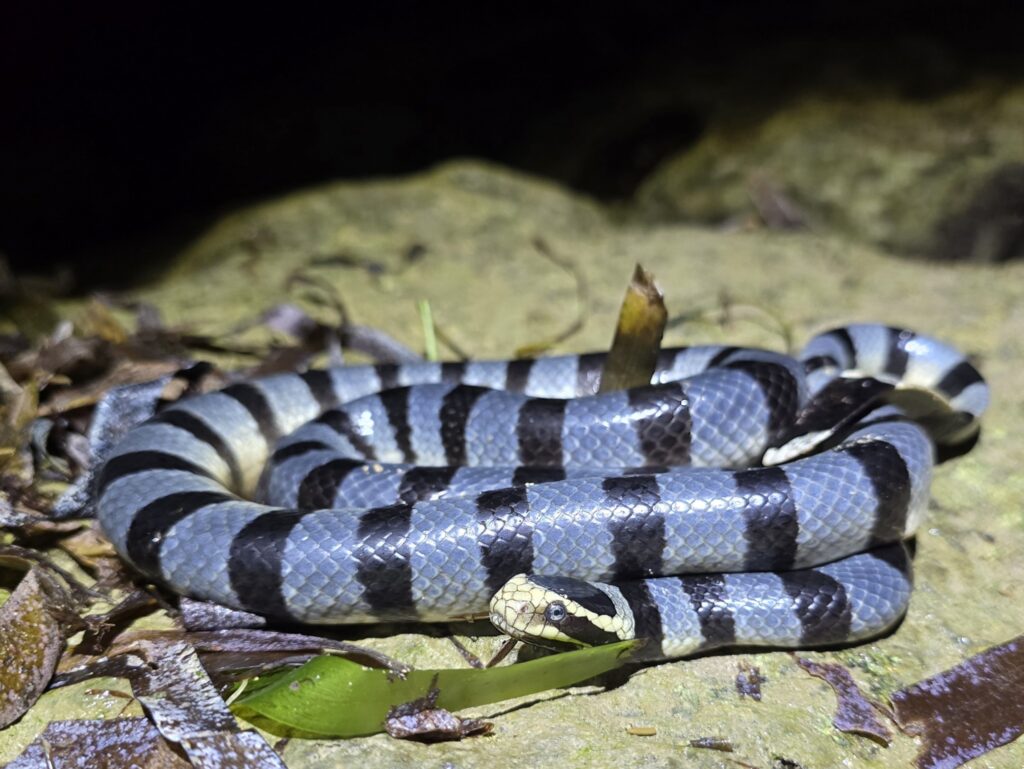
Reports have surfaced for years of something that shouldn’t exist in the Gulf of Mexico—highly venomous sea snakes, far outside their known range.
In a 2018 account from Higher Calling Wildlife, an experienced angler described a strange encounter near an offshore structure. A banded, paddle-tailed “snake” emerged from beneath floating weeds and swam at the surface, clearly visible for several minutes. He was certain of what he saw.
Hear reports of sea snakes in the Gulf on this episode of Dark Outdoors®.
But there’s a problem.
Sea snakes aren’t supposed to be there.
These reptiles are native to the Pacific and Indian Oceans, not the Gulf or the Atlantic. And yet, similar sightings keep appearing—off oil rigs, along beaches, even in open water. Some witnesses describe distinctive black-and-white banding consistent with species like sea kraits, while others report multiple animals moving together near the surface.
There are explanations.
Some scientists and observers believe many of these sightings are misidentified snake eels, which can resemble sea snakes in both shape and movement. Others point to rare possibilities—animals drifting across oceans on currents or even transported unintentionally through ship ballast systems.
And some sightings remain harder to dismiss.
Decades of scattered reports—some from experienced outdoorsmen—raise a question that hasn’t gone away: are these all cases of mistaken identity, or is something occasionally entering waters where it doesn’t belong?
That’s where this story begins.
Because out in the dark, far from shore, when something surfaces that shouldn’t be there… you don’t always get an answer.
In this episode of Dark Outdoors, we take that question offshore—where one fisherman encountered something in the water that turned a quiet night into something far more unsettling.