
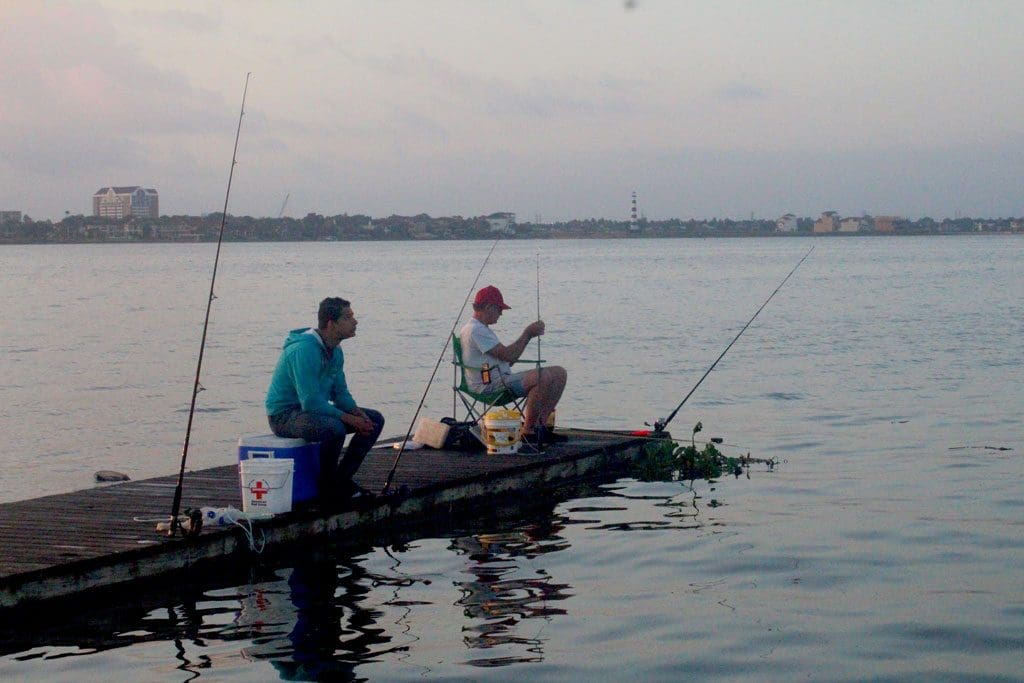
There’s something honest about bank fishing the Texas coast. No tower boat. No long runs offshore. Just you, a rod, some tide movement, and the hope that a redfish or trout is cruising close enough to make your drag sing.
But the anglers who consistently catch fish from shore usually know a handful of little tricks that separate them from the folks chunking bait into empty water. Some of those tricks are practical. Some look downright weird. And a few feel almost too simple to matter — until you watch them work.
One of the oldest tricks along the Texas coast is using chum to pull fish closer to casting range. Wade fishermen and boat anglers have done it forever, but bank fishermen can use it too.
A favorite old-school method is chunking menhaden, or “pogies,” into small pieces and tossing them into a drain, cut, or shoreline pocket where current is moving. Fresh pogies create a slick that carries scent down-current and pulls in everything from mullet to trout, reds, and even black drum.
But here’s where the trick gets interesting.
Some hardcore bank fishermen carry wrist-rocket slingshots in their tackle bags. Not for target practice — for launching chum farther than they could ever throw it by hand.
A balled-up wad of cut pogies or crushed shrimp can be fired 30 or 40 yards into a marsh drain or current seam. That lets an angler create a scent trail well beyond normal casting distance. In places with shallow mud flats or marsh edges, this can draw fish closer without ever stepping into the water.
Another variation is freezing menhaden chunks inside small mesh bags or onion sacks. The frozen chum thaws slowly and creates a longer-lasting scent line. Some anglers tie the bag to a rope and toss it near rocks, pilings, or cuts where water funnels through. Instead of a quick burst of scent, the area stays active for an hour or more.
The Texas coast is full of subtle current movement, and successful bank fishermen learn to fish water movement instead of just fishing spots.
A tiny drain emptying from a marsh pond at falling tide can hold more redfish than an entire shoreline. Same goes for small guts that cut across mud flats. These places concentrate bait naturally.
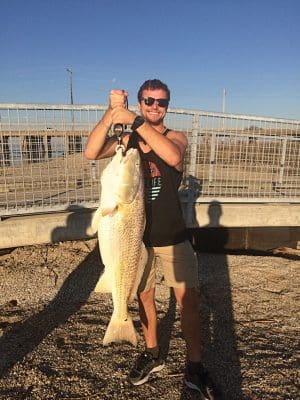
48 pounds. Gig ‘Em!
One trick veteran anglers use is tossing a handful of live shrimp or finger mullet into a drain before they ever cast. Not enough to feed the fish — just enough to get nervous bait activity started. Predator fish often react immediately when they see mullet flicking or shrimp skipping across shallow water.
Another overlooked trick is using sound.
Bank fishermen sometimes accidentally scare fish by stomping around on docks or banging tackle boxes against concrete. Coastal fish in shallow water are incredibly sensitive to vibration.
Smart anglers use that to their advantage.
Some quietly tap the water surface with the butt of a rod or lightly splash bait near grass lines to imitate feeding mullet. Others intentionally fish near noisy structure like ferry landings, culverts, or bridge washouts where fish are already conditioned to constant sound.
Shade is another major factor most casual anglers ignore.
In summer, dock shadows, bridge shade, and even the shadow line from marsh grass can stack fish during bright afternoons. Trout especially love ambush points where shade meets moving water.
A simple but deadly trick is casting past the shade line and slowly swimming a paddle-tail or suspending bait into the darkness. Many strikes happen the instant the lure crosses from sunlight into shade.
Texas bank fishermen also get creative with elevation.
Sometimes being higher helps more than being closer. Standing on a cooler, dock railing, or elevated shoreline lets anglers spot bait movement, wakes, nervous water, and cruising reds they’d otherwise never see.
Polarized sunglasses become almost as important as the rod itself.
Some aggressive Texas bank fishermen use what they jokingly call “power chumming.” Instead of tossing out a few scraps and waiting, they actively fire up feeding activity by throwing handfuls of live shrimp, mud minnows, or tiny finger mullet into a current line a little at a time.
The goal isn’t feeding fish. It’s creating chaos.
When shrimp start skipping across the surface or minnows begin scattering in panic, predator fish often react instantly. Trout may start slicking. Redfish push wakes toward the commotion. Sometimes gulls even give the whole thing away.
A few hardcore anglers carry cast-net bait in floating bait buckets and toss small handfuls every few minutes while fan-casting artificials nearby. Along marsh drains and channel edges, this can completely change a slow bite.
One especially slick version involves using a wrist-rocket slingshot to launch live shrimp or small chunks of mullet far beyond casting range. That lets the angler start feeding activity where fish already feel comfortable before drawing them gradually closer. In calm water, the sound of shrimp snapping and bait flicking can trigger reaction strikes even before the scent spreads.
One of the sneakiest tricks involves feeding mullet.
Along many coastal shorelines, mullet schools stay nervous around predator fish. If you see mullet constantly jumping, flipping, or pushing tight against the bank, predators are usually nearby.
Experienced bank fishermen don’t always cast directly into the mullet. Instead, they cast ahead of the school’s direction of travel and let the lure sit still or move slowly. Reds and trout often trail behind bait schools waiting for stragglers.
Night fishing opens another world of tricks.
Dock lights can create miniature food chains. Tiny shrimp gather in the glow. Glass minnows show up next. Then come trout and reds.
The biggest mistake beginners make is casting directly into the brightest part of the light.
The smarter move is targeting the edge — where darkness meets illumination. Predator fish often sit just outside the light cone waiting to ambush bait drifting out.
And then there’s the simplest trick of all.
Mobility.
The best coastal bank fishermen rarely stay in one spot too long. If bait isn’t present, current isn’t moving, or the water looks dead, they move.
Sometimes success comes from covering shoreline until you locate life: mullet flipping, shrimp popping, slicks forming, birds dipping, or wakes pushing shallow.
The Texas coast rewards anglers who pay attention.
A slingshot full of pogies might sound crazy to somebody driving over the causeway. But along marsh drains and windy shorelines from Sabine to Port Mansfield, little tricks like that can mean the difference between soaking bait all afternoon and hooking into a copper-backed redfish five feet from the bank.
That’s the beauty of coastal bank fishing.
You don’t need a $70,000 boat, which are great.
Sometimes you just need sharp eyes, moving water, and a pocket full of sneaky ideas.
Chester Moore