
Back in the day, most of my hog hunting around Southeast Texas involved sitting on the edge of a field with a rifle and a red-filter light. That setup worked, and honestly it still does in plenty of situations. We killed a lot of hogs that way over the years, watching trails and field edges and waiting for pigs to slip out after dark.
But a decade ago during an early summer hunt, I got my first real look through a thermal optic, and it completely changed the way I viewed nighttime hog hunting.
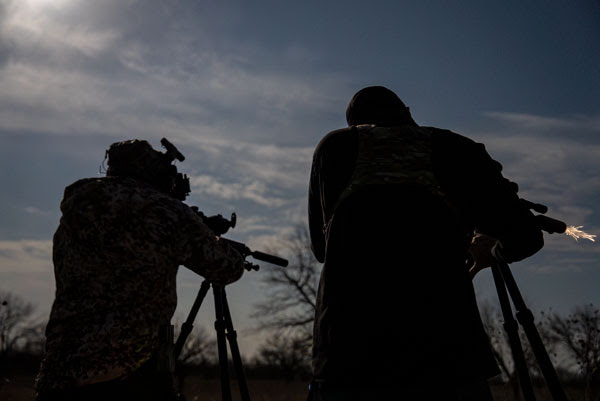
Instead of sweeping fields with lights and hoping hogs wouldn’t spook, thermal optics allowed us to spot animals instantly in complete darkness. Hogs that would’ve been nearly impossible to see with the naked eye suddenly stood out clearly through the thermal. You could watch them feeding, moving along tree lines or crossing openings without ever alerting them.
That was the moment I realized how much hog hunting had changed.
Early summer is prime time for hog hunting in Texas because the heat pushes pigs into heavy nighttime activity. Most movement happens after sunset when temperatures cool down. Hunters usually focus on fields, water sources and travel corridors where hogs are feeding regularly. Fresh rooting, tracks and muddy wallows are all signs pigs are active in the area.

But one thing that hasn’t changed — no matter how advanced the technology gets — is the importance of safety and knowing exactly what you’re shooting at.
That’s especially important in Southeast Texas where cattle, horses and other livestock often share the same pastures and fields hogs use after dark. Thermal optics are incredibly effective, but hunters still need to positively identify animals before ever pulling the trigger. A quick shot at movement in the dark can lead to disaster if someone mistakes livestock for hogs.
Good hunters take their time.
You also have to pay attention to what’s beyond the target. Rural properties around Winnie and much of coastal Texas can include roads, pipelines, neighboring homes and equipment yards not far from hunting areas. Just because thermal technology allows you to see better doesn’t mean basic hunting responsibility goes away.

Wind direction still matters too. Hogs may not see you easily at night, but they’ll still smell you in a heartbeat. Most successful hunters move slowly, scan constantly and avoid rushing shots. Thermal optics help tremendously, but patience and common sense are still a huge part of the hunt.
I still appreciate the old-school side of hog hunting. There’s something about sitting quietly under the stars with a red-filter light that feels simple and familiar. Those methods worked for generations of Texas hunters and still have a place today.
But there’s no denying thermal optics have changed the game, especially for landowners and hunters trying to control large numbers of destructive feral hogs. The ability to quickly locate animals and make clean, ethical shots has made nighttime hog hunting far more effective than it used to be.
The downside, of course, is cost. Good thermal equipment can be expensive, which is why many hunters are looking for practical ways to upgrade without completely starting over.
Chester Moore
Upgrading Into Thermal Hunting
As thermal optics continue to grow in popularity among Texas hog hunters, companies like Southern Precision Outdoors are helping make the transition more affordable.
The family-owned company specializes in thermal and night vision equipment and offers a trade-in program that allows hunters to apply the value of eligible optics toward newer thermal technology. For hunters who already own older thermal or night vision gear, it can make upgrading much easier financially.
Southern Precision Outdoors also stands out because the people behind the company actively hunt with the gear they sell, including regular hog and predator hunts across Texas. That hands-on experience helps customers choose optics that fit their hunting style, property size and budget.
As a Platinum Dealer for Nocpix, the company carries a full line of thermal optics along with customer support and upgrade guidance.
Outdoor writer Lou Marullo recently praised the company’s hunter-focused approach, calling the trade-in program “a smart and practical way to upgrade.”