
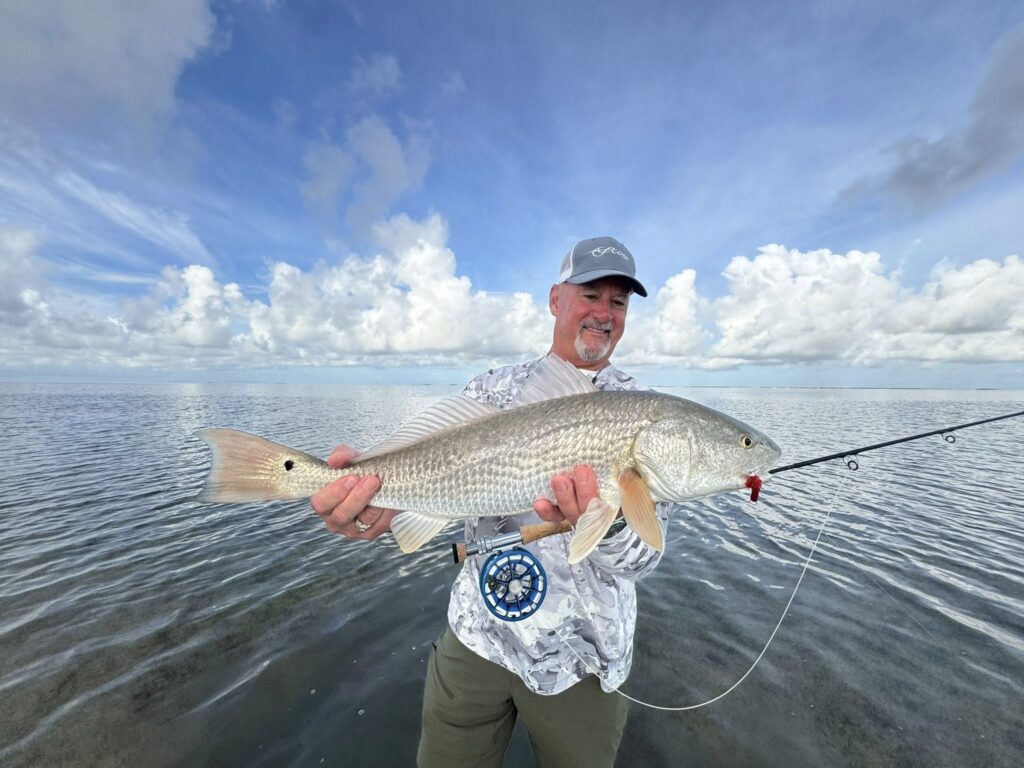
Some places capture your imagination long before you ever see them. For me, the Lower Laguna Madre was one of those places.
Over the years, I had heard countless stories about the shallow-water fishery stretching along the Texas coast near South Padre Island. I had seen photos of copper-colored redfish gliding across clear seagrass flats and listened to fly fishermen talk about sight-casting opportunities that sounded more like something from Florida than Texas. Having fished virtually every stretch of the Texas coast and spent time fly fishing the famous flats of Florida, I was curious to see how the Lower Laguna compared.
And early in my career I got to fish there and was blown away. That’s why every time I get a chance to return I do my best to make it happen-even though it’s a nearly eight hour drive from Southeast Texas to gett here.
Recently, I had the chance to find out when my friend Gray Thornton invited me to spend three days on the water with Captain Eric Glass.
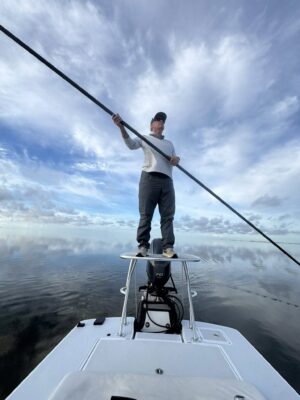
The timing couldn’t have been better.
Both Gray and I had been buried in demanding projects over the previous month. Like many outdoorsmen, we needed a break from deadlines, schedules and the constant demands of work. We needed a few days where the biggest decision was whether the fish would be on a shoreline, a grass edge or a shallow flat.
As soon as we launched, it became clear why anglers from across the country travel to fish this remarkable ecosystem. The water glowed in shades of green and blue, and endless seagrass meadows stretched beneath the surface. Everywhere you looked seemed capable of holding fish.
What impressed me most wasn’t simply the habitat. It was the sheer amount of life.
Mullet pushed wakes across the flats. Rays glided beneath the boat. Shorebirds worked the edges of the grass. Everywhere there seemed to be movement, and with that movement came possibility.
The fishing started quickly.
One of the first truly memorable situations we encountered involved small schools of hardhead catfish. Around those catfish were feeding redfish and speckled trout. It was a fascinating interaction most people might not expect to come across. The predators moved through and around the catfish schools, creating opportunities for us to make presentations with the fly rod.
In many ways, it reminded me of the Florida flats. The clear water, expansive seagrass meadows and emphasis on spotting fish before making a cast all created a completely different experience than what most anglers envision when they think about Texas coastal fishing. Yet it still retained its own identity, one shaped by the unique geography and ecology of South Texas.
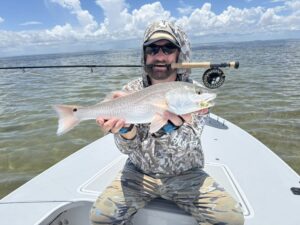
The first thing that struck me was how often we saw fish.
Redfish appeared throughout the trip. Speckled trout showed themselves in places where many anglers might not expect to find them. Black drum materialized over the grass like giant shadows. The fish were there every day, and often in impressive numbers.
What made things interesting was that many of those fish were far from easy.
Some days were relatively calm while others brought stronger winds. One day in particular tested our casting ability more than the others, but the weather never detracted from the experience. In fact, the changing conditions simply added another layer to the challenge.
Many of the redfish were exceptionally spooky. They lived in clear, shallow water and behaved like fish that had seen plenty of anglers. A cast that landed too hard or a fly that moved unnaturally could end the opportunity in a heartbeat.
That’s what made every successful presentation so rewarding.
Gray Thornton is one of the most accomplished fly fishermen I’ve had the privilege of fishing alongside. Watching him work through challenging situations was impressive. He consistently delivered accurate casts and made the most of opportunities that might have overwhelmed less experienced anglers.
I have fly fished in roughly ten states and spent much of my life studying fish, wildlife and their habitats. I consider myself a good fisherman, but I am also realistic enough to recognize where my strengths and weaknesses lie. I don’t spend nearly as much time sight-fishing from a skiff as many dedicated saltwater fly anglers.
The Laguna reminded me of that.
I missed a few shots I’d like to have back. There were moments when I rushed casts or misjudged distances. But that’s part of fly fishing, particularly when you’re targeting fish you can actually see.
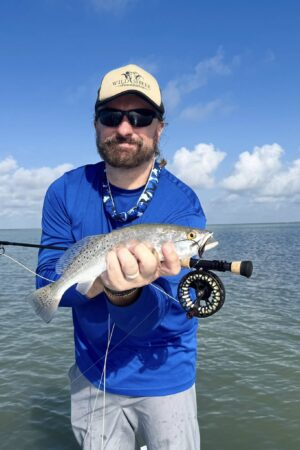
Fortunately, I also connected.
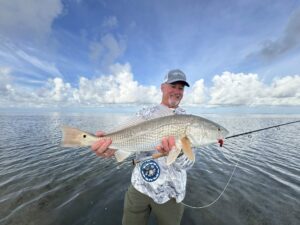
Over the course of the trip, I landed both redfish and speckled trout on fly tackle. Watching a redfish appear from a seagrass flat, track a fly and then suddenly commit is one of the most exciting experiences in fishing. It never gets old.
What made the experience even more meaningful was that it mirrored a previous trip to the Lower Laguna Madre. The last time I visited the area was also with Gray Thornton and Captain Eric Glass. Looking back, I caught about the same number of fish during that trip as I did on this one.
The similarity reinforced something I’ve come to appreciate more with age.
The best fishing trips aren’t always measured by numbers.
What stood out from both trips wasn’t a huge catch total. It was the quality of the experience. The opportunity to sight-fish for redfish and trout in one of the most unique ecosystems on the Texas coast. The chance to spend time outdoors with good people. The opportunity to observe wildlife and learn something new about a fishery that continues to fascinate me.
One of the things I enjoy most about fishing with great guides is that they teach you how to see things you might otherwise miss.
Captain Eric Glass did exactly that.
Throughout the trip we encountered numerous cownose rays and southern stingrays moving across the flats. Most anglers notice the rays and move on. Captain Glass explained how redfish often take advantage of them. As rays move across the bottom, they stir up shrimp, crabs and other forage. Redfish will frequently follow behind them, feeding on whatever becomes exposed.
Once he pointed it out, we started paying much closer attention.
Suddenly every ray became more than just another animal moving across the flat. It became a potential clue. In several instances, we found ourselves watching rays just as carefully as we watched the water for redfish.
The Lower Laguna Madre seemed filled with these kinds of relationships.
Every species appeared connected to another in some way. The more time we spent on the water, the more apparent those connections became.
One of the most unforgettable moments of the trip had nothing to do with fishing.
During a period of lower water, we spotted a coyote on a small island. At first, it appeared to be hunting. Considering the abundance of wildlife concentrated in the area, it wasn’t difficult to imagine the predator searching for an easy meal.
Eventually the animal realized we were nearby.
When it did, it took off running.
To our amazement, the coyote splashed off the island and began crossing the shallow flats. It moved steadily through the water toward another island while we watched from the boat.
It was one of those moments that reminds you why outdoor adventures are about much more than fish.
In a matter of minutes, we had gone from watching redfish and black drum to observing a wild coyote navigating a marine environment. It’s not something I expected to see, and it’s certainly not something I’ll forget.
The wildlife encounters continued throughout the trip. Massive black drum cruised shallow water. Rays moved gracefully beneath the surface. Birds worked the shorelines and grass beds. Everywhere we looked there seemed to be another reminder of how rich this ecosystem truly is.
As someone who has spent much of his career advocating for wildlife conservation, I couldn’t help but think about the importance of protecting places like the Lower Laguna Madre.
The seagrass meadows that make this fishery so productive are among the most valuable habitats on the Texas coast. They provide nursery areas for fish, shelter for countless marine species and support an entire food web that extends far beyond the water itself.
Healthy seagrass means healthy fisheries.
Healthy fisheries support recreational opportunities, local economies and traditions that have existed for generations.
When you’re standing on a skiff watching redfish cruise over emerald grass flats, conservation isn’t an abstract concept. It’s right beneath your feet.
The experience left me with a renewed appreciation for what makes this area so special and why it deserves continued stewardship.
As our final day on the water came to a close, I found myself reflecting on how fortunate I have been throughout my life. As a boy, I dreamed of adventures like this. I dreamed of pursuing fish in faraway places, learning from talented outdoorsmen and spending time in wild landscapes that stirred the imagination.
And there was more.
I was able to share a boat with one of the finest fly fishermen I know. I learned from a guide whose understanding of the ecosystem runs deep. I caught redfish and speckled trout on fly tackle. I watched a coyote cross a shallow flat and gained an even greater appreciation for one of the most remarkable fisheries in Texas.
Most importantly, I had the chance to step away from the noise of everyday life and spend time in a place where the rhythms of nature still set the pace.
For that, I am grateful.
Grateful for friends like Gray Thornton.
Grateful for guides like Captain Eric Glass.
Grateful for healthy fisheries and wild places.
And grateful to the Lord for opportunities to experience things that once existed only in the dreams of a young outdoorsman who couldn’t get enough of fish, wildlife and the adventures they inspire.
The redfish, trout and black drum were certainly memorable, but years from now what I’ll probably remember most is the feeling of standing on those endless emerald flats, scanning the water with friends, knowing that at any moment another fish or another surprise might appear.
That’s the magic of the Lower Laguna Madre, and it’s why I suspect I’ll keep returning whenever the opportunity arises.
Reach out to Capt. Eric Glass here.
Chester Moore