
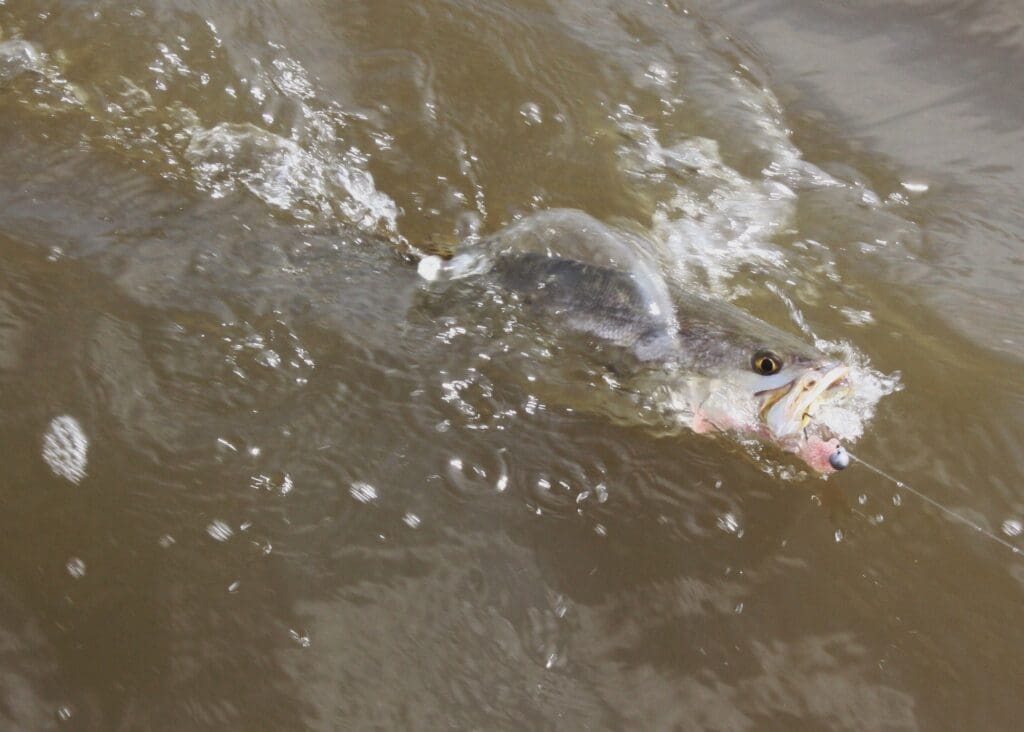
I still remember the day the late Captain Phillip Samuels taught me one of the most valuable fishing lessons I’ve ever learned. It happened years ago on the lower stretches of the Neches River near Sabine Lake, where freshwater from the river mixes with the saltier waters of the estuary. At first glance, it didn’t look like much—just a faint line across the water where one color met another. But Captain Samuels saw something entirely different.
“That’s a dinner table,” he told me, pointing to the distinct color change where muddy river water met cleaner, greener water. He explained that these current lines act like natural gathering places.
Baitfish, shrimp, and other forage are pushed along by the current and often concentrate along these edges. Predators like speckled trout and redfish learn to patrol them, waiting for an easy meal.
Instead of drifting right down the middle of the color change, Captain Samuels positioned the boat on the clearer side of the line. His reasoning was simple: trout and reds often hold in the cleaner water where they can see better, then dart into the stained water to ambush prey. He handed me a freelined live shrimp rigged with a small split shot about a foot above the hook and told me to cast parallel to the edge.
It didn’t take long. The line twitched, I reeled down, and a solid speckled trout came to the surface shaking its head. Throughout the morning, we caught trout after trout, mixed with several redfish. When the shrimp became hard to find, we’d switch to live mud minnows, and the fish didn’t seem to mind at all.
That day taught me that fishing isn’t always about finding structure on the bottom. Sometimes the structure is right there on the surface. Color changes, current seams, and water clarity transitions can be just as important as reefs, points, or drains.
A few lessons from Captain Samuels still stick with me today:
- Fish the clean side of the color line whenever possible. Predators often use the clearer water to spot prey.
- Cast parallel to the seam instead of directly across it. Your bait stays in the strike zone longer.
- Use just enough weight. A freelined shrimp with a small split shot drifts naturally and looks vulnerable.
- Watch the current. The sharper the seam, the more likely bait is being concentrated.
- Try both live shrimp and mud minnows. Some days trout prefer shrimp, while redfish can be especially fond of mud minnows.
- Focus on moving water. Current is the engine that makes these feeding zones work.
Every time I see a distinct water line in a river, bayou, or marsh drain feeding into a bay system, I think back to Captain Phillip Samuels. What looked like a simple change in water color was, in his eyes, a roadmap to feeding fish.
Chester Moore