

Few reservoirs in America can match Toledo Bend for size, diversity, and angling opportunity. Stretching along the Texas-Louisiana border through the heart of the Pineywoods, this massive impoundment has earned a reputation as one of the premier freshwater fisheries in the South.
Created when the Sabine River was impounded in the 1960s, Toledo Bend covers approximately 181,600 acres and boasts more than 1,200 miles of shoreline. The reservoir extends roughly 65 miles from north to south, creating a vast aquatic ecosystem filled with creek channels, flooded timber, brushy coves, expansive flats, and deep river ledges. The result is a fishery capable of supporting a remarkable variety of gamefish and providing year-round opportunities for anglers of every skill level.

While Toledo Bend is often associated with largemouth bass, the reservoir’s broader fishery is what truly makes it special.
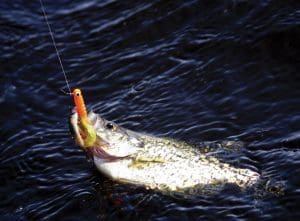
The lake supports healthy populations of black and white crappie, and many anglers consider it one of the most productive crappie destinations in East Texas. Extensive standing timber, submerged brush, creek channels, and habitat enhancement projects provide ideal conditions for these popular panfish.
Spring spawning runs attract crappie anglers from across the region, but the fishery remains productive throughout the year. During summer and winter, anglers often target brush piles and timber along creek channels where schools of crappie congregate. Fisheries surveys conducted by Texas Parks and Wildlife Department consistently show strong populations of both black and white crappie.
The reservoir has also produced impressive trophy fish. Official Toledo Bend records include a 4.00-pound black crappie and a 3.44-pound white crappie, demonstrating the lake’s potential for producing slab-sized fish that few waters can match.
Catfish are another major draw.
Blue catfish, channel catfish, and flathead catfish all thrive in Toledo Bend’s fertile waters. Anglers pursuing catfish can fish shallow flats, river channels, creek mouths, or timbered structure depending on the season. The lake has developed a strong reputation among trophy catfish enthusiasts thanks to its abundance of forage and extensive habitat.
Official water-body records tell the story. Toledo Bend has produced blue catfish weighing 84 pounds and flathead catfish approaching the century mark at 97.5 pounds. While most anglers pursue more modest-sized fish for the table, the possibility of hooking a true giant keeps many returning year after year.
Open-water anglers also find plenty to like.
White bass provide fast-paced action throughout much of the reservoir. Their schooling behavior often creates exciting fishing opportunities when baitfish become concentrated. During cooler months and seasonal feeding migrations, anglers can enjoy consistent action by following schools of shad and locating feeding fish with electronics.
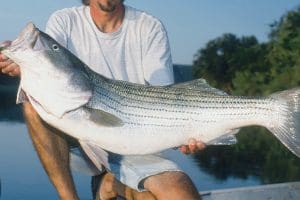
Striped bass add another dimension to the fishery. Through cooperative management efforts, striped bass have been stocked in the reservoir for decades, creating opportunities to catch hard-fighting fish capable of making powerful runs across open water. These fish often follow schools of baitfish and can provide some of the most exciting action available on the lake.
Sunfish species, including bluegill, contribute significantly to Toledo Bend’s appeal as a family fishing destination. Abundant throughout shallow cover and protected coves, these fish offer steady action for young anglers and provide excellent table fare.
One of the keys to Toledo Bend’s long-term success is habitat.
Unlike many reservoirs that gradually lose structural complexity as flooded vegetation deteriorates, Toledo Bend continues to benefit from extensive standing timber and ongoing habitat enhancement projects. Fisheries managers and conservation partners have invested heavily in creating and maintaining fish-attracting structures throughout the reservoir.
These projects benefit crappie, catfish, sunfish, and numerous other species while helping sustain the reservoir’s productivity.
Another factor is forage abundance. Threadfin shad, gizzard shad, bluegill, and other prey species provide a strong food base that supports healthy growth rates across multiple gamefish populations. Combined with the reservoir’s size and habitat diversity, this forage base helps maintain balanced fisheries capable of producing both numbers and quality fish.
Management cooperation between Texas Parks and Wildlife Department and the Louisiana Department of Wildlife and Fisheries has also played a major role in Toledo Bend’s continued success. The two agencies work together on fisheries surveys, habitat projects, stocking efforts, and management strategies designed to ensure the reservoir remains productive for future generations.
More than six decades after its creation, Toledo Bend remains one of the crown jewels of Texas fishing.
It is a place where anglers can spend the morning catching crappie around flooded timber, chase schooling white bass in open water during the afternoon, and anchor over a river channel after dark in search of a trophy catfish. Few reservoirs offer that level of diversity on such a grand scale.
That combination of size, habitat, and opportunity is what continues to make Toledo Bend one of the most important and enduring freshwater fisheries in the Lone Star State.