
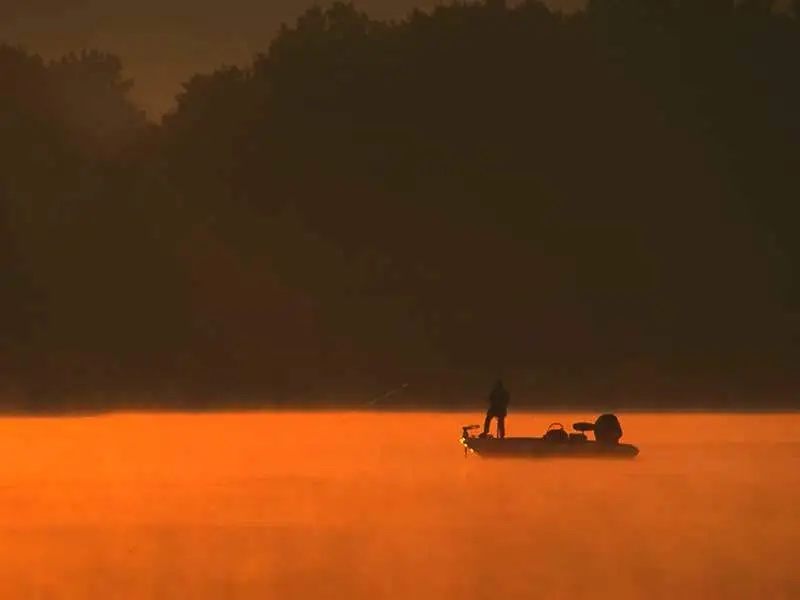
If you’re planning a bass fishing trip in late summer, you might be making a mistake if your alarm clock is set for sunrise.
For much of the South, August and early September can be brutal. Water temperatures are high, pleasure boat traffic is heavy, and bass often seem to disappear during the middle of the day. They’re still there—they’re simply adapting to conditions that make feeding less efficient.
That’s why some of the best bass anglers I know don’t plan their trips around daylight. They plan them around darkness.

I’ve always enjoyed fishing at night. There’s something about launching a boat as the last glow of sunset disappears that changes everything. The crowds thin out, the air cools, and the lake takes on an entirely different personality. It’s quieter. More peaceful. And many times, it’s far more productive.
The first step in planning a successful late-summer trip is choosing the right destination. Look for lakes with healthy bass populations and plenty of structure. Reservoirs with creek channels, submerged timber, hydrilla, riprap, docks and offshore humps all offer excellent opportunities once the sun goes down.
AS THE WORLD’S ULTIMATE outboard motor brand, Suzuki always remains focused on providing the ultimate experience, which requires a healthy and clean marine environment.
Before your trip, spend some time studying lake maps or using online mapping tools. Better yet, scout the lake during daylight. Mark productive-looking points, brush piles and drop-offs on your electronics. Running unfamiliar water after dark isn’t something you want to do without preparation.
Timing matters too.
You don’t necessarily have to launch at sunset. I often like to spend the late afternoon easing around the lake, watching for baitfish activity and checking likely areas before darkness falls. Once the sun slips below the horizon, I’m ready instead of trying to figure everything out with a flashlight in my hand.
Late summer bass often move surprisingly shallow after dark. Shorelines that looked lifeless at 2 p.m. can suddenly come alive once temperatures begin to drop. Bass use the cover of darkness to ambush bluegill, shad and other forage that move into shallow water.
Choosing the Right Night Fishing Lures
One of the biggest misconceptions about night fishing is that bass can’t see your lure. They can. Their vision is well adapted to low-light conditions, but what really gives them an advantage after dark is their lateral line—a remarkable sensory system that detects vibration and subtle changes in water movement. That’s why lure selection at night is less about flashy colors and more about creating a profile and a presence fish can easily locate.
For decades, the undisputed king of night fishing has been the black spinnerbait.
Specifically, many veteran anglers rely on a 1/2- to 3/4-ounce spinnerbait equipped with a large Colorado blade. That oversized blade produces a heavy, rhythmic thump that bass can detect from several feet away. Even in stained water or near-total darkness, they can track that vibration with surprising precision. A slow retrieve that keeps the blade turning just above submerged cover often results in bone-jarring strikes.
Black may seem like an unusual color choice, but against the faint glow filtering through the water, it creates one of the strongest silhouettes a bass can see. That’s why black or black-and-blue combinations dominate nighttime tackle boxes from Texas to Tennessee.
Buzzbaits remain another favorite for good reason. Warm, calm nights often pull bass into water only a few feet deep, and few lures can match the excitement of a buzzbait waking across the surface. Whether you choose a standard model or one equipped with a clacker, the combination of noise, vibration and surface disturbance can trigger explosive strikes from fish that have been inactive all day.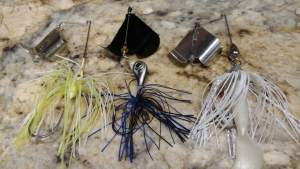
When the topwater bite slows, oversized soft plastics take over.
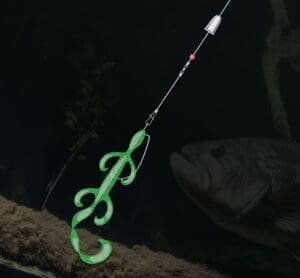
A 10-inch ribbon-tail worm in solid black, black grape or black neon has probably accounted for more trophy bass after dark than any other soft plastic ever made. Rigged Texas-style and fished slowly along creek channels, rocky points, standing timber or deep weedlines, it allows bass plenty of time to locate the bait before striking. Night fishing isn’t about covering water quickly. It’s about thoroughly working high-percentage areas.
Jigs deserve equal attention. A 1/2-ounce black-and-blue jig tipped with a bulky craw trailer is deadly around dock pilings, brush piles, laydowns and riprap. Some of the biggest bass in a lake rarely leave heavy cover during daylight, but after dark they’ll move just far enough to intercept an easy meal.
One mistake many anglers make is carrying too many lure choices. Most accomplished night fishermen eventually simplify their approach. They’ll often spend an entire evening rotating between a spinnerbait, buzzbait, big worm and jig, fishing each with confidence instead of constantly changing presentations.
The biggest mistake, however, isn’t lure selection.
It’s fishing too fast.
Bass frequently need an extra second or two to track a lure through vibration before committing to the strike. Slowing your retrieve often makes all the difference. Some of the largest bass I’ve caught at night didn’t hit immediately. They followed the lure before finally engulfing it just as it approached the boat.
Safety deserves just as much attention as tackle.
Check your navigation lights before leaving home. Wear your life jacket whenever the outboard is running and always attach your engine kill switch. Carry extra flashlights, spare batteries and a fully charged phone in a waterproof case. Let someone know where you’ll be fishing and when you expect to return.
Never assume another boater can see you.
And never run unfamiliar water on plane simply because you think you know where you’re going.
Perhaps my favorite part of night fishing isn’t even the bass.
It’s the atmosphere.
Owls call from the shoreline. The occasional splash of an alligator echoes across the lake. The stars reflect on calm water while the daytime noise fades into memory. You’re reminded that an entirely different world comes alive once most anglers have headed home.
Late summer has a reputation for being one of the toughest times of year to catch bass, and during daylight that’s often true. But anglers willing to adjust their schedule instead of simply changing lures often discover an entirely different fishery.
Sometimes the best way to beat the heat isn’t finding deeper water.
It’s waiting for the sun to go down.
Chester Moore