
Texas is like its own country.
With massive geographical boundaries and many unique cultures, Texas is as big and diverse as many nations.
For wingshooters, Texas’s hunting diversity is second to none, and it comes with a unique challenge only available within its borders.
The Texas Upland Bird Slam involves the taking of dove, quail, pheasant, and chachalaca. These birds require hunting from the far north to the Mexico border and offer opportunities from the Louisiana line to El Paso.
Let’s take a look at how, when, and where to bag these birds, and it starts with the right shotgun.
Want to get in a drawing for a $100 Visa gift card? Take this survey and help with research on dove hunting.
Click here to take the survey and get entered into the drawing.
Texas Fish & Game Magazine has partnered with one of our sponsors, Dove Gear of Rockport, Texas, to present a survey to help us learn more about all you dove hunters. Please take a few minutes to complete this survey and share your email at the end to be entered into a drawing for three (3) $100 Visa Gift cards sponsored by Dove Gear, LLC.
Dove Time
Some 400,000 Texas hunters take to the field and bag somewhere in the neighborhood of five million doves beginning September 1.
With the mourning dove population alone exceeding 30 million, this state is unlike any other in terms of hunting these sporting birds.
Yes, we said “mourning doves alone.”
According to the Texas Parks & Wildlife Department (TPWD), Texas has seven species of doves and pigeons. Of these, only four (mourning dove, white-winged dove, white-tipped dove, and European collared dove) are currently hunted.
Dove hunters only need $48 to get in on thousands of acres of prime dove hunting habitat.
That’s the price of an Annual Public Hunting Permit (APH), which unlocks access to many dove-specific leases and hunting land totaling more than 900,000 acres.
Dove (and small game) leases are distributed from South Texas (Brooks County) to the Panhandle (Hansford County) and from the Beaumont region (Orange County) to far West Texas (Hudspeth County).
Around 80 percent of the acreage is located in Dallas/Ft Worth (Reg. 4), Austin/Waco (Reg. 6), Houston/Beaumont (Reg. 7), San Antonio/Corpus Christi (Reg 8).
We’ve Still Got Quail!
(Photo: Adobe Stock)
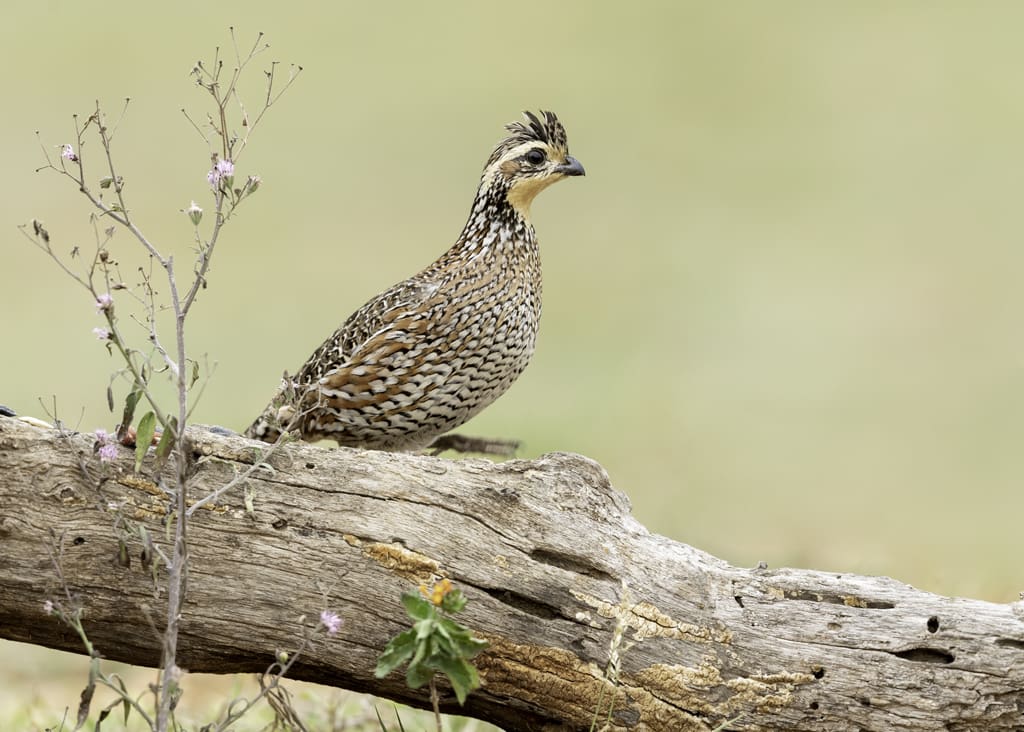
Quail numbers are down nationwide, but South, Central, and West Texas, as well as well-managed properties in the Panhandle, still have substantial populations.
The most commonly hunted quail here is the bobwhite. A beautiful (and tasty) bird famous for flushing at the very last second, makes up most of the quail bagged in Texas.
Number two is the scaled quail, most often referred to as “blue quail” in Texas.
According to TPWD officials, scaled quail occur throughout the Chihuahuan desert and are the most common quail in the Trans Pecos.
They are also present in the Edward’s Plateau and Panhandle. These wary birds often run instead of flying in retreat and can make impressive speeds.
In the Trans-Pecos, the beautiful Gambel’s quail is present and in huntable numbers. Public land for hunting them is scarce, but Elephant Mountain Wildlife Management Area is an option.
Quail season kicks off October 30 and runs through February 27.
Chachalaca? Huh?
(Photo: Randi Mal)
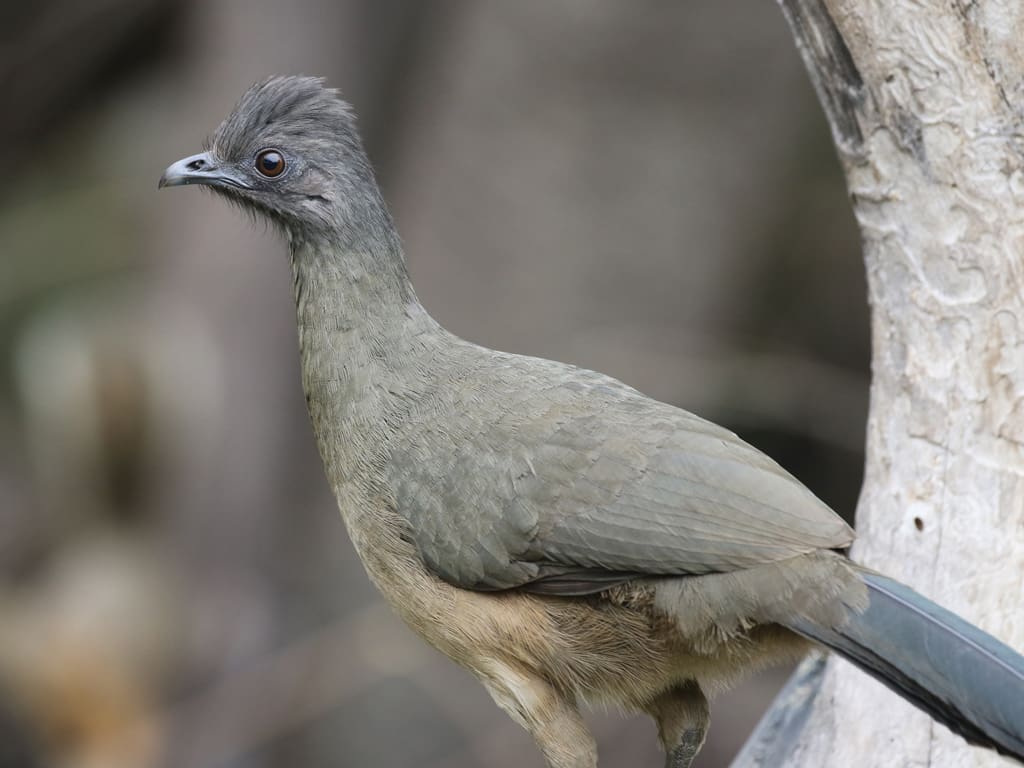
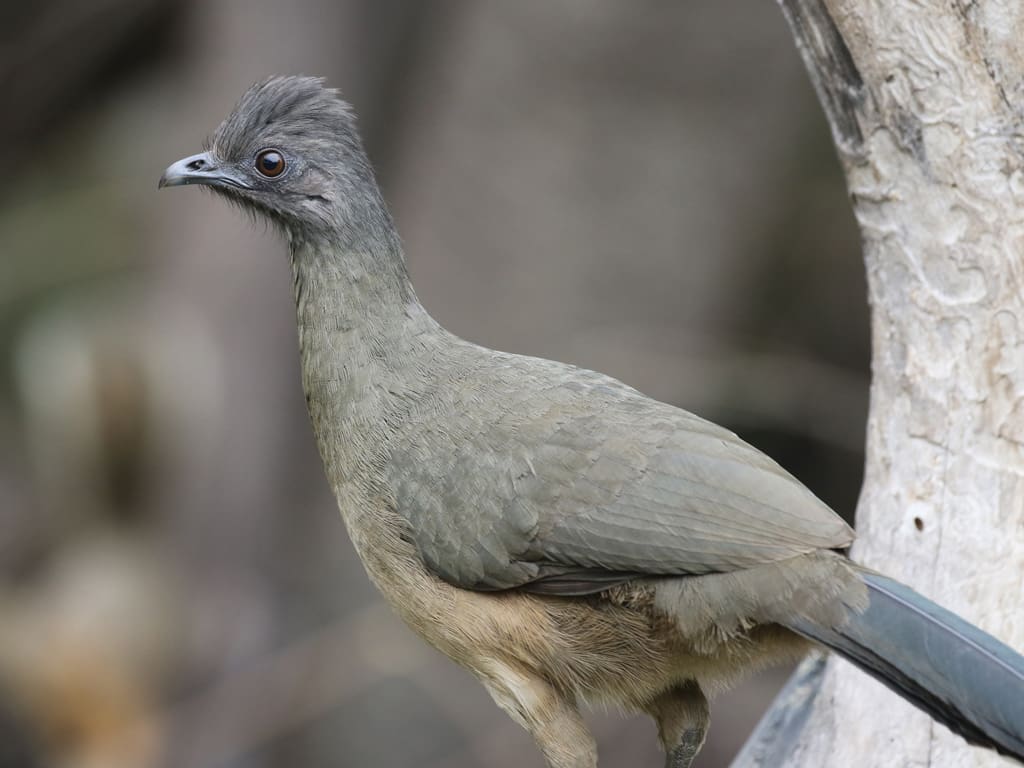
The plain chachalaca typically occurs in small groups of three to five individuals. They are found in tall, thorny thickets, scrubland, and second-growth forest edge along the Gulf-Caribbean slope from the Lower Rio Grande Valley of Texas and Nuevo Leon, Mexico, south to Honduras and Costa Rica, according to TPWD officials.
Texas is the only state to have enough of these unique birds to offer a season, and they are available to hunt in four counties (Cameron, Hidalgo, Starr, Willacy).
Secretive and often difficult to spot in their native habitat, these unique gamebirds offer a challenging hunting experience for the outdoorsman. The upcoming season is October 30 to February 27 with a daily bag limit of five birds.
Texas Parks & Wildlife offers hunting on five units of the Las Palomas Wildlife Management Area. These include the Baird, Anacua, Carricitos, Longoria, and Tucker Units.
Finishing With Pheasants
(Photo: Bernie Duhamel)
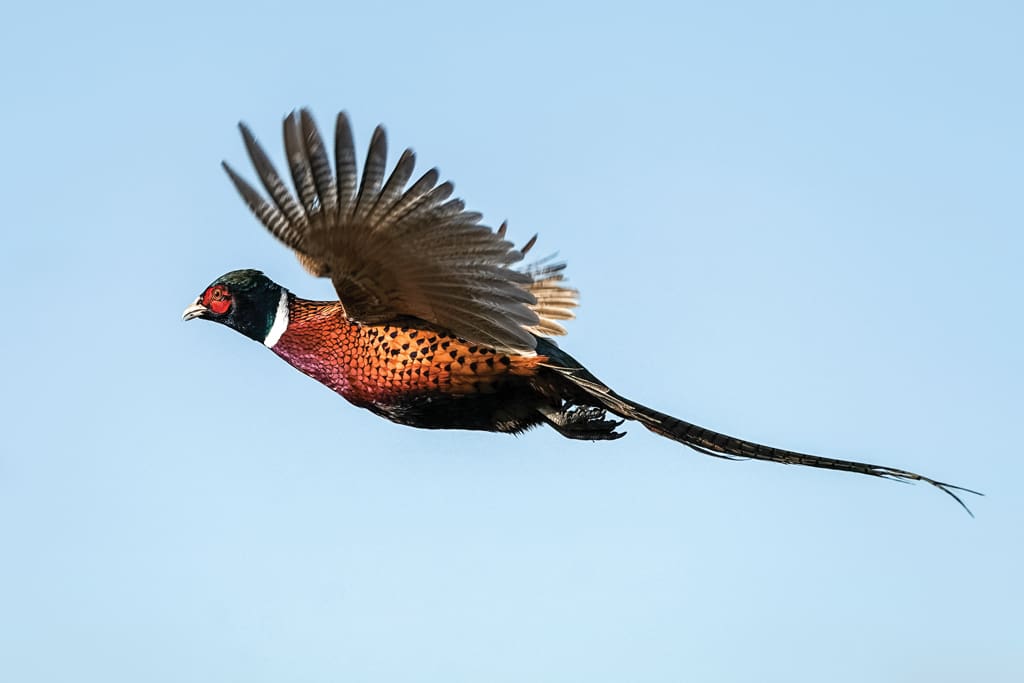
Texas has quality free-ranging, wild pheasant hunting in 37 counties in the Panhandle region.
According to TPWD records, the first pheasants in the High Plains and Northern Rolling Plains of Texas immigrated from western Oklahoma in 1939 or 1940. Various attempts at pheasant stockings have occurred at the state and private level from the Panhandle to the Gulf Coast (which used to have a season), but the Panhandle is where the birds flourish.