
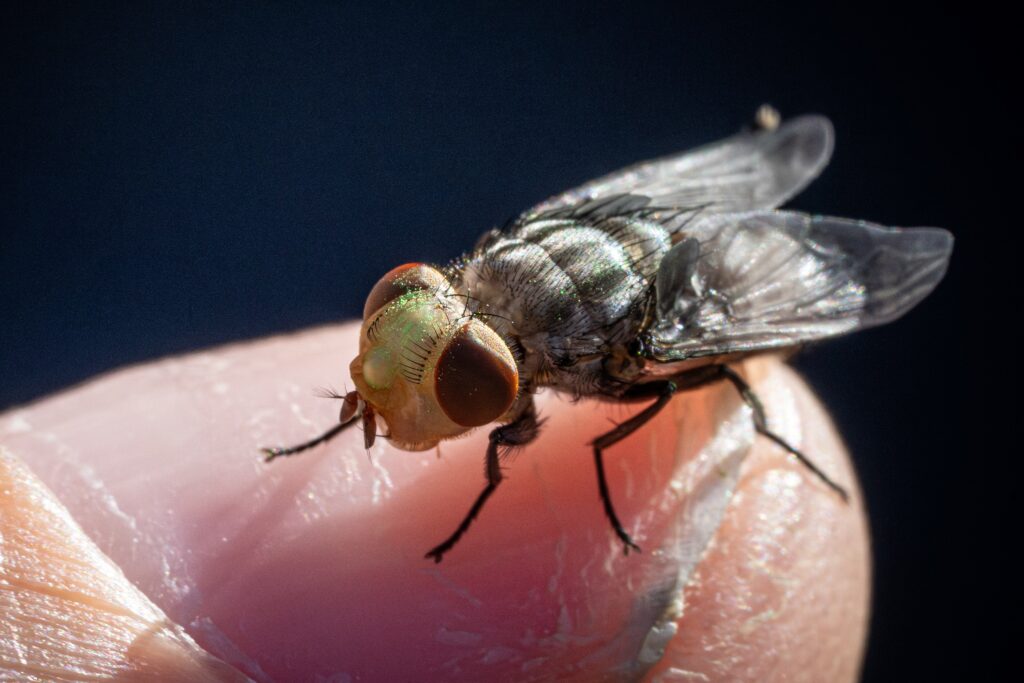
The New World screwworm doesn’t simply feed on something that’s already dead. Its larvae invade wounds and feed on the living flesh of warm-blooded animals.
That disturbing fact is part of what made the parasite such a nightmare for American ranchers and wildlife managers before it was eradicated from the United States decades ago. Now, in 2026, New World screwworm has returned to the U.S. mainland, and the battle to stop it has taken on new urgency.
But what if one of the next weapons against this flesh-eating parasite isn’t simply more traps, treatments or sterile flies?
What if it’s genetics?
That’s the subject of Episode 80 of the Dark Outdoors® podcast, featuring a conversation between Chester Moore and Matt James of Colossal Biosciences about the potential for advanced genetic technologies to become part of the fight against New World screwworm.
Listen to Episode 80
Apple Podcasts:
https://podcasts.apple.com/us/podcast/can-genetics-stop-the-screwworm-a-new-weapon/id1630809603?i=1000782125719&l=vi
Spotify:
https://open.spotify.com/episode/7fY1j5Z4gZqCJxCvtLOzpU?si=bafec6ea94c845e9
A New Kind of Weapon
For generations, one of the most effective weapons against New World screwworm has been the sterile insect technique.
Enormous numbers of sterile male flies are produced and released into areas where the parasite is present. Females that mate with those sterile males produce no viable offspring, allowing authorities to suppress the population.
It was an extraordinary biological weapon against an extraordinary parasite, and sterile insect releases remain central to the fight today.
But biotechnology has advanced dramatically since the original screwworm eradication campaign.

Colossal Biosciences has publicly discussed the potential for genetic biocontrol and gene-drive technology to be applied to New World screwworm. Instead of relying exclusively on repeated releases of sterile flies, advanced genetic techniques could potentially introduce traits designed to interfere with reproduction and spread those traits through a population.