
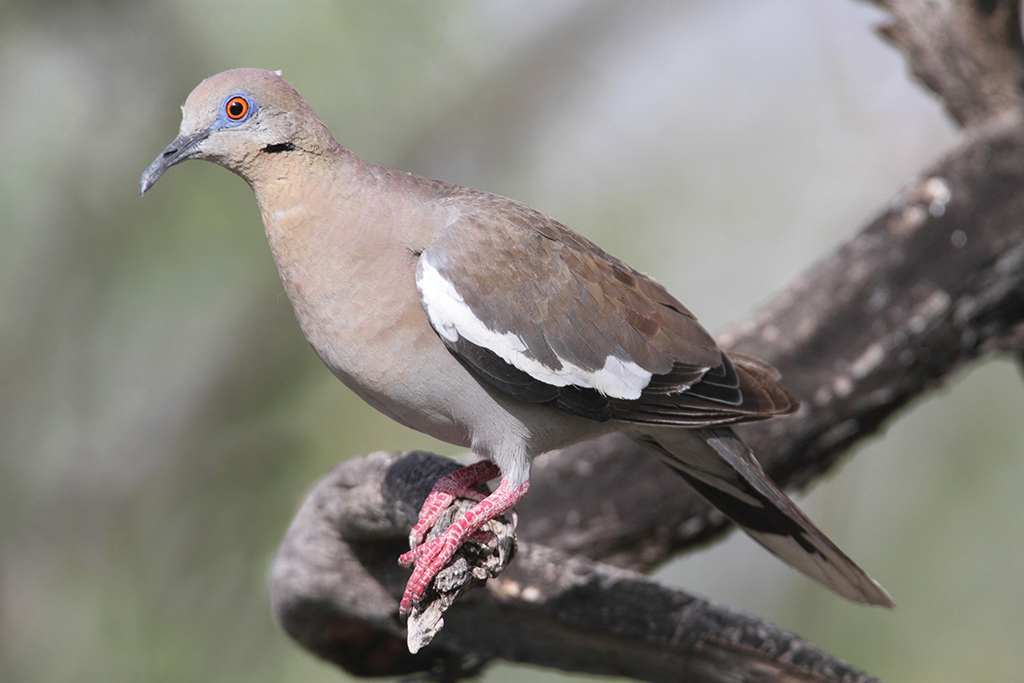
Long before many hunters ever climbed into a deer stand, called a turkey or headed west in pursuit of big game, they sat on a bucket at the edge of a field and tried to hit a dove.
Sometimes they connected. More often, those first hunts involved a lot of empty shotgun shells and some good-natured ribbing from the experienced hunters sitting nearby.
That is part of what makes dove hunting special.
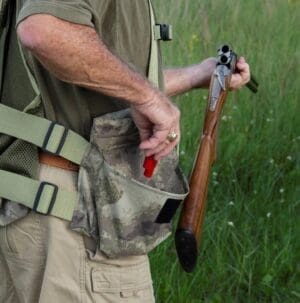
For generations, dove season has served as one of the great entry points into American hunting. It requires relatively little specialized equipment, lends itself perfectly to groups of family and friends and provides plenty of action. In Texas, where dove hunting is practically an institution, opening weekend can feel as much like a reunion as a hunting season.
But is dove hunting still playing that role for today’s hunters?
Texas is the dove hunting capital of the USA, but there is precious little known about the hundreds of thousands of Texas hunters who take to the fields each September. So Texas Fish & Game Magazine has partnered with one of our sponsors, Dove Gear of Rockport, Texas, to present a survey to help us learn more about all you dove hunters. Please take a few minutes to complete this survey and share your email at the end to be entered into a drawing for three (3) $100 Visa Gift cards sponsored by Dove Gear, LLC.
Click here to take the survey and get entered into the drawing.
More Than Another Hunting Season
Dove hunting occupies an unusual position in the hunting world.
A first-time deer hunter might spend hours sitting quietly without seeing the animal he or she came to hunt. Turkey hunting requires specialized calling and woodsmanship skills. Waterfowl hunting can involve decoys, boats, dogs and considerable expense.
Dove hunting can be much simpler.
Put a new hunter in a productive field with an experienced mentor and there is a good chance something will happen. Doves may streak overhead, twist through the wind or suddenly appear from a direction nobody was watching. Even when the shooting is terrible, the action keeps people engaged.
And unlike many forms of hunting, conversation usually doesn’t ruin the experience.
That’s important.
Dove hunting is inherently social. Hunters can spread out across a field while still seeing and communicating with one another. Fathers and daughters, mothers and sons, grandparents, longtime hunting buddies and first-timers can all share the same experience without everyone having to possess the same level of hunting skill.
That makes a dove field one of the best classrooms in the outdoors.
The First Hunt Matters
The hunting community spends considerable time discussing recruitment, retention and reactivation, often referred to collectively as R3.
Recruitment gets much of the attention. We want to introduce children and adults to hunting, and countless organizations have developed youth hunts and mentored hunting programs to accomplish that goal.
But getting someone to hunt once isn’t the same thing as creating a hunter.
The experience has to be something they want to do again.
That is where dove hunting may have an advantage that deserves more attention. A successful dove hunt combines action with fellowship, and success doesn’t necessarily have to mean a limit of birds.
A teenager who misses 15 doves but spends an evening laughing with friends may leave the field wanting another chance. A new adult hunter who feels intimidated by the complexity of hunting can quickly discover that he or she belongs around the campfire and in the field just as much as someone who has hunted for 40 years.
Those experiences matter if hunting is going to remain an important part of Texas culture.
Who Is Actually Hunting Doves?
Here’s the problem: We talk a lot about dove hunters without necessarily knowing enough about them.
Texas is America’s undisputed heavyweight when it comes to dove hunting. Hundreds of thousands of hunters participate, yet that enormous group isn’t necessarily uniform.
How old are today’s dove hunters? How long have they hunted? Who introduced them to the sport? Are younger hunters participating? Are people hunting primarily with family or friends? What keeps them coming back?
And perhaps just as importantly, what could cause them to quit?
Those questions have consequences beyond selling shotguns, shells and hunting gear. They can help us understand whether one of Texas’ greatest outdoor traditions is successfully being transferred from one generation to another.
That’s one of the reasons Texas Fish & Game and Dove Gear are asking hunters themselves.
Take the Texas dove hunting survey here.
What Happens After Opening Day?
Opening weekend will always be special in Texas.
There will be sunflower fields, milo, stock tanks and fencelines filled with hunters scanning the sky. There will be barbecue pits fired up after the hunt, dogs retrieving birds and somebody wondering how they managed to shoot an entire box of shells for three doves.
The bigger question is what happens afterward.
Does the 15-year-old sitting beside Dad this September become a 30-year-old who takes his own daughter hunting?
Does the adult who was invited on a dove hunt for the first time decide to buy a license next year?
Dove hunting gives Texas an extraordinary opportunity to keep people connected to hunting, conservation and the outdoors. Before we can understand how to strengthen that connection, however, we need a clearer picture of the hunters themselves.
If you hunt doves in Texas, take a few minutes and tell us about your experience. Complete the Texas Fish & Game/Dove Gear survey and, if you choose to provide your email address, you’ll be entered into the drawing for one of three $100 Visa gift cards provided by Dove Gear, LLC.
Click here to take the survey.
We know Texas has a lot of dove hunters.
Now it’s time to learn more about who they are.