
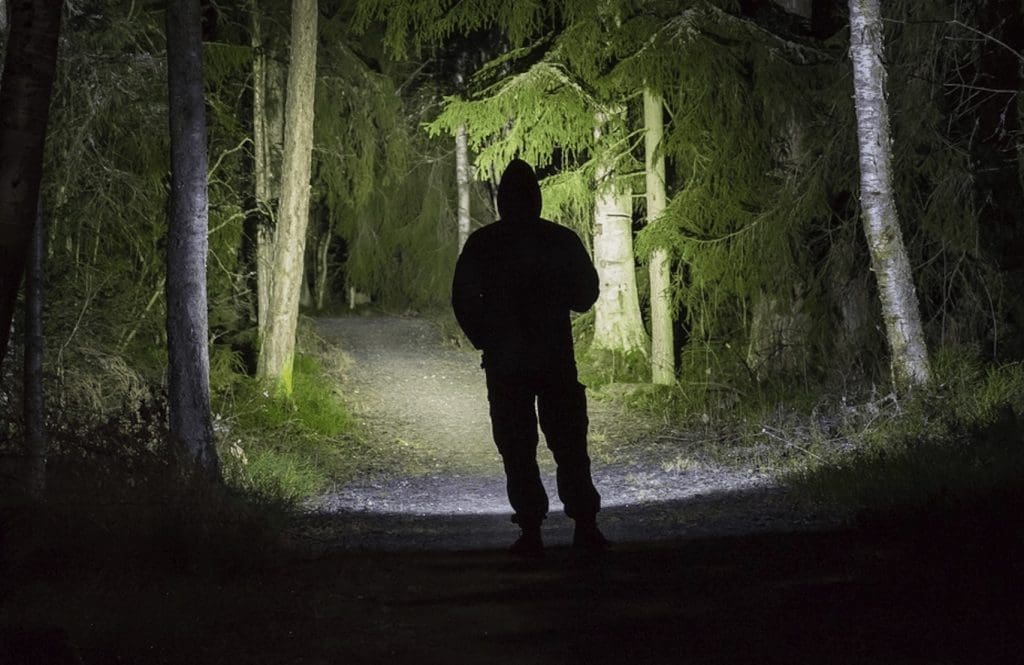
Before heading into the Missouri Ozarks for a story, someone familiar with the area gave me a warning I wasn’t expecting. They told me there was something unusual I needed to watch out for in the woods: Bald Knobbers.
I knew the name, but certainly not that version of it. The only Baldknobbers I knew were the famously silly country music and comedy entertainers associated with Branson. But the person who warned me described something much darker—secretive gatherings, strange regalia and people you supposedly didn’t want to encounter in remote areas.
I have found no credible evidence that an organized Bald Knobber group exists in Missouri today, but the person had previously given me surprisingly accurate information about secretive organizations. That was enough to send me down the rabbit hole.
I recently explored that warning, the real history of the Bald Knobbers and some of my own experiences with strange gatherings in remote places in a new episode of the Dark Outdoors podcast, “They Warned Me About the Bald Knobbers.”
Listen to the episode:
Spotify: https://open.spotify.com/episode/6i2V75hcKA6xD46vahBgPH?si=7462473387924aab
Apple Podcasts: https://podcasts.apple.com/us/podcast/they-warned-me-about-the-bald-knobbers/id1630809603?i=1000783368325
What I discovered while researching the episode was stranger than the warning itself because the real Bald Knobbers were not folklore.
They emerged in southwest Missouri during the turbulent years following the Civil War, when violence, political division and lawlessness still haunted parts of the Ozarks. Beginning in Taney County in the 1880s, armed men organized under the banner of restoring order where they believed legitimate authorities had failed.
They became known as the Bald Knobbers, reportedly because some of their early meetings were held on the bare, treeless summits known locally as bald knobs.
At first, supporters could portray them as citizens standing against criminals in a region where justice could be difficult to enforce. But vigilantism has a way of creating its own definition of justice.
The movement became associated with intimidation, beatings and killings. Bald Knobbers sometimes operated at night and concealed their identities. In neighboring Christian County, members became especially notorious for grotesque masks with horns and exaggerated features that transformed ordinary men into frightening figures.
That imagery is a long way from the Branson entertainers I associated with the name.
And that is where the warning I received became interesting.
There is an enormous difference between documenting the historical Bald Knobbers and claiming some modern organization carrying on their traditions is roaming the Ozarks. I have found evidence for the first. I have not found credible evidence for the second.
But stories have long lives in isolated country.
Names survive. Symbols survive. Traditions get borrowed and reinvented. Sometimes an old story becomes local folklore. Sometimes people adopt historical imagery without having any real connection to the original organization. And sometimes a warning is simply a warning, impossible to prove but difficult to completely forget.
Strange Activity in the Outdoors
There is also a larger lesson here that has nothing to do with whether modern Bald Knobbers exist.
Hunters, anglers, hikers and campers spend time in places where there may be nobody else around for miles. Most of the people we encounter are simply other outdoors enthusiasts. But occasionally something doesn’t look right.
Over the years, I have encountered strange gatherings and unusual activity in remote places. I have also heard enough firsthand accounts from outdoors people and law enforcement officers to know that human threats deserve a place alongside weather, wildlife and terrain in our outdoor safety planning.
You don’t have to determine exactly what you are looking at.
In fact, trying to investigate it yourself may be the worst possible decision.
If you encounter a group of people acting strangely, vehicles hidden far from established roads, threatening behavior, suspicious camps or anything else that makes the hair stand up on the back of your neck, your job isn’t to solve the mystery.
Your job is to get home.
Remote-Area Safety Checklist
-
Tell someone where you’re going. Give a family member or friend your general location, planned route and expected return time.
-
Keep your phone charged. Carry a portable battery, but remember that many hunting and fishing areas have little or no cell coverage.
-
Have another means of communication when possible. Satellite communicators can be extremely valuable when traveling deep into areas without cellular service.
-
Know your escape routes. Whether you’re hunting public land, camping or exploring backroads, know more than one way out whenever possible.
-
Pay attention to vehicles. A vehicle repeatedly appearing around your location, blocking an access road or following you deserves your attention.
-
Don’t investigate suspicious camps or gatherings. Curiosity can pull you closer to a situation you don’t understand. Distance is usually the better option.
-
Don’t announce your presence unnecessarily. If you observe something concerning from a distance, there is rarely a benefit in walking up and confronting the people involved.
-
Trust changes in behavior more than appearances. Unusual clothing or an odd-looking camp doesn’t necessarily mean danger. Threats, aggressive movement, attempts to surround you, blocking your departure or following you are much stronger warning signs.
-
Document from safety if appropriate. Once you’re safely away, write down locations, vehicle descriptions, license plates or other details you can accurately remember. Don’t risk a confrontation trying to get a photograph.
-
Report genuine threats or suspected crimes. Contact the appropriate sheriff’s office, police department, game wardens or other authorities rather than attempting to handle the situation yourself.
-
Don’t let curiosity override instinct. If something feels wrong and you have the opportunity to leave safely, leave.
The Human Factor
We spend plenty of time preparing for what nature might throw at us.
Texas outdoorsmen know about venomous snakes, feral hogs, alligators, heat, lightning, flash floods and getting turned around after dark. Travel into the Ozarks, Appalachians, Rockies or other remote country and the list changes with the landscape.
But there is one potential hazard virtually everywhere: people.
That doesn’t mean becoming paranoid about everyone you meet in the woods. The overwhelming majority of encounters outdoors are harmless, and some of the finest people I’ve met have been hunters, anglers and backcountry travelers encountered miles from anywhere.
Situational awareness isn’t paranoia. It’s simply paying attention.
That is ultimately what stayed with me about the Bald Knobber warning.
I don’t know whether there was anything behind the modern story I was told. What I do know is that the historical Bald Knobbers were real, their story was far darker than I realized, and the warning provided a reminder applicable far beyond the Missouri Ozarks.
Know where you are. Know how you’re getting out. Pay attention to what’s happening around you. And when you encounter something in a remote place that tells you it’s time to move along, you don’t always have to stick around long enough to figure out exactly what it was.
Sometimes leaving is the smartest outdoor skill of all.