
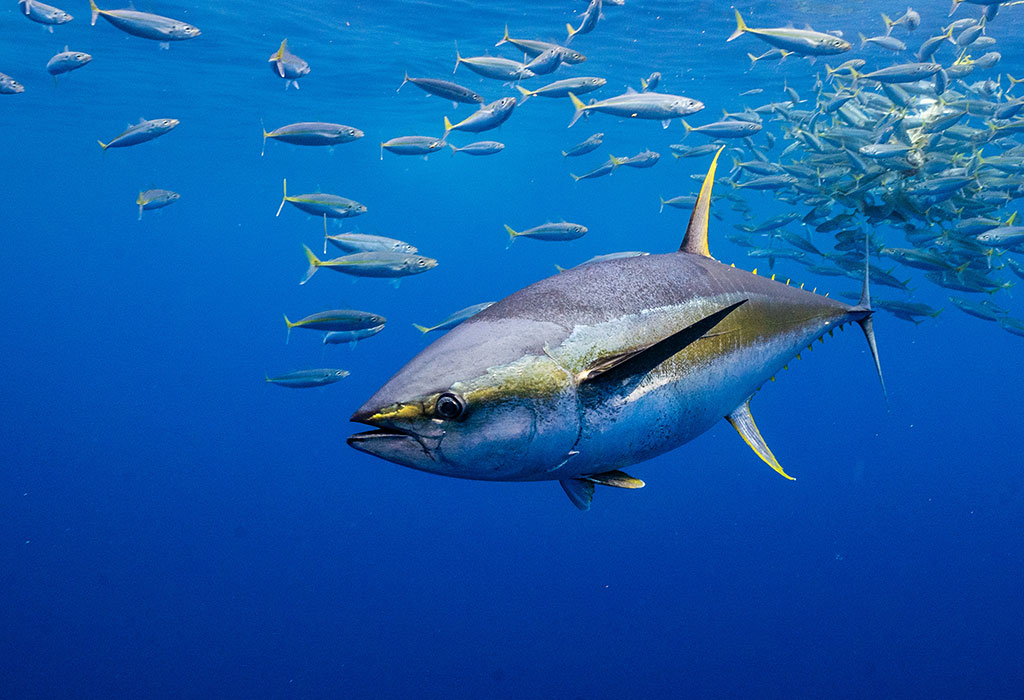
Bluefin Tuna have a special place in commercial and recreational fishing. Their size, speed, strength, and long migrations make them among the ocean’s most demanding game fish. Their rich meat is also highly valued in markets worldwide. That combination has created economic opportunity, cultural significance, and a serious management challenge.
The future of the Bluefin Tuna population depends on more than the number of fish caught in a season. Managers study spawning biomass, recruitment, and age structure to determine whether enough mature fish are reproducing and whether young fish are surviving. Those details help show whether a stock is genuinely productive or simply benefiting from a temporary increase in catchable fish.
Why Bluefin Tuna Require Careful Fisheries Management
Bluefin are difficult to manage because their biology makes them vulnerable to concentrated fishing pressure. They grow large, travel across national boundaries, and rely on specific areas for spawning. They also mature later than many smaller pelagic species. If too many mature fish are removed, the impact can continue for years because fewer breeding adults are available to produce the next generation.
Spawning aggregations require particular care. When large numbers of Bluefin gather in one place, fishermen can locate them more easily. Removing too many adults from that group may have an outsized effect on reproduction. A healthy stock isn’t defined only by total abundance; it also needs a balanced age structure and a distribution that supports successful spawning.
NOAA Fisheries’ overview of western Atlantic Bluefin Tuna helps explain why managers must consider the species’ entire life cycle. Young fish use nursery areas, while adults cross broad stretches of ocean. A rule that reduces pressure in one region can lose its value if fishing intensifies elsewhere. Bluefin management must therefore be coordinated across locations and seasons.
Quotas and Catch Limits Are Changing Fishing Strategies
Total allowable catches are a central tool in fisheries management. A quota sets a limit on fishing mortality based on a stock assessment and then divides access among commercial fleets, charter operations, and recreational anglers. The goal is to prevent strong market demand or an unusually productive season from turning into excessive harvest.
For commercial fishermen, quotas influence vessel investment, trip schedules, crew planning, and fishing locations. Charter captains must pay close attention to retention rules because changes in daily limits can affect both trip timing and customer expectations. Recreational anglers also need to check current size, season, permit, and retention requirements before leaving the dock.
Quotas change as new information emerges because recruitment, stock assessments, ocean conditions, and data quality can vary from year to year. Adaptive management allows regulators to tighten, expand, or redistribute limits when the evidence supports a change. Accurate catch reporting is essential. If managers can’t separate actual fishing pressure from incomplete or estimated data, even a carefully designed quota may rest on a misleading picture of the fishery.
Size Limits, Seasons, and Protected Areas
Catch limits are only one part of the conservation system. Minimum size rules can protect juveniles before they contribute to the spawning stock. Maximum size limits or restrictions on large fish can protect valuable breeding adults. These measures also encourage fishermen to think about selectivity and fish care instead of treating every legal fish as an automatic harvest.
Seasonal closures reduce pressure during spawning periods and other sensitive times. A closure can be difficult for a captain or angler, but it protects fish when they’re concentrated or especially important to future reproduction. Area-based rules offer another layer of protection by safeguarding spawning grounds, migration routes, and feeding areas.
These measures change how fishermen plan. A successful Bluefin trip depends not only on finding fish, but also on knowing when and where fishing is legal. Checking regulations has become part of responsible trip preparation.
International Cooperation Is Essential for a Migratory Species
No single country can manage the Bluefin Tuna population on its own. These fish cross maritime boundaries, pass through multiple fishing grounds, and may be harvested by different fleets as they mature. A strict rule in one jurisdiction can be undermined if another jurisdiction allows excessive fishing on the same shared stock.
Regional fisheries management organizations and international agreements coordinate quotas, monitoring, scientific assessments, and enforcement. Their work is complicated because countries and fishing sectors have different economic priorities. Coastal communities may rely on Bluefin Tuna for jobs and revenue, while managers must focus on long-term productivity rather than the needs of a single port or season.
Consistency is key. Shared definitions, compatible reporting systems, and comparable enforcement standards make it harder for illegal, unreported, or unregulated fishing to erase conservation gains. For a species that ignores political borders, cooperation is a biological necessity.
Technology Is Improving Bluefin Monitoring and Accountability
Technology is giving managers a clearer view of the fishery. Electronic monitoring can document activity aboard vessels, while tracking systems help confirm vessel locations and fishing patterns. Digital catch records strengthen the chain of custody from landing to market. Tagging programs can add information about movement, growth, and survival.
Biological sampling is equally important. Measurements of size, age, reproductive condition, and other characteristics help scientists refine stock assessments and identify populations under the greatest pressure.
The speed at which information is generated is also crucial. Near-real-time reporting can flag a possible quota overage before it becomes a larger problem and can support investigations into illegal or unreported fishing. FishGame’s coverage of concerns involving recreational fisheries data shows why accuracy and public confidence are so important. Technology can’t replace sound judgment, but it can give managers better information for decisions that affect fish and fishermen.
What Conservation Measures Mean for Recreational Anglers
For recreational anglers, conservation influences decisions made before a trip begins. Regulations can affect tackle, timing, locations, bait, retention, and reporting. An angler who checks the rules ahead of time is better prepared to avoid an accidental violation and can explain the requirements to everyone else on board.
Catch and release also requires care when large pelagic fish are involved. Equipment should be strong enough to shorten the fight, and anglers should limit time on deck, keep the fish in the water whenever possible, and avoid unnecessary handling. Proper hooks, dehooking tools, heavy leaders, and coordinated movements can improve the fish’s chances after release.
These practices don’t take away from the excitement of Bluefin Tuna fishing; they help preserve it for future anglers. Recreational fishing also supports charter businesses, marinas, tackle shops, restaurants, and coastal communities, so the goal is responsibility, not cancellation. When anglers treat compliance, reporting, and fish care as part of good fishing, the sport can continue to grow.
Conservation and the Economics of Bluefin Tuna Fishing
Bluefin Tuna supports a broad economic network. Commercial fishermen, charter operators, guides, processors, seafood businesses, equipment suppliers, and coastal communities all benefit when the stock remains healthy. A dependable fishery supports employment and long-term investment, and without that foundation, a single profitable season may be followed by years of uncertainty.
Tighter restrictions can bring short-term costs, such as fewer trips or lower dockside revenue; however, allowing harvest to exceed what the stock can replace creates greater economic risk. Conservation is better viewed as an investment in a long-term durable fishery than as a simple limit on fishermen.
Responsible Seafood Choices and Bluefin’s Place on the Plate
Conservation extends to the consumer. When buying Bluefin Tuna or other seafood, shoppers should consider the species’ status, source, harvesting method, and traceability. Appearance and price can’t show whether a fish was caught under effective management or moved through a poorly monitored supply chain.
Bluefin is valued for its flavor and texture and, like most fish, can provide high-quality protein and naturally occurring omega-3 fatty acids. Portion size, preparation, and overall dietary balance must still be considered, however, as certain health risks are associated with the overconsumption of fish. Preserved seafood provides a convenient option that circumvents refrigeration needs. Products such as fish jerky can offer a shelf-stable way to include fish in meals, snacks, or travel food.
For people focused on weight loss, Bluefin Tuna can be a protein-rich option that fits into a balanced eating plan. This doesn’t change the need for transparency, though. Responsible choices depend on knowing which species was used, where it came from, and whether the harvest method supports the resource over time. Consumers should always ask whether a product was sourced in a way that supports healthy stocks and accountable fishing.
The Next Generation of Bluefin Tuna Management
Future management will become more adaptive and data-driven. Priorities include improving stock assessments, reducing bycatch, strengthening traceability, protecting spawning habitat, and adjusting catch limits as conditions change. Better models can also help managers account for uncertainty instead of treating every estimate as equally reliable.
Warmer oceans and shifting migration patterns may make traditional management boundaries harder to maintain. Bluefin Tuna could theoretically change when or where they move, bringing them into contact with different fleets and regulations, which means flexible international coordination will become increasingly important.
Science should remain at the center of these decisions, but it shouldn’t be separated from experience on the water. Commercial fishermen, charter captains, and recreational anglers notice changes in timing, distribution, weather, and fish condition. Those observations can be shared through reports or formal surveys. Combining credible science with carefully evaluated fishing-community knowledge can produce rules that are more responsive and trustworthy.
Protecting the Fishery by Protecting the Fish
The future of Bluefin Tuna fishing depends on healthy, productive populations rather than the largest possible short-term harvest. Quotas, size restrictions, seasonal protections, protected areas, international cooperation, monitoring technology, and responsible fishing practices work best together.
Effective conservation can preserve the ecological role of Bluefin Tuna as well as the jobs, traditions, and coastal activity built around the fishery. The strongest future is one in which sustainable access is understood as the result of conservation, not its opposite.