

Manatees are synonymous with Florida, but Gulf Coast boaters need to understand these huge, slow-moving marine mammals don’t always stay there.
During the warmer months, Florida manatees can travel westward along the Gulf Coast into Alabama, Mississippi and Louisiana, with some making the long journey all the way to Texas. And in 2026, Texas has experienced a notable series of sightings.
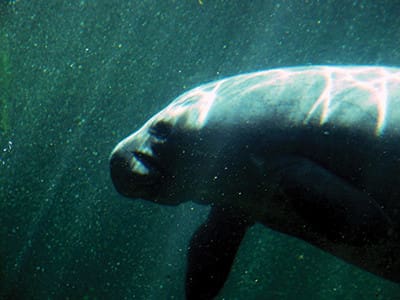
The Texas Marine Mammal Stranding Network (TMMSN) reported manatees from Galveston to Port Mansfield during the summer, including animals using busy harbors and marinas and visiting freshwater outflows. That’s exciting news for wildlife lovers, but it also creates a conservation challenge.
Manatees and fast-moving boats are a dangerous combination.
Watch the Water
Manatees can be surprisingly difficult to see from a moving boat. Although adults are huge animals, much of their body can remain below the surface, and stained coastal water can make spotting them even more difficult.
Boaters operating in areas where manatees have been reported should slow down and pay close attention to the water ahead. Polarized sunglasses can help cut glare, and having another person actively watching the water is even better. Watch for a nose breaking the surface, a large back rolling, or unusual swirls and disturbances in the water that could indicate an animal has submerged.
This is especially important around marinas, harbors, canals, rivers and other protected waters where manatees might be traveling or feeding. Manatees also seek freshwater sources, which can bring them into areas with significant boat traffic.
Don’t assume you’re too far west to encounter one.
A Texas boater might go a lifetime without seeing a manatee, but the increased reports in 2026 are a reminder that encounters do occur. Louisiana and other northern Gulf states also receive manatee visitors during the warmer months.
Give Them Room
If you encounter a manatee, one of the best things you can do is simply give it space.
Don’t chase it for photographs, crowd it with the boat or try to interact with it. Never feed a manatee or offer one water from a hose. Providing food or freshwater can encourage these animals to associate people, docks and marinas with resources, potentially keeping them in areas where boat traffic places them at greater risk.
Boat strikes remain one of the most serious human-caused threats to manatees. A collision doesn’t have to involve the propeller to cause severe injury. The hull, keel, skeg or other parts of a vessel can cause devastating blunt-force trauma.
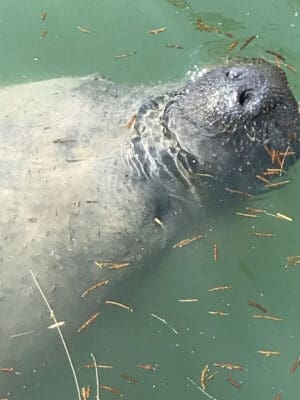
Propellers create another obvious danger. Many manatees carry distinctive scars from encounters with boats, and some survive multiple strikes during their lives. Those familiar parallel scars across the back of a manatee aren’t simply markings. They can be evidence of a close encounter with a propeller that the animal was fortunate enough to survive.
When operating in known manatee areas, slowing down gives both the boater and the animal more time to react. Obey slow-speed and no-wake zones, and use extra caution in shallow water where manatees may have less room to dive away from an approaching vessel.
Protect What’s Under the Boat
There’s another kind of prop scar Gulf Coast anglers should think about.
Seagrass beds are among the most productive habitats in our coastal ecosystem. They provide nursery habitat, cover and feeding areas for numerous species important to anglers, but they’re vulnerable to damage from boats operating in extremely shallow water.
When an outboard propeller contacts a seagrass-covered bottom, it can cut through the grass and damage the roots and rhizomes underneath. These prop scars can fragment grass beds, increase erosion and take considerable time to recover.
Texas Parks and Wildlife Department recommends planning routes through shallow areas, using marked channels and knowing the limitations of your boat. If you find yourself in water too shallow to safely operate the outboard without damaging seagrass, don’t simply power through it.
Raise the outboard and use the wind, a push pole or an electric trolling motor to move into deeper water.
That’s one place where trolling motors such as Minn Kota’s saltwater Riptide series can be valuable conservation tools as well as fishing tools. Precise low-speed control allows anglers to navigate shallow coastal areas without relying on the outboard every time the boat needs to be repositioned.
That doesn’t mean a trolling motor gives anglers permission to run anywhere. Extremely shallow grass should still be avoided when possible, and every boat has limitations. The objective is to navigate intelligently and leave the habitat in the same condition you found it.
Report Texas Manatees
If you see a manatee along the Texas coast, report the sighting to the Texas Marine Mammal Stranding Network.
TMMSN tracks manatee sightings to help monitor their movements along the coast and coordinates with the U.S. Fish and Wildlife Service when an animal might require assistance. Photographs taken from a safe distance can also be useful because scars and other identifying characteristics may help researchers recognize individual animals.
Manatee sightings in Texas can be reported to TMMSN at 1-800-9MAMMAL (1-800-962-6625).
Reports are particularly important if an animal appears injured, entangled, distressed or is found dead, but TMMSN asks that manatee sightings along the Texas coast be reported so researchers can better understand their movements.
Manatees are still unusual visitors to Texas, and seeing one would be an incredible experience for almost any angler or boater.
Enjoy the encounter.
Just do it from a distance.
Slow down, give the animal room, protect the habitat underneath your boat and report what you see. A little awareness from Gulf Coast boaters can help ensure these unexpected visitors make it safely through Texas waters and continue their journey.
TF&G Staff