
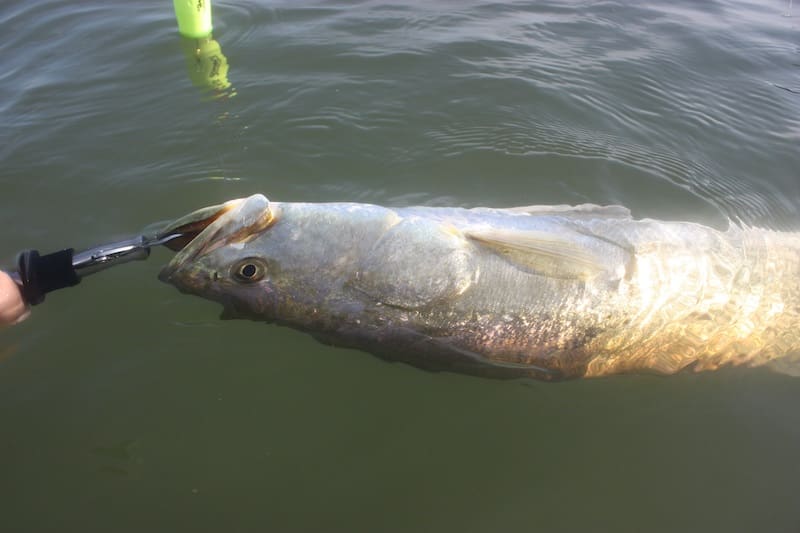
Some of the most interesting speckled trout fishing on the Texas and Louisiana coasts occurs far from beachfront passes and Gulf jetties. It happens in the sprawling network of rivers, bayous, canals and marshes where freshwater flowing toward the coast mixes with saltwater pushed inland by tides. This is brackish country, and anglers who understand how trout use it can find tremendous action, particularly as conditions begin changing in fall.
The biggest mistake is thinking about these areas as simply fresh or salt. A coastal river is constantly changing. Rainfall, river discharge, tides and wind can alter conditions dramatically, sometimes over a relatively short period. Speckled trout have a broad tolerance for salinity and can move through large portions of an estuary when conditions are right. For anglers, that opens a lot of water, but it also means learning how to eliminate most of it.
Follow the Salt and the Bait
Salinity is one of the most overlooked pieces of the speckled trout puzzle. A river entering an estuary creates a gradient, with the freshest water generally toward the source and increasing salinity as you move toward the bay and Gulf. But don’t picture a perfectly straight dividing line. Tides push saltier water inland, while rainfall and river flow push freshwater outward. Wind can move tremendous amounts of water through shallow coastal systems, and connecting bayous, canals and marsh drains complicate things even further.
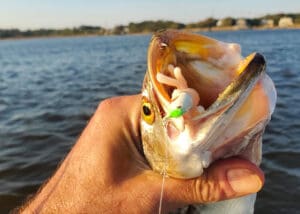
Instead of asking whether trout are in a particular river, ask where the best trout water is in that river today. Look for changes in water quality. A main river might be muddy while a connecting bayou contains clearer water, or runoff could muddy a tributary while the main channel looks considerably better. Where two different kinds of water meet can be a legitimate feeding zone, especially when bait is present.
Speckled trout aren’t moving into these systems because they like brackish water. They’re following food. Shrimp can be extremely important, particularly for smaller and medium-sized trout, while mullet, menhaden and other baitfish become increasingly important for larger fish. Watch for bait flipping along shorelines, nervous water, small fish spraying near points and shrimp skipping across the surface. Bird activity can reveal feeding trout, but don’t become so obsessed with diving gulls that you ignore everything else. Some of the best trout may be underneath concentrations of bait the birds haven’t discovered.
Fish the Intersections
Some of the best locations in brackish systems are intersections. Look for a smaller bayou entering a larger one, a marsh drain emptying into a river, a canal intersecting a main channel or a secondary channel joining a deeper river. These places create current, provide depth changes and can concentrate forage within a relatively small area.
An outgoing tide can be especially interesting when water is pouring from marsh drains. Shrimp and small baitfish leaving shallow marsh habitat can be swept into deeper water, creating natural feeding stations for trout. Don’t automatically put the boat right on top of the drain. Back off and determine where the current plume is going. Trout may be 20, 30 or 50 yards downstream where that moving water intersects the main current. The obvious piece of structure isn’t always where the fish are actually feeding.
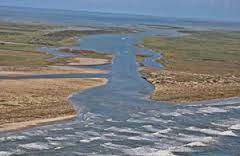
Current itself should be considered structure. When moving water strikes a point, piling, bulkhead, laydown or sharp bend, it creates differences in speed and direction. Trout can hold in softer water and attack forage being swept through faster current. Pay particular attention to seams between fast and slow water and experiment with casting angles. Sometimes trout want a lure moving naturally with the flow; at other times, quartering a lure across the current triggers strikes. If you catch one fish, work the area thoroughly because brackish-water trout can stack into surprisingly small zones when bait and current come together.
Think About Depth
Depth becomes increasingly important as temperatures begin dropping. Texas Parks and Wildlife Department has noted that during periods of low rainfall and runoff, trout can move into deeper rivers and bayous with the first cool weather of fall. Dredged channels, boat harbors, deep bayou bends and canal intersections can all provide the kind of depth trout use as conditions change.
Don’t focus exclusively on the deepest water. A river might have a dredged channel considerably deeper than the surrounding bottom, but the drop leading into that channel can be more productive than its center. A bayou bend might contain a hole carved by current with a shallow flat immediately adjacent to it. On warmer fall afternoons, trout may move onto those shallower areas to feed while maintaining quick access to deeper, more stable water. The transition from four feet to eight feet can sometimes be more important than either four or eight feet by itself.
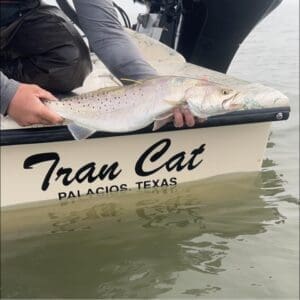
Oyster habitat adds another dimension. It doesn’t have to be a giant, obvious reef. A relatively small patch of shell on an otherwise muddy bottom can hold bait and attract trout. Electronics can reveal changes in bottom composition, but sometimes your lure tells you what’s there. If you begin bringing back pieces of shell or can feel a harder bottom through the rod, pay attention. Catch a trout over scattered shell and make several more casts from the same angle before moving.
Match the Presentation
Brackish-water trout fishing doesn’t require an exotic tackle box. Paddle-tail soft plastics are hard to beat because they imitate a wide variety of forage and can be fished throughout the water column. Adjust jighead weight according to current and depth rather than automatically throwing the same weight everywhere. Use enough weight to maintain contact with the zone you’re trying to fish without overpowering the presentation.
Suspending plugs can be excellent around deeper bayou bends, channel edges and current breaks, particularly when trout aren’t aggressively chasing. Topwaters deserve a place in the lineup as well, especially along protected shorelines when mullet are active. Pay attention to bait size. If trout are feeding on tiny forage, downsizing can make a dramatic difference. Water clarity matters, too. In stained water, vibration and silhouette become increasingly important, while clearer water may call for more natural forage patterns.
Control the Boat
Boat positioning can make or break this style of fishing. A productive current seam might only be 20 yards wide, or a school of trout could be holding along one specific section of a channel drop. Add wind pushing the boat one direction and tidal current moving another, and staying in the strike zone becomes a major part of the fishing equation.
That’s where trolling-motor navigation can be particularly valuable. Minn Kota’s Riptide Terrova is designed for saltwater environments, and its GPS navigation capabilities fit brackish river and bayou fishing extremely well. Drift Mode can control both speed and course, allowing anglers to work along a channel edge, oyster line or current seam without constantly correcting for wind and current. Instead of spending half the time repositioning the boat, anglers can concentrate on maintaining the correct casting angle and lure presentation.
Spot-Lock offers a different advantage. Catch two or three trout from one small piece of structure and there’s little reason to continue drifting away from them. Holding the boat away from the fish and casting into the productive zone can also prevent running directly over a school. Spot-Lock Jog can adjust that position in five-foot increments, which is useful when fish are just outside comfortable casting range or when a slightly different angle is needed. Around current, that kind of precision matters because a difference of only a few yards can separate a productive seam from dead water.
Rain Can Change Everything
Heavy rainfall can rearrange the entire pattern. Freshwater doesn’t automatically destroy trout fishing, but a major influx can push fish toward saltier portions of the system, muddy the water and change where forage concentrates. After substantial rain, anglers may need to move closer toward the bay or investigate deeper channels carrying higher-salinity water into the system. During extended dry periods, the opposite can occur, with saltwater penetrating farther into rivers and bayous and trout appearing in places where many anglers would never think to look for them.
Tide charts are useful, but they don’t always tell you exactly what the water is doing deep inside a brackish system. Wind can exaggerate, delay or counteract predicted tidal movement, and river discharge adds another variable. Watch the water around pilings, grass, points and drains. If the tide chart says water should be moving but everything around you looks dead, believe what you’re seeing. When current begins moving and bait becomes active, start paying attention.
Find the Sweet Spot
When approaching unfamiliar brackish water, don’t randomly run from spot to spot. Develop a search pattern. Check the mouths of major bayous and drains, current intersections, channel bends, depth changes and patches of shell. Look for bait and pay attention to changes in water clarity. When you catch a trout, stop and determine why it was there. Was there shell? A depth change? Better water? Bait? A current seam? Was the fish on the protected side of a point? One trout can tell you how to find the next ten if you pay attention to the conditions that put it there.
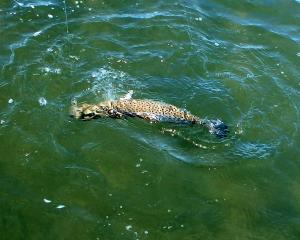
Brackish-water trout fishing ultimately comes down to finding the sweet spot in a constantly changing environment. You need suitable salinity, acceptable water clarity, forage and some combination of current, structure or depth that gives trout an advantage. When those factors come together, the fishing can be outstanding.
There’s also something special about catching specks in these environments. You might be casting beneath cypress trees with legitimate largemouth bass water only a few miles upriver and classic redfish marsh around the next bend. An alligator might be sitting on the bank while gulls work shrimp over the channel. It doesn’t necessarily look like traditional speckled trout water, and that’s precisely why some anglers overlook it.
The Texas and Louisiana coasts aren’t divided neatly into freshwater and saltwater. Between those two worlds lies a vast network of brackish rivers, bayous, canals and marshes. Learn to read the water, follow the bait, understand the current and control the boat instead of allowing the boat to control the way you fish, and you’ll discover there’s a lot more speckled trout water out there than most anglers realize.
TF&G Staff