
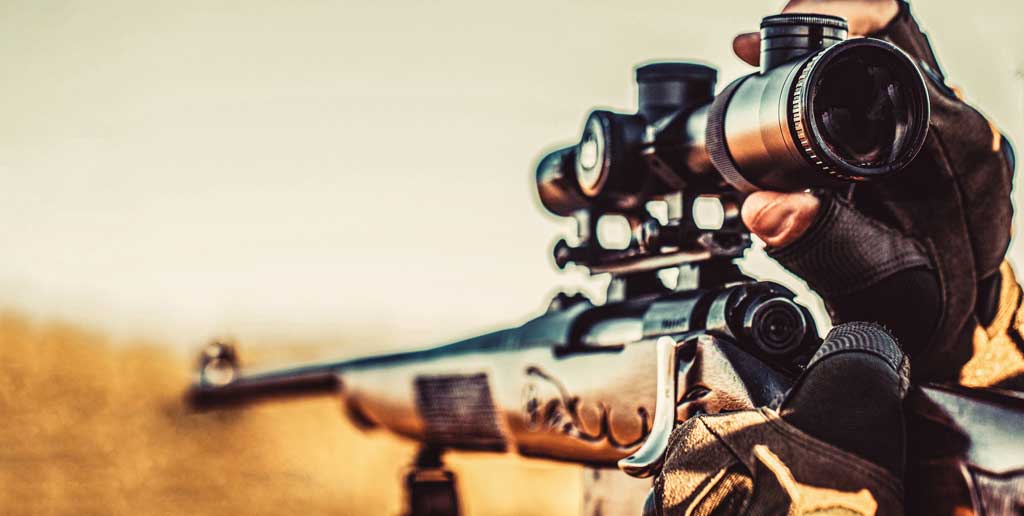
EVERY YEAR, SOMEWHERE between the last hot week of September and the first cold morning of the season, a lot of us do the same thing. Pull the rifle out of the safe, wipe it down, fire three rounds to “confirm zero,” and call it ready.
That is not an audit. That is a ritual.
An audit is less comfortable, because it asks what has changed since last season. Your load changed. Your glass changed. The lease changed hands. The law changed in a state you drive through to get there. Your habits changed, and not always for the better, because nobody practices being careful. They just assume they still are.
Here are six things worth genuinely re-checking, roughly in the order they are likely to cost you something.
1. Your drop chart is older than your zero
Most hunters confirm zero at 100 yards and stop there. That works right up until the shot presents itself at 340 and you are doing arithmetic on a hillside with a shaking reticle.
The problem is that a drop chart is not a property of your rifle. It is a property of your rifle, your specific load, your barrel length, the altitude you are standing at, and the temperature that morning. Change the ammunition and the numbers move. Drive from the Hill Country to an elk hunt at 8,000 feet and they move again. A chart taped to your stock in 2023 is describing a trip you already took.
Re-running it is a ten minute job. Put your bullet weight, ballistic coefficient, muzzle velocity, sight height and zero range into a ballistics calculator and print a fresh table for the conditions you actually expect to hunt in. Then go confirm two of those numbers on paper at distance, because a solver is a starting point, not dope. Dope is what you have personally watched happen.
If you are still settling on a load, it is worth understanding how projectiles behave downrange before you buy three boxes of something that prints beautifully at 100 and falls apart at 400. The ballistics fundamentals are not complicated, but they are specific, and the specifics are the entire point.
2. A drop chart is useless if the range is a guess
Here is the failure that gets blamed on ballistics and almost never is. The chart was right. The distance was wrong.
Eyeballing range is a skill that degrades fast and lies confidently. It is worst exactly when it matters: low light, broken terrain, downhill or uphill angles, an animal standing against a slope with nothing familiar nearby for scale. Guess 250 when it is 310 and a good chart will still put the bullet where you did not want it.
This is what a laser rangefinder is for, and the useful features are not the ones on the front of the box. Angle compensation matters more than maximum range for anyone hunting country that is not flat, because the horizontal distance is what your bullet cares about. A display you can actually read at legal light matters more than one more magnification step. Scan mode matters if the animal is moving.
Range first, then chart. In that order, every time. Take the unit out before the season and range a few known distances around the property so you know what it does in the conditions you will be in, not in the parking lot.
3. The four rules do not go stale, but your habits do
Ask any instructor what they see most in returning students and you will get a version of the same answer. Everybody knows the rules. The habits have drifted.
The four universal rules, in whatever wording you learned them, are the whole foundation. Treat every firearm as loaded. Never let the muzzle cover anything you are not willing to destroy. Keep your finger off the trigger until your sights are on the target. Know your target and what is beyond it. They hold everywhere, from a dove field to a deer stand to the cab of a truck at the end of a long day.
American Eagle Protective Services, out of Leander, has a plain write-up of the four universal laws of responsible gun handling that is worth ten minutes even if you have known them for thirty years. Ammo.com’s version covers the same four rules plus a few extras that matter specifically in the field, where you are tired, cold, and moving over uneven ground.
The reason this deserves an annual re-read rather than a nod: hunting incidents are rarely exotic. Look at hunting accident statistics across any multi-year stretch and the recurring causes are depressingly ordinary. Muzzle direction during a fence crossing or a climb into a stand. A shot taken at movement rather than at an identified animal. Someone unloading in the truck who was certain the chamber was empty.
The rules are not the hard part. Running them when you are cold, rushed, and one hand short is the hard part.
4. Marksmanship is not the same thing as training
Here is an uncomfortable distinction. Shooting well on a square range proves you can operate the rifle. It says very little about what you do when something unexpected happens, because nothing unexpected happens on a square range. That is what a square range is for.
The professional precision shooting world has had to think about this harder than the sporting world has, because they do not get to choose their conditions. Look at what a serious long range marksmanship curriculum actually drills and very little of it is group size. Firing from non-standard and restricted positions. Shooting under time constraints. Night shooting. Cold bore verification. Re-zeroing when the ammunition type changes, and reconciling what the ballistic calculator predicted against what the bullet actually did. Strip out the tactical content and what is left is a list of the things that go wrong on a hunt.
You do not need to enroll in a professional course to take the point. You need to occasionally shoot in conditions you did not choose. Off a tree instead of a bench. After a quarter mile uphill with a pack on. With your heart rate where it will actually be. Do that once and you will learn which of your fundamentals are habits and which are just things you know.
For long range work, the projectile matters as much as the technique, so read up on long range hunting bullets before you commit to a load. Accuracy at 500 yards and terminal performance at 500 yards are two different questions, and only one of them shows up on paper.
5. The camp is a target when you are not in it
This one has nothing to do with shooting and everything to do with the season going smoothly.
A deer lease is, for most of the year, an unattended property with expensive equipment on it. Feeders, stands, cameras, a side by side, sometimes a camp house with a generator and a decade of accumulated gear. Rural theft is patient and it is seasonal, and the people doing it know exactly when nobody is around.
Trail cameras are not a solution to this, whatever the marketing says. A trail camera tells you an animal walked past a spot four days ago. It does not alert anyone, it does not record continuously, and it is itself one of the most commonly stolen items on a lease.
The objection is always the same, and it used to be decisive: there is no power at the camp and no internet either. That is no longer the obstacle it was. Solar surveillance trailers run off their own panels and a cellular or satellite link, which means they work on a site with no service drop, no router and no outlet. They are built for construction yards and remote industrial sites, which is close enough to an unattended lease to be the same problem. They can also be moved, which matters if you want coverage on the camp house in the off season and on the gate during the season, and several can be rented rather than bought if one season is all you need.
Then do the unglamorous half. Photograph serial numbers. Keep receipts somewhere that is not the camp. Check whether your homeowner’s policy covers equipment stored off site, because a surprising number do not.
6. Your paperwork expires faster than your tag
The least interesting item on the list, and the one most likely to actually end a trip at a roadside.
In Texas, hunter education certification is required for anyone born on or after September 2, 1971, and once you have it, it does not expire. Almost everything else does. Your license. Your lease agreement. Your out of state permits, which have their own renewal calendars and their own moods.
If you carry a handgun alongside the hunting rifle, the paperwork question gets harder the moment you cross a state line, and the ground is moving. Permit processing is under active litigation in several jurisdictions. Oak Arms Training Group has a readable breakdown of how New York City’s permit delays became a federal lawsuit, which is a useful corrective for anyone who assumes an application is a formality with a predictable timeline. In a growing number of places it is not.
Check the current rules for every state you will drive through, not only the one you are hunting in. Where you sleep and refuel counts.
The Checklist
- Re-run your drop chart for this year’s load and this year’s elevation, then confirm two of the numbers on paper at distance.
- Range first, chart second. Take the rangefinder out before the season and check it against known distances.
- Re-read the four rules, then spend one day watching your own habits instead of trusting them.
- Train once in conditions you would not have chosen. Off a tree, out of breath, in failing light.
- Secure the camp before you need to, and photograph serial numbers while everything is still there.
- Check every licence, permit and lease agreement, for every state you will drive through.
None of it is difficult. All of it is the kind of thing that gets skipped because last season went fine.