
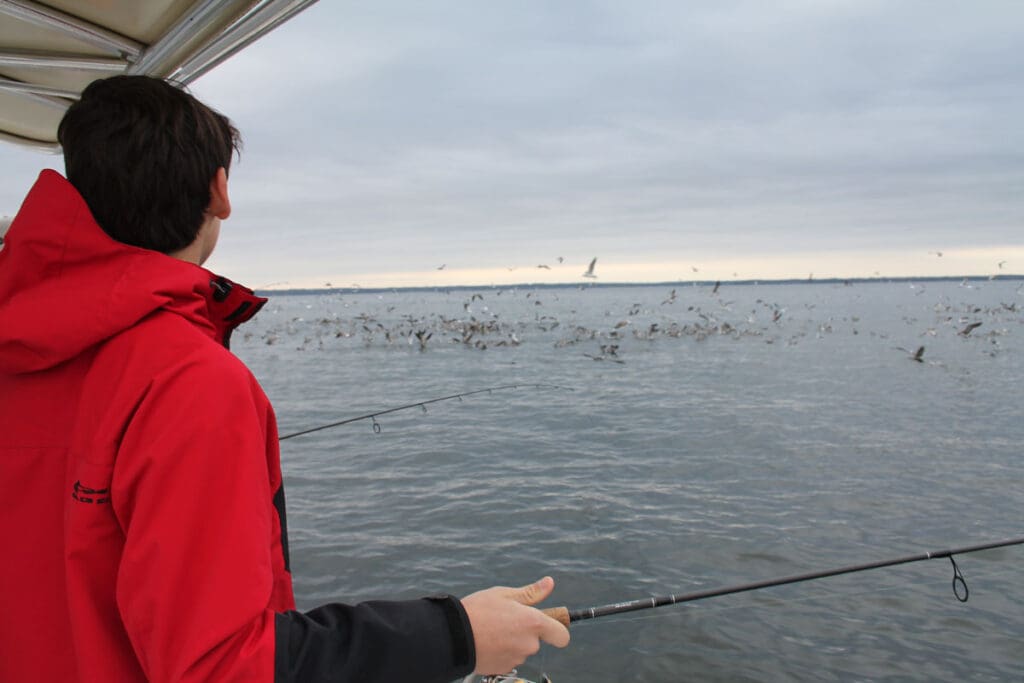
Few things get a Texas coastal angler’s blood pumping like seeing gulls dipping and diving over open water.
From Sabine Lake and Galveston Bay down through the Middle and Lower Coast, working birds can signal speckled trout driving shrimp and small baitfish toward the surface. Finding the birds, however, is only part of the game. How you approach them and what you do once you get there can make the difference between catching a couple of fish and really getting into the action.
The first trick is to watch the direction the birds are moving before charging toward them. Trout schools often push bait in a fairly predictable direction. Instead of running directly into the flock and scattering everything, circle wide, get ahead of the movement and drift or use your trolling motor to quietly get into casting range.
Sometimes you simply can’t get close enough.
That’s when I like a spoon.
A relatively heavy spoon can be launched a tremendous distance, allowing you to reach fish that are well beyond normal casting range with a soft plastic. If the birds keep moving away from you or another boat has them nervous, being able to throw an extra 20 or 30 yards can keep you in the game. Spoons also imitate the small shad and other baitfish commonly being hammered beneath the birds.
Pay attention to what kind of birds are working, too. A group of gulls hovering tightly, dipping repeatedly and obviously struggling to keep up with something underneath deserves immediate attention. A few terns making occasional dives may simply be picking off tiny bait near the surface. Learn to recognize birds that are following moving fish instead of birds that just happen to be feeding.
Another trick is to fish the edges rather than automatically throwing into the middle of the frenzy.
Speckled trout may be directly beneath the birds, but redfish will sometimes be around the outside of the action. This is another great situation for a spoon. Fan-cast beyond and around the main group instead of putting every cast directly underneath the gulls. You might be surprised when what looks like a trout bite suddenly produces a hard-running redfish.
And don’t assume the biggest trout are always directly beneath the most frantic birds.
Sometimes smaller trout create the obvious surface commotion while better fish work around the edges or trail the school, picking off wounded shrimp and baitfish. Make some casts 20 or 30 yards behind the direction the school is moving or toward the down-current side of the activity.
Lure size can also become critical. Trout underneath gulls can get extremely keyed in on tiny shrimp or small shad. If you’re getting short strikes or suddenly stop catching fish, downsize. A small soft plastic can sometimes dramatically outperform the larger baits we normally associate with trout fishing. Match what is coming out of the water rather than automatically throwing your favorite lure.
One of the biggest mistakes, however, happens when the birds leave.
Don’t immediately crank the outboard and go hunting for another flock. Drop a soft plastic toward the bottom and work the area thoroughly. The explosive surface feeding may have stopped, but trout can remain underneath, picking off injured bait or simply settling deeper in the water column.
And if a particular flock produces good fish, mark the location.
Birds are telling you where feeding is happening, but there is usually a reason the fish are there. It might be a reef, channel edge, depth change, current seam or concentration of bait. That same location may produce again later in the tide—or the next time you fish similar conditions.
Anybody can chase gulls.
The trick is learning what the birds are telling you about what’s happening underneath them.
Chester Moore