
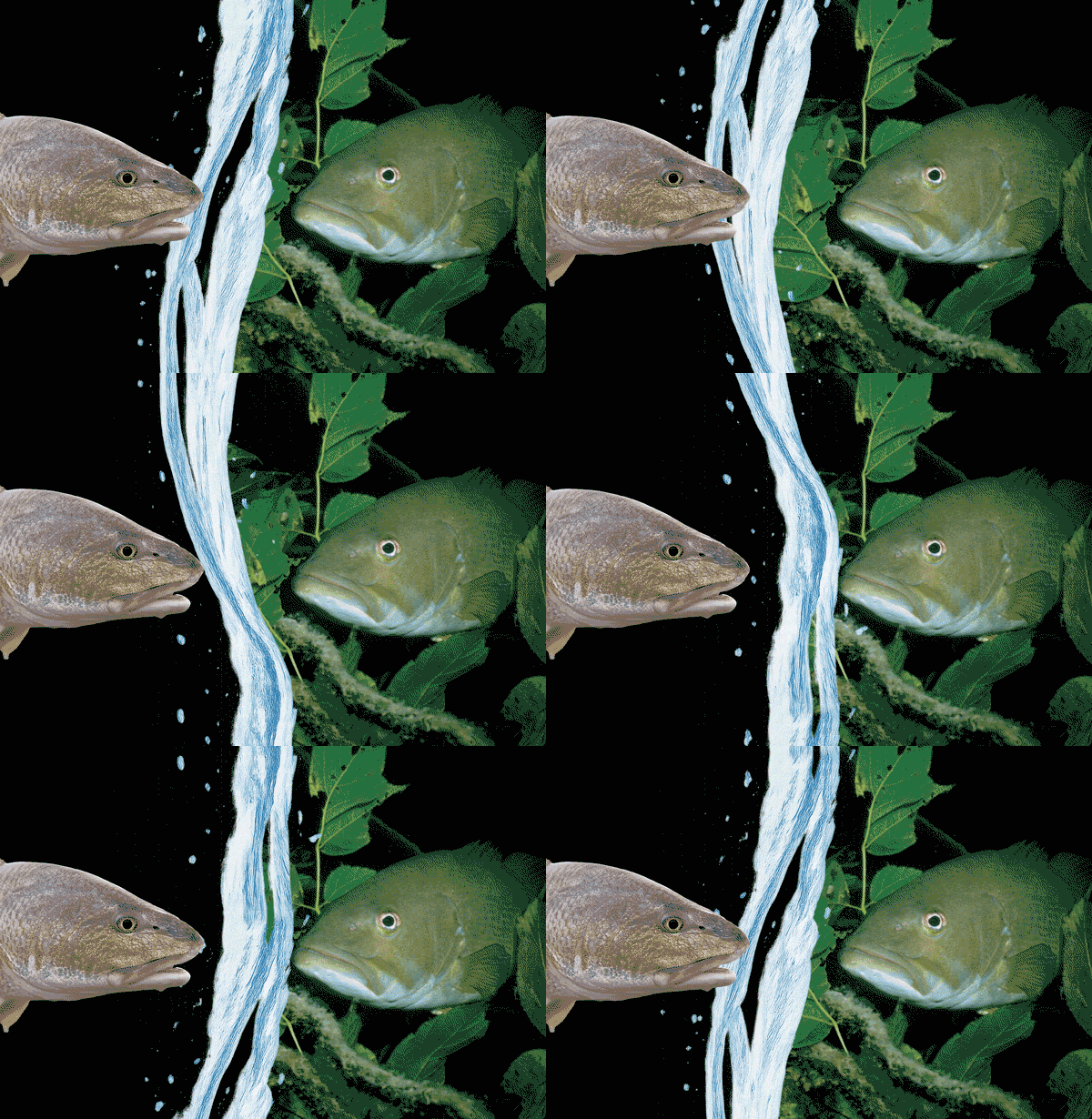
Some of the most interesting fishing on the Texas and Louisiana coasts happens in water that can’t quite decide what it wants to be. It’s not truly freshwater, and it’s not completely saltwater. It’s the brackish world of rivers, bayous and marshes where freshwater flowing toward the coast mixes with saltwater moving inland with the tides.
In these places, bass country can become redfish water. Anglers fishing the lower reaches of coastal rivers and large bayou systems can encounter largemouth bass in areas where catching a redfish is also a legitimate possibility. Move farther upriver and bass become more prominent. Head toward the marsh and estuary and reds become increasingly likely. Somewhere between those two worlds is an overlap that can produce some fascinating fishing, and fall is a great time to explore it.
Cooling temperatures can put baitfish on the move and predators on the feed. Instead of approaching these waters strictly as a bass fisherman or saltwater angler, concentrate on the things bass and redfish have in common. Both are predators, and finding the bait is often the first step toward finding them.
Follow the Bait
Shad can be extremely important in river and bayou systems, particularly as fish begin concentrating around moving schools of forage. Closer to the coast, menhaden—better known throughout much of Texas and Louisiana as pogies—become another major player. Mullet and other forage can also be part of the equation.
The exact species of bait isn’t always as important as recognizing where it is concentrating. Watch for bait flipping along the shoreline, nervous patches of water, birds suddenly becoming interested in one particular stretch and visible schools moving along points or through cuts. Pay special attention to places where a smaller bayou enters a larger river or where a marsh drain empties into a major bayou.
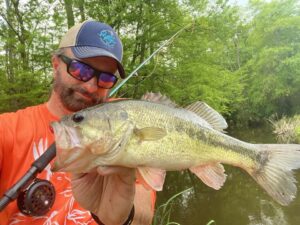
Those junctions can concentrate bait because current coming through a narrow cut can sweep forage into a larger body of water. A bend in the river can push it toward one bank, while a point can redirect the flow and create an eddy immediately downstream. These are natural places for predators to set up and feed.
A bass doesn’t know it’s getting close to redfish country, and a redfish moving into lower-salinity water doesn’t care that it has entered what anglers traditionally consider bass habitat. Both are there because the conditions offer an opportunity to eat.
Fish the Current
Current is one of the most important pieces of the puzzle in these systems. Unlike fishing a typical reservoir or farm pond, anglers in coastal rivers and bayous may be dealing with river flow, tidal movement and wind at the same time. Sometimes they’re all moving in roughly the same direction, and sometimes they’re working against each other.
An outgoing tide can pull water from the marsh through narrow drains, carrying bait into a river or major bayou. An incoming tide can reverse the equation and push water back into those same areas. Add a strong wind running against the current and conditions can become surprisingly choppy even well inside a river or bayou system.
That’s why anglers shouldn’t think only about visible cover. Current can function like structure. Look for seams where fast-moving water meets slower water and watch the downstream side of points, pilings, laydowns and other objects that break the flow. Eddies and pockets where baitfish can become trapped or disoriented deserve particular attention.
Bass and redfish can both use these areas for the same reason. They can remain outside the strongest flow and intercept forage moving past them. Instead of simply casting toward the bank, work lures across those current seams and experiment with different angles.
Bass Lures Catch Reds
One of the fun things about fishing this overlap is that there’s no reason to completely reinvent your tackle. Many traditional bass presentations are excellent redfish lures.
Spinnerbaits can be deadly around grass, drains and muddy shorelines. Shallow-running crankbaits can imitate shad and other small forage around points and current breaks, while paddle-tail swimbaits are equally at home around largemouth bass and redfish. When predators are actively pushing bait to the surface, topwaters can produce explosive action from either species.
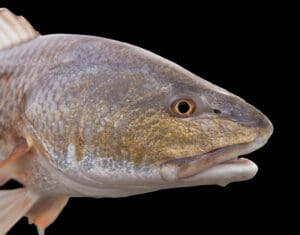
The key is matching the forage and putting the lure where feeding fish can intercept it. That’s also what makes these waters unpredictable. A strike beside a laydown might come from exactly the largemouth bass you expected, while the next cast down the same bank could produce something considerably stronger with a black spot near its tail.
Controlling the Boat
Boat control becomes especially important when fishing these transition zones because anglers are often trying to follow moving bait or repeatedly work very specific pieces of current. The Minn Kota Riptide Terrova is designed for saltwater use while offering the kind of precise GPS boat-control capabilities that are also useful for bass-style fishing.
That combination fits the freshwater-saltwater crossover of these fisheries. AutoPilot can help maintain a chosen heading while compensating for wind, waves and current, which can be valuable when working a long riverbank, following the edge of a bayou or maintaining a consistent casting angle along a current seam.
Drift Mode can help control speed and course when anglers want to move through an area instead of remaining stationary. In river and bayou systems where wind and current can quickly move a boat away from feeding fish, controlling that drift can mean spending more time casting and less time repositioning.
Spot-Lock is particularly useful when a moving school of bait suddenly attracts feeding fish around a point, drain or other small piece of structure. Instead of continuing past the action with the current, anglers can hold position and thoroughly work the productive water. Sometimes the feeding zone might be no larger than the downstream side of a point, the mouth of a narrow bayou or a short stretch where two currents meet. In that situation, precise boat position can make a major difference.
Work With the Water
There are times when anglers have to work against the wind or current to maintain the correct position, but constantly fighting both can also be counterproductive. Whenever possible, use the natural movement of the water to your advantage.
Set up ahead of a productive stretch and work through it. Position the boat so the current helps carry a lure naturally through the strike zone. If bait is moving down a shoreline, move with it instead of continually forcing the boat in the opposite direction. The goal isn’t to overpower the environment but to maintain enough control to fish effectively within it.
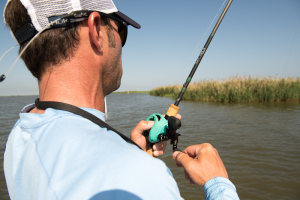
This can be especially important in shallow water where excessive trolling-motor movement and constant corrections can create unnecessary disturbance. In clear or heavily pressured water, a quieter approach can sometimes make the difference between watching fish move away and getting them to strike.
The Water Between Two Worlds
The Texas-Louisiana coastal region contains countless places where freshwater and saltwater fisheries blend together. They aren’t always glamorous fishing destinations. They can be muddy rivers, sprawling bayous, industrial waterways, marsh drains and seemingly ordinary stretches of shoreline, but they can be incredibly productive.
The invisible line separating freshwater from saltwater isn’t nearly as important to fish as it is to fishermen. Salinity changes with tides, rainfall and river flow. Bait moves in response to those conditions, and predators move with it.
For anglers willing to follow those changes, the possibilities are tremendous. Find the bait, read the current and use wind and tide instead of automatically fighting them. Maintain boat control when conditions demand it and pay particular attention to the places where moving water concentrates forage.
Somewhere along the Texas-Louisiana coast, there’s a stretch of brackish river or bayou where bass country meets redfish water. On the right fall day, you might catch both without ever leaving the same stretch of shoreline.
TF&G Staff