
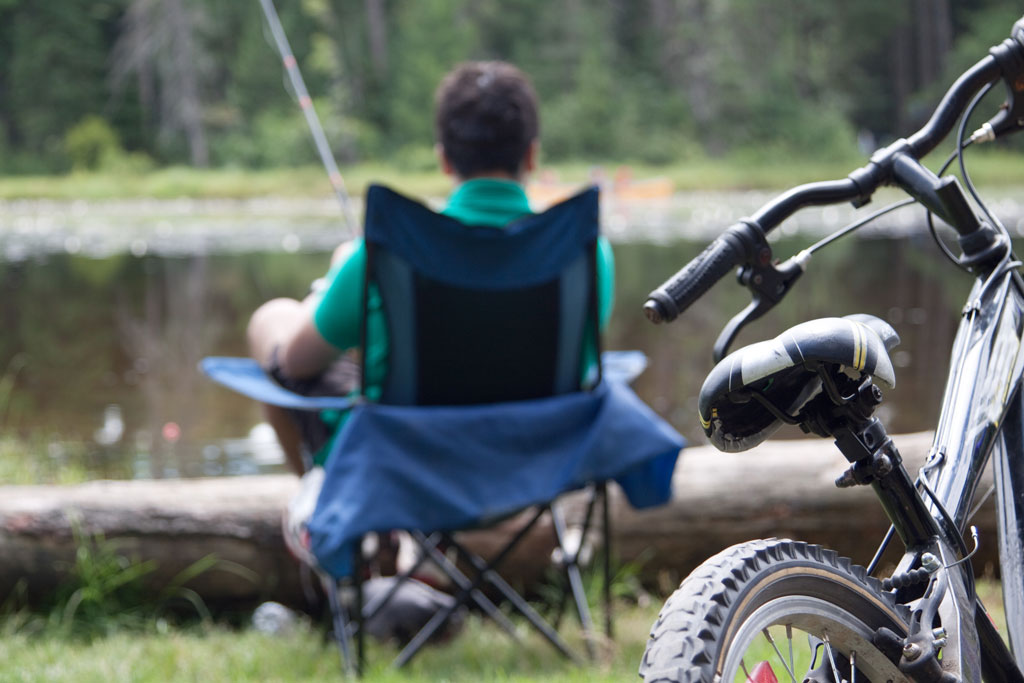
FOR MANY PEOPLE, spending time outdoors begins with a familiar activity. It might be fishing from a favorite shoreline, hunting a familiar piece of land, hiking a wooded trail, or simply spending a morning around a lake. But learning a new outdoor sport can change that experience in an unexpected way. Instead of simply visiting nature, you begin paying closer attention to it.
A new activity gives you a reason to slow down, study your surroundings, learn how weather affects conditions, and notice details that might otherwise go unseen. The skills involved may be different from traditional hunting or fishing, but the underlying relationship with the outdoors is remarkably similar.
New Skills Create a Different Kind of Awareness
One of the biggest benefits of learning a new outdoor sport is that it changes what you notice.
An experienced angler already knows to watch water temperature, current, structure, bait movement, weather patterns, and changes in light. A hunter develops a similar awareness of tracks, wind direction, animal behavior, terrain, and habitat. Learning another outdoor discipline introduces a new set of observations.
Someone learning archery, for example, begins to pay much closer attention to distance, wind, body position, natural obstacles, and the way a particular location affects a shot. The landscape stops being simply a backdrop. It becomes part of the activity.
That same process happens across outdoor recreation. The more skills you develop, the more information you learn to extract from your surroundings.
Practice Changes the Way You See the Landscape
Learning any physical outdoor skill requires repetition. That repetition can make familiar places feel surprisingly different.
Consider a person who regularly visits the same patch of woodland. On an ordinary walk, they might notice the trees, a creek, or a few birds. After spending time learning to practice archery in that environment, however, they may begin noticing open shooting lanes, changes in terrain, prevailing wind, natural backstops, and potential hazards.
The location has not changed. The person’s attention has.
This is one reason outdoor sports can create a deeper connection with nature. Developing competence requires observation. Observation leads to curiosity, and curiosity often leads to a greater understanding of wildlife and habitat.
Learning to Read Weather and Conditions
Outdoor sports also teach an important lesson: nature does not operate according to a fixed schedule.
Wind can change the way an arrow travels. Rain can alter a trail. Temperature can influence wildlife movement. Cloud cover can change visibility. Water levels can transform a familiar fishing location. Seasonal changes can affect everything from insect activity to animal behavior.
Fishing is perhaps one of the clearest examples. Successful anglers constantly adapt to changing conditions. A productive location in the morning may behave differently later in the day because of sunlight, wind, water temperature, or forage movement.
The same principle applies when someone learns an unfamiliar outdoor sport. Instead of expecting nature to accommodate the activity, the participant has to adapt to nature.
That mindset is valuable well beyond the sport itself.
Different Sports Can Lead People Back to Traditional Outdoor Pursuits
Learning a less traditional outdoor activity does not necessarily pull people away from hunting and fishing. It can actually create another pathway into them.
A young person who first becomes interested in archery may eventually become curious about bowhunting, wildlife tracking, or habitat management. Someone who develops an interest in paddling may become more interested in fishing waterways that are inaccessible from larger boats. A person who begins exploring outdoor photography may become fascinated by birds, mammals, and seasonal wildlife behavior.
Even tennis can introduce someone to the simple habit of spending regular time outside, paying attention to weather and physical surroundings rather than automatically choosing an indoor activity.
The important point is that outdoor recreation does not have to follow a single path. Different activities can introduce people to different parts of the natural world.
Physical Skills Encourage Patience
Many outdoor sports also teach patience in ways that are difficult to replicate indoors.
Fishing requires waiting, observation, and willingness to change tactics. Hunting requires careful preparation and the ability to remain attentive for extended periods. Archery requires repetition and concentration. Paddling requires awareness of currents, wind, and water conditions.
Those lessons become particularly valuable for newcomers.
A beginner may initially focus on whether they are succeeding. Over time, however, the experience often becomes less about immediate results and more about understanding the process. A day outside can still be worthwhile even when the fish do not bite, the target practice does not go perfectly, or wildlife remains hidden.
That shift in perspective is one of the most important things outdoor recreation can teach.
New Activities Can Strengthen Conservation Awareness
Greater familiarity with the outdoors can also lead to greater awareness of conservation.
When people repeatedly spend time in natural environments, they become more likely to notice changes. A shrinking wetland, damaged shoreline, declining habitat, invasive vegetation, litter, or altered water conditions becomes more than an abstract environmental issue.
This connection is particularly important for the hunting and fishing community. Fish & Game readers already understand that healthy habitat is fundamental to healthy wildlife populations and quality outdoor opportunities. Recent coverage on Texas coastal development, for example, has highlighted how habitat changes can affect both ecosystems and traditional fishing and hunting opportunities.
Learning another outdoor sport can reinforce that same connection by giving people another reason to observe and understand the landscape.
Outdoor Sports Teach Respect for Limits
Nature also has a way of making limitations obvious.
A person can train extensively, purchase better equipment, and improve technique, but weather, terrain, wildlife behavior, and environmental conditions will always remain outside their complete control.
That can encourage a healthier approach to outdoor recreation.
Instead of trying to force an outcome, participants learn to work with the conditions available. Experienced anglers know that changing locations may be smarter than repeatedly casting into unproductive water. Hunters understand that wind, movement, and animal behavior can make conditions unsuitable. Other outdoor athletes learn similar lessons in their own environments.
The result is a deeper appreciation for preparation, judgment, and adaptability.
Introducing Young People to More Than One Outdoor Activity
Exposure to multiple outdoor sports can be especially valuable for children and teenagers.
Not every young person will immediately connect with fishing or hunting. Some may discover the outdoors through archery, cycling, paddling, climbing, swimming, or another activity. What matters is creating opportunities for them to develop confidence outside.
Swimming provides one example. Programs such as Nemo swimming programs can help participants become more comfortable in and around water, while other outdoor activities can introduce them to forests, fields, mountains, or coastal environments.
Once young people develop confidence in one setting, they may become more willing to explore another. An interest in one activity can become the starting point for a much broader outdoor lifestyle.
Fish & Game has also highlighted the importance of introducing younger generations to outdoor experiences through mentorship, education, and hands-on activities.
The Outdoors Becomes More Than a Destination
Ultimately, learning a new outdoor sport changes the way you experience nature because it gives you a reason to interact with the environment rather than simply pass through it.
You begin noticing wind before you feel it. You pay attention to water movement, animal tracks, vegetation, terrain, light, and seasonal changes. You become more aware of how small environmental differences can affect an entire experience.
That perspective can make familiar places feel new again.
For hunters and anglers, this is nothing unfamiliar. The best outdoor experiences have always involved much more than equipment or the pursuit itself. They involve reading the land, understanding wildlife, respecting conditions, and developing the judgment that comes from spending time outside.
A new outdoor sport simply provides another way to build those habits.
Whether the activity involves a bow, a paddle, a racket, a trail, or the water, the result can be the same: greater curiosity, stronger outdoor skills, and a deeper appreciation for the places that make outdoor recreation possible.
And once you start seeing nature through a new set of skills, even a familiar landscape can offer something you never noticed before.