
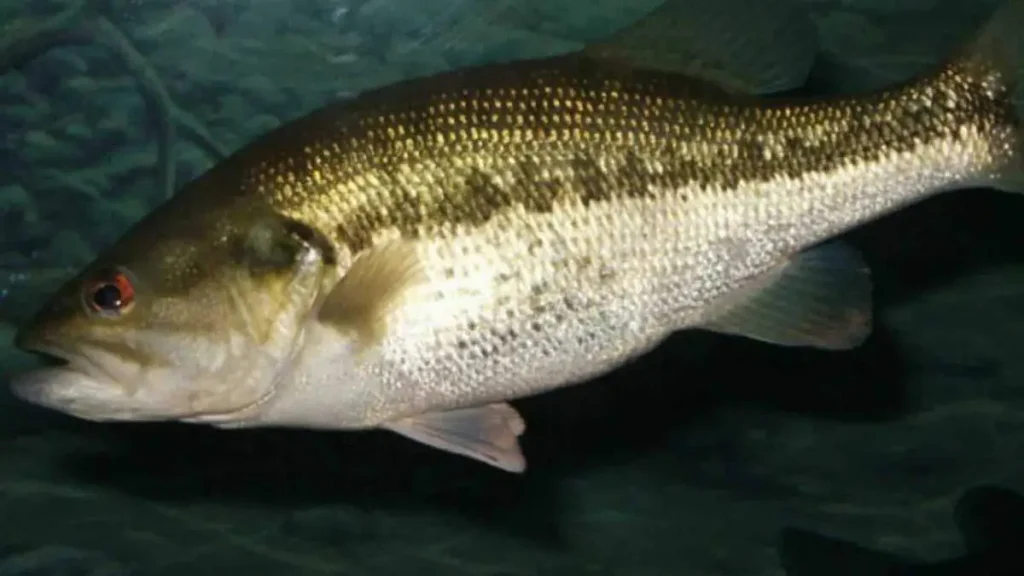
Fall is a time of transition for largemouth bass on Texas reservoirs. As water temperatures begin to drop, shad move into creeks and coves, and bass often follow. This creates some outstanding shallow-water opportunities, but anglers looking for truly big fish should not overlook main-lake humps and ridges.
Some of the biggest bass in a lake can remain offshore well into fall, taking advantage of concentrations of baitfish and favorable conditions along underwater structure. While many anglers focus on throwing spinnerbaits, squarebill crankbaits and topwaters around shallow cover, there can be a completely different bite developing offshore. Sometimes that bite produces the biggest fish of the season.
The key is understanding how these fish use the terrain and how their behavior changes as fall progresses.
Understanding Offshore Structure
A main-lake hump is essentially an underwater hill that rises from deeper water. Ridges are elongated high spots that often connect points, humps or other structural features. Both can provide ideal feeding opportunities for big bass, especially when they feature sharp drops, isolated brush, standing timber or rock.
On reservoirs like Sam Rayburn and Toledo Bend, offshore structure can hold quality bass throughout much of the year. Fall presents a unique opportunity because fish may move up and down these structures as conditions change. However, these patterns are not limited to the giant East Texas reservoirs.
O.H. Ivie Reservoir has become famous for producing enormous largemouth bass, and its combination of rocky structure, submerged cover and deep-water access makes it an excellent example of why offshore habitat deserves attention. Lake Fork is another obvious destination for anglers seeking giant bass. Its extensive underwater structure, including old roadbeds, points, humps and creek channels, provides numerous places where big fish can position themselves during fall.
Farther south, Falcon Lake offers rocky points, ridges and other structural features that can concentrate bass when water levels and conditions are favorable. Even lakes that are better known for shallow-water fishing can have offshore opportunities that many anglers overlook.
The important thing is not necessarily the name of the lake but the relationship between structure, baitfish and deep water. A hump rising out of 35 feet of water and topping out at 15 feet can be an outstanding place to start. These are not magic depths. In some reservoirs, productive humps may be considerably shallower. In others, bass may hold much deeper, especially during early fall.
What matters is having different depths available within a relatively small area. Big bass do not always have to make long movements to feed. A fish positioned near a sharp break can move onto a feeding shelf and return to deeper water with relatively little effort. That is the kind of structure worth finding.
Finding the Sweet Spot
Not every hump or ridge holds bass. In fact, anglers can spend considerable time fishing beautiful-looking underwater structure without getting a strike. The difference often comes down to baitfish and subtle features that concentrate bass.
A hump with a flat top might look promising on a map, but one featuring a sharp drop on the southern end, a small rockpile or a patch of standing timber can be much more productive. The same is true of ridges. Pay particular attention to places where a ridge makes a turn, narrows considerably or intersects another structural feature. These irregularities can create natural feeding stations.
Modern electronics make locating these areas much easier than in years past. Side-imaging sonar can reveal rock, brush and timber along a ridge, while traditional sonar and down imaging can help identify fish and bait directly beneath the boat.
Forward-facing sonar can help anglers determine how bass are positioned around structure and how they respond to presentations. However, electronics should be used to understand the structure rather than simply chase individual fish. Finding a productive hump and learning how bass relate to it can pay dividends throughout the season.
One important consideration is the thermocline. During early fall, some Texas reservoirs remain strongly stratified, with oxygen levels below the thermocline potentially limiting where bass can comfortably hold. A hump surrounded by deep water may look outstanding on a map, but that does not mean bass will be using its deepest sections.
Look for bait and fish activity at depths that offer suitable conditions. As fall cooling progresses and lakes begin mixing, those patterns can change considerably.
Learn about Suzuki’s Clean Ocean Project
Presentations for Giant Bass
One of the most effective ways to fish offshore humps and ridges is with a football jig. A half-ounce or three-quarter-ounce jig can be worked along rocky bottoms, gravel and other relatively open structure. The wide football-shaped head helps it move across hard bottom, although it is not the best choice for heavy brush or dense timber.
Dark colors such as black and blue can work well in stained water, while green pumpkin and other natural colors are good choices in clearer conditions. Rather than hopping the jig aggressively across the bottom, try dragging it slowly and occasionally allowing it to rest. Large bass sometimes strike when a jig barely moves.
A Texas-rigged worm is another excellent choice, particularly when fishing brush, timber or other cover where a football jig might hang up. Large worms have a long history of producing quality bass on Texas reservoirs. A 10-inch worm might seem oversized to some anglers, but it is certainly not too large for a trophy largemouth. Work it slowly along breaks and through isolated cover.
Carolina rigs are particularly effective when bass are scattered across long ridges or broad offshore flats. A Carolina-rigged soft plastic can cover considerable territory while keeping the bait near the bottom. This is especially useful when fish are not tightly concentrated on one piece of cover.
Deep-diving crankbaits also deserve attention. When bass are actively feeding on the upper portions of a hump, a crankbait that reaches the bottom and occasionally deflects off rock can trigger reaction strikes. Long casts are essential for getting these baits to their maximum running depth.
Experiment with casting angles. Sometimes retrieving a crankbait uphill produces strikes. Other times, working it parallel to a break or across the top of a ridge is more productive.
A swimbait can also be an outstanding option when large bass are suspended near offshore structure and feeding on shad. Match the size and running depth of the lure to the baitfish present. On lakes with exceptionally large bass, anglers may be tempted to throw the biggest swimbait in the tackle box. That can certainly produce fish, but it is not always the best approach. Sometimes a smaller, more natural presentation gets more attention.
Wind, Weather and Timing
Wind can be a major factor in offshore fall bass fishing. A moderate breeze blowing across a hump or ridge can help concentrate baitfish and create feeding opportunities. The windward side is often worth checking first, particularly when baitfish are present.
However, wind does not automatically mean bass will be feeding. Water clarity, temperature, current and available forage can all influence where fish position themselves. On some reservoirs, current generated by power production or water releases can make offshore structure considerably more productive.
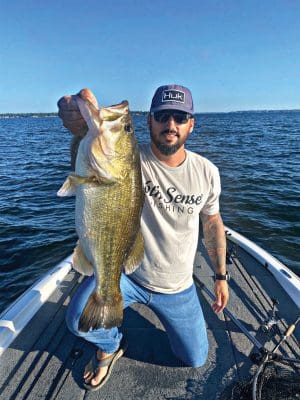
Fall cold fronts can also influence the bite. An approaching front may produce an excellent feeding window, while the period immediately following a strong front can sometimes make fishing more difficult. Rather than abandoning an offshore location after a front, try changing the presentation. A slow-moving jig or worm may produce when a fast-moving crankbait does not.
Timing within the fall season matters as well. During September and early October, many Texas reservoirs still have summerlike water temperatures. Bass may continue holding along deep structure, particularly during periods of stable weather.
As the season progresses into November, cooling water can cause significant changes in baitfish movements and bass activity. Some offshore locations that produced during summer may become less productive, while others closer to creek channels or major migration routes improve.
That is why anglers should avoid treating fall as one consistent pattern. Early fall on O.H. Ivie can be a very different proposition from late fall on Sam Rayburn. Even on the same lake, conditions can change dramatically within a few weeks.
Targeting the Biggest Fish
There is a difference between catching numbers of bass and deliberately targeting giants. Large schools of offshore bass can produce tremendous action, but they do not always contain the biggest fish in the reservoir. Sometimes a hump holding only two or three bass is more interesting to a trophy hunter than one loaded with smaller fish.
Look for isolated cover along the edge of major structural features. A single large stump near a drop, a brushpile on the end of a ridge or a rock formation surrounded by otherwise featureless bottom can be especially attractive. These places can offer a big bass an advantageous position from which to feed.
Many anglers focus on the obvious high spots while ignoring smaller irregularities along the sides. That can be a mistake. On lakes such as Fork and O.H. Ivie, where giant bass are a major attraction, fishing slowly and thoroughly around promising offshore cover can be worthwhile.
It is also important to approach these places carefully. Running directly over a shallow hump or repeatedly positioning the boat on top of the cover can disturb fish, particularly in clear water. Use mapping and sonar to plan your approach, then position the boat so casts can cover the most promising areas.
When a quality fish is caught, do not immediately assume the location is finished. There may be another big bass nearby. At the same time, anglers should resist the temptation to spend hours on an unproductive spot simply because it looks good on a map. If the baitfish are absent and conditions are wrong, moving to another piece of structure may be the best decision.
Finally, anglers targeting giant bass should be prepared to handle them carefully. Use appropriately heavy tackle around cover, have a landing net ready and minimize the amount of time a fish spends out of the water. Large bass are valuable fish, especially in reservoirs with established trophy fisheries.
Anglers who catch qualifying fish should also be familiar with the Texas Parks and Wildlife Department’s Toyota ShareLunker program and its current participation requirements.
Texas has some of the finest trophy largemouth bass fisheries in the nation. From the timber and expansive structure of Toledo Bend and Sam Rayburn to the rocky terrain of O.H. Ivie and the legendary waters of Lake Fork, anglers have tremendous opportunities to pursue truly exceptional fish.
While fall fishing often brings images of bass crashing shad against shallow shorelines, some of the biggest fish may never make that move during the time anglers are on the water. They may be waiting offshore, along an underwater ridge, near a rocky hump or beside an isolated piece of cover.
Sometimes catching a fall giant means looking beyond the shoreline and discovering the hidden terrain beneath the surface.
Chester Moore