
What if scientists could develop an artificial egg capable of helping restore bird species that disappeared centuries ago?
It sounds like science fiction, but researchers at Colossal Biosciences are exploring technologies that could open new possibilities for wildlife conservation, biodiversity and even the return of extinct species.
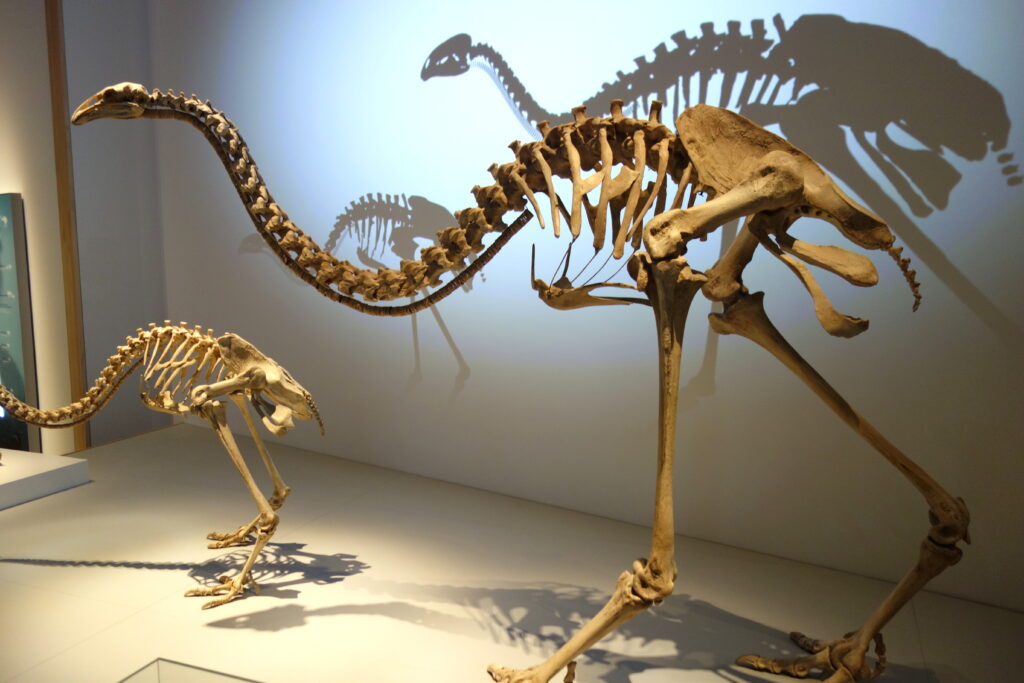
Among the animals that could potentially benefit from this research are giant moa, the enormous flightless birds that once inhabited New Zealand. Some species stood more than 10 feet tall with their necks extended, making them among the tallest birds ever to walk the Earth.
Hear the conversation with Dr. Andrew Pask of Colossal Biosciences: Apple Podcasts | Spotify
The moa disappeared centuries ago, but advances in genetic research and reproductive technology are raising questions about whether birds like these could someday return in some form.
One of the biggest challenges in avian de-extinction involves reproduction. Unlike mammals, birds develop inside eggs, creating unique obstacles for scientists attempting to work with their reproductive cells and develop new generations of animals.
Artificial egg technology could eventually help researchers overcome some of these challenges by providing a controlled environment for embryonic development.
Dr. Andrew Pask, a renowned Australian geneticist and chief biology officer at Colossal Biosciences, recently discussed this research with wildlife journalist Chester Moore.
Pask explained how artificial egg technology fits into the broader scientific effort to explore de-extinction and why developing these techniques could have applications far beyond bringing back lost species.
Colossal Biosciences is also pursuing research involving the woolly mammoth and thylacine, commonly known as the Tasmanian tiger. These projects involve complex questions about genetics, reproduction and the possibility of developing animals with characteristics of extinct species.
But perhaps the most important potential benefits involve wildlife that still exists.
Technologies developed through de-extinction research could eventually contribute to conservation breeding programs, genetic diversity management and efforts to protect species facing serious population declines.
For endangered birds, advances in reproductive science could provide additional tools for conservationists working to maintain healthy populations and prevent further extinctions.
The science remains experimental, and significant technical and biological challenges must be overcome before artificial egg technology could support the development of extinct or endangered bird species.
Nevertheless, the possibilities demonstrate how research into animals that disappeared long ago might eventually help protect those still sharing the planet today.
The conversation with Pask is featured in a special episode of Dark Outdoors, which explores the science behind artificial eggs, the challenges of avian de-extinction and the conservation implications of emerging genetic technologies.
While the idea of bringing back giant birds captures the imagination, the broader conservation implications may ultimately prove even more significant. The same scientific advances being explored to understand and potentially recreate extinct wildlife could someday help prevent other species from disappearing in the first place.