

Late October and the transition into November can offer some of the finest speckled trout wadefishing of the year along the Texas coast. Cooling water temperatures, migrating baitfish and increasingly frequent cold fronts create opportunities for anglers willing to adjust their tactics to changing conditions.
From Sabine Lake to the Lower Laguna Madre, trout begin responding to seasonal changes that can concentrate fish in predictable locations. The key is finding the right combination of bait, bottom structure and water movement.
Upper Coast: Shorelines, Reefs and Marsh Drains
On the upper coast, late October and early November offer excellent opportunities in Sabine Lake, East Galveston Bay and Trinity Bay. One productive approach is working shallow shorelines adjacent to deeper water, particularly where scattered shell, mud and sand come together.
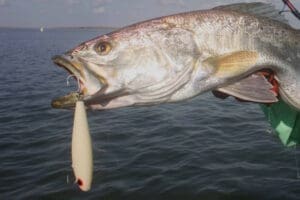
As temperatures drop, shrimp and other forage begin moving out of marshes and toward open water. Trout often gather around drains and bayou mouths to take advantage of these movements. An outgoing tide can concentrate bait around these areas, creating opportunities for anglers throwing soft plastics.
Three- and four-inch paddletails on 1/8-ounce jigheads are excellent choices. Darker colors can work well in stained water, while natural patterns are productive when visibility improves.
As stronger cold fronts arrive, protected shorelines with nearby deeper water become increasingly attractive. Mud and shell bottoms can be especially productive during warming trends following a front.
Middle Coast: Grass Beds and Sand Pockets
The middle coast, particularly the Rockport, Aransas Bay and San Antonio Bay areas, offers outstanding wadefishing as October gives way to November. Submerged grass beds interrupted by sand pockets, potholes and small channels are prime locations.
Trout frequently position themselves along the edges of these openings, waiting to ambush mullet and other baitfish. Topwater plugs remain effective during calm mornings, particularly when baitfish are active over shallow grass.
Walking-style plugs worked with occasional pauses can produce explosive strikes. As water temperatures continue dropping, suspending twitchbaits become increasingly valuable. These lures allow anglers to slow their presentations and keep them in the strike zone longer.
Shorelines receiving moderate wind-driven current can also be productive, particularly when baitfish are concentrated along grass edges.
Lower Coast: Clear Water and Subtle Presentations
The Lower Laguna Madre offers a different experience, with extensive shallow flats, clear water and abundant submerged grass. Around Port Mansfield and South Padre Island, late October and November can provide excellent opportunities for anglers targeting trout over grass flats and around potholes.
Look for schools of mullet moving across shallow areas, especially near slightly deeper depressions. In clear water, long casts and quiet approaches are particularly important.
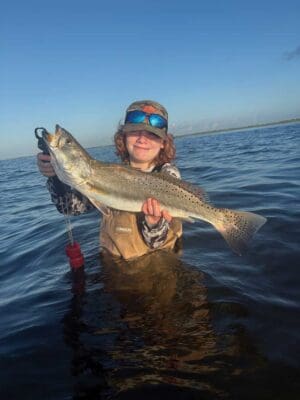
Smaller paddletails, suspending lures and topwaters can all produce. When trout follow without striking, slowing the retrieve or changing lure size can make a difference.
The first significant cold fronts can also create opportunities along deeper edges where trout have access to nearby shallow feeding areas.Make the Most of the Transition
Late October and November fishing requires attention to weather patterns. The days immediately before a cold front can produce aggressive feeding, while warming afternoons following a front can bring trout back onto shallow flats.
Anglers should also monitor water levels, particularly on the upper coast, where strong north winds can quickly drain shallow areas. Wear protective footwear, shuffle feet in stingray habitat and avoid wading exposed shorelines during dangerous weather conditions.
As fall progresses, the most productive wadefishing often comes from adjusting to conditions rather than fishing the same locations and presentations every trip. For Texas anglers, the transition from October into November can mean outstanding opportunities to catch speckled trout without ever leaving the shoreline.
TF&G Staff