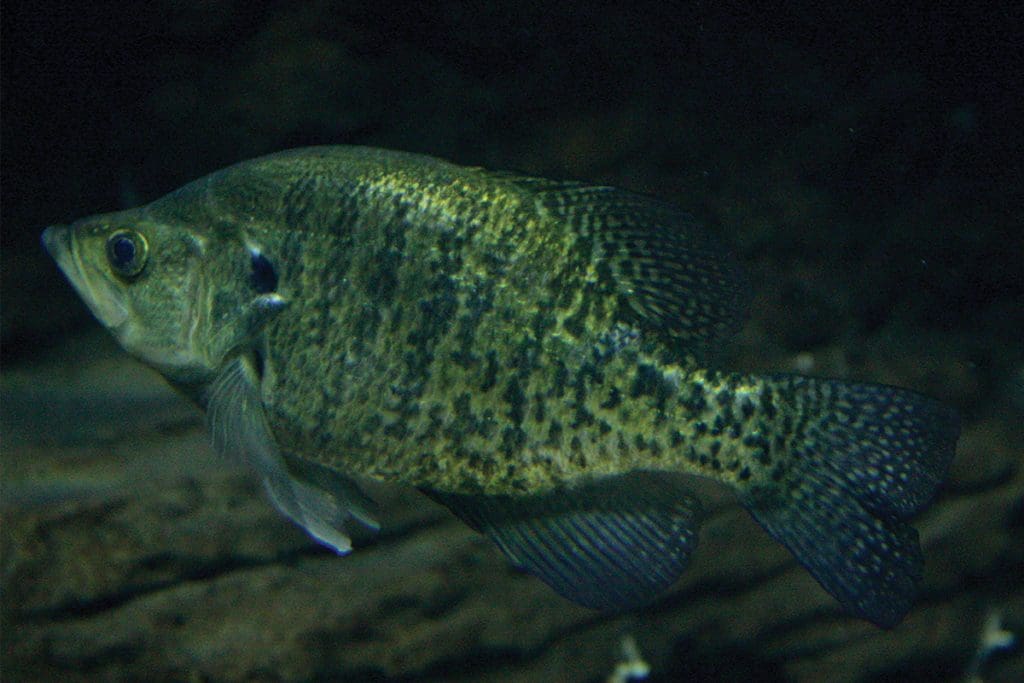
Drought conditions can change the way anglers fish Texas reservoirs, particularly when targeting crappie. Areas that produced fish during normal water levels may become too shallow, while submerged brush piles, creek channels and standing timber can become more important as fish adjust to changing conditions.
For fishermen on reservoirs such as Sam Rayburn and Toledo Bend, low water can present both challenges and opportunities. The key is understanding how crappie relate to structure and recognizing that productive fishing locations can change as water levels decline.
Follow the Creek Channels
One of the first places to begin searching is along creek channels, particularly where deeper water runs close to submerged timber, brush piles or other cover.
Crappie frequently suspend around structure, and channel edges can provide access to different depths as conditions change. Instead of concentrating exclusively on brush piles that produced fish in previous years, anglers should investigate nearby drops and deeper sections of the same creek systems.
Fish finders equipped with side-imaging sonar can help locate previously overlooked cover. Humminbird has long been a leader in this technology, and its imaging capabilities are now part of Minn Kota’s newly announced integrated fishing system. The new Minn Kota X Series fish finders, powered by Humminbird Imaging, feature Side Imaging, Down Imaging and Dual Spectrum CHIRP sonar, allowing anglers to examine structure away from the boat rather than relying entirely on traditional downward-looking sonar.
The system also connects compatible trolling motors and fish finders, making it easier to locate structure and maintain precise boat positioning while targeting crappie.
Take Advantage of Newly Exposed Structure
One advantage of low water is the opportunity to identify features normally hidden beneath the surface. Stumps, fallen trees, old roadbeds and isolated brush can become visible or easier to locate. Anglers should mark promising structure with GPS waypoints, paying particular attention to features near creek channels and deeper water.
These locations may become productive again when water levels rise, giving fishermen valuable information for future trips.
Adjust Your Presentation
When crappie are suspended around deeper cover, vertical jigging can be extremely effective. Small tube jigs, curly-tailed grubs and live minnows are good options, particularly when fish are holding tight to timber or brush.
Start by determining the depth of the fish rather than automatically dropping a bait to the bottom. Crappie frequently suspend above structure, and presenting a jig just above their holding depth can produce more strikes.
A trolling motor with precise positioning capabilities can help anglers maintain their position around isolated cover, especially in windy conditions. Minn Kota’s enhanced Spot-Lock technology is designed to provide tighter boat positioning on compatible motors.
Drought can disrupt established fishing patterns, but it can also reveal structure anglers never knew existed. By combining careful observation, electronics and an understanding of crappie behavior, fishermen can locate productive water even when their favorite reservoirs are far below normal levels.
The information gathered during low-water periods can pay dividends long after the lakes refill.
TF&G Staff