
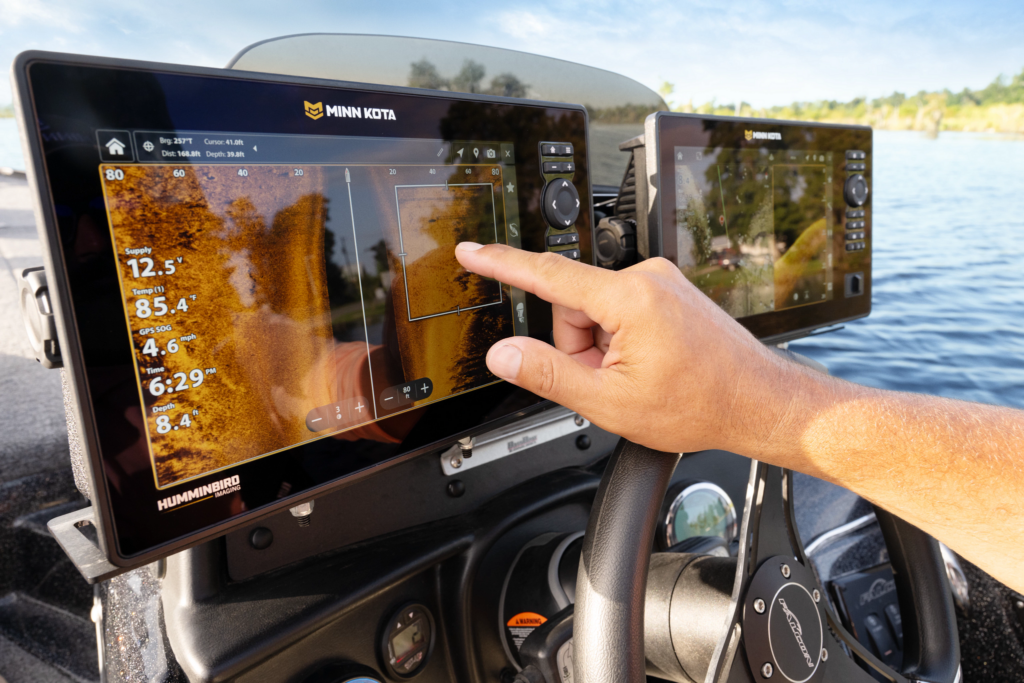
From the submerged timber of Sam Rayburn Reservoir to the oyster reefs of Sabine Lake, Texas fishermen face an incredible variety of fishing conditions. Finding fish in these environments has always required experience, knowledge of seasonal patterns and an understanding of underwater structure.
But today’s fish finders can do far more than show fish swimming beneath the boat. Modern electronics can help anglers discover previously hidden structure, follow underwater contours, navigate shallow water and even control trolling motors and anchoring systems.
On Oct. 6, Minn Kota announced a major expansion of its fishing technology, bringing Humminbird’s established sonar and imaging capabilities into a new integrated system. Humminbird technology will continue under the name Humminbird Imaging, powering new Minn Kota fish finders and connecting sonar, mapping, navigation and boat control.
For Texas anglers who fish everything from sprawling reservoirs to shallow coastal bays, these advances offer some interesting possibilities. Here are seven things modern fish finders can do that might surprise you.
1. Discover New Structure When Lake Levels Drop
Low water creates serious challenges for freshwater fishermen, but it also presents opportunities to learn more about a lake. Consider Sam Rayburn Reservoir, where unusually low water levels can expose structure that might normally be submerged. Old roadbeds, stumps, timber, points and other features can become visible or much easier to identify.
Anglers who take advantage of these conditions can develop a much better understanding of areas they may have fished for years. Modern fish finders with GPS mapping and side-imaging sonar can help fishermen locate, examine and mark these features. A bass angler might discover an overlooked stump field or a small drop-off that becomes a productive fishing location when water levels return to normal.

Humminbird’s imaging technology has long been useful for this kind of exploration, and its Side Imaging, Down Imaging and Dual Spectrum CHIRP sonar are now featured in the new Minn Kota X Series fish finders. The same principle applies to Toledo Bend, Lake Fork and other Texas reservoirs where fluctuating water levels can reveal important details about fish habitat.
The key is using electronics to build a better picture of the lake, then saving promising locations for future trips.
2. Find Oyster Reefs and Other Structure Away From the Boat
Many Texas saltwater anglers understand the importance of oyster reefs, but locating productive sections of these reefs can be challenging. Side-imaging sonar allows fishermen to examine underwater areas off to either side of the boat rather than looking only at what’s directly beneath them.
In Sabine Lake, for example, an angler might use side imaging to locate reef edges, changes in bottom composition or submerged debris that could attract speckled trout, redfish and flounder. The same technology can reveal brush piles, submerged timber and rock formations in freshwater reservoirs, but its ability to examine broad areas of underwater structure is particularly valuable along the coast.
The new Minn Kota X Series uses Humminbird Imaging technology and is available in 7-, 9-, 10-, 12- and 16-inch display sizes. Having the ability to investigate structure without repeatedly driving directly over it can be particularly useful when fish are holding in specific areas or are sensitive to boat traffic.
3. Follow an Underwater Route Without Constantly Steering
Imagine fishing a winding creek channel on Toledo Bend and having your trolling motor automatically follow the route while you concentrate on casting. Minn Kota’s new Draw & Navigate technology allows anglers to draw a route directly on a compatible fish finder and have the trolling motor follow it.
For bass fishermen, this could mean working a submerged ridge, channel edge or extended point without constantly adjusting the trolling motor. A fisherman targeting offshore bass on Lake Fork could use the same approach to make repeated presentations along a productive stretch of structure.
This technology represents a major step toward making fish finders more than tools for locating underwater structure. They can now help direct how anglers fish that structure.
4. Help Avoid Shallow Water Hazards
Texas coastal fishermen encounter plenty of shallow-water challenges, particularly in places like the Laguna Madre, where flats, channels and changing water levels demand constant attention. Modern fish finders already provide depth information and mapping, but newer integrated systems can take things further.
Minn Kota’s Intelligent Depth Control monitors changing depth conditions and helps prevent compatible trolling motor systems from moving into shallow or potentially hazardous water. For a redfish angler working the edges of shallow flats or navigating unfamiliar bay waters, that can provide another layer of awareness.
Of course, no electronic system replaces watching the water, understanding tidal conditions or exercising caution around submerged obstacles. But the ability to connect depth information with boat control is an important advancement.
5. Watch Fish React to Your Lure
One of the most fascinating developments in fishing electronics is the ability to observe fish responding to a lure in real time. Live sonar has changed the way many Texas bass and crappie fishermen approach suspended fish and underwater structure.
A crappie fisherman on Lake Fork might watch fish approach a jig near a submerged brush pile. A bass angler on Sam Rayburn could observe a fish following a lure and adjust the retrieve or presentation.
Humminbird’s MEGA Live technology has been part of this evolution, and the new Minn Kota integrated system includes software improvements for existing MEGA Live 2 equipment. Those updates are designed to improve fish, bait and jig tracking, down-mode performance and returns from hard objects.
Minn Kota has also announced plans to introduce new Live Sonar and 360 Imaging products beginning in early 2027. While these systems don’t guarantee strikes, they can help fishermen better understand how fish respond to different presentations.
6. Identify Underwater Highways That Hold Fish
Fish frequently use underwater features that fishermen never see from the surface. On Sam Rayburn and Toledo Bend, creek channels, humps, ridges and sharp depth changes can concentrate largemouth bass and crappie. Understanding how these features connect can help anglers identify areas fish might use as they move between shallow and deep water.
Detailed mapping allows anglers to identify these features before making their first cast. Minn Kota’s new mapping system is built on LakeMaster data, long associated with Humminbird electronics. The new X Series includes mapping coverage of more than 13,000 inland lakes and coastal maps, with contour detail as fine as one foot in supported areas.
For Texas fishermen, combining detailed mapping with sonar provides a way to narrow down potentially productive areas on large bodies of water. Instead of searching miles of shoreline or open water, anglers can identify specific places where depth, structure and fish habitat come together.
7. Control Your Boat From Your Fish Finder
One of the biggest changes in fishing electronics is the growing connection between fish finders, trolling motors and other boat equipment. Minn Kota’s newly announced integrated system allows compatible fish finders and trolling motors to communicate wirelessly without requiring an Ethernet cable between them. Anglers can also operate compatible shallow-water anchors through their electronics or the Minn Kota Fishing App.
The company’s enhanced Spot-Lock technology provides up to a 50% tighter hold on compatible trolling motors compared with previous Minn Kota models. For a coastal fisherman working a productive shoreline in East Matagorda Bay, integrated shallow-water anchors and trolling motors can help manage boat positioning while fishing for redfish or speckled trout.
The new Minn Kota Fishing App also brings together mapping, waypoints and equipment controls, replacing the previous One-Boat Network App. Importantly, fishermen who already own certain Humminbird electronics won’t necessarily have to replace their equipment to benefit from the new technology.
Compatible Humminbird XPLORE, APEX and SOLIX G3 fish finders can receive software updates that add new integrated-system capabilities. That’s welcome news for anglers who have already invested in quality electronics and want to expand their capabilities.
Making the Most of Texas Waters
No matter how sophisticated fishing electronics become, there’s still no substitute for experience on the water. A fish finder can’t completely explain why largemouth bass suddenly begin feeding along a particular ridge on Sam Rayburn or why speckled trout move onto an oyster reef during a certain tide. Understanding seasonal movements, weather, water conditions and fish behavior remains essential.
But technology can help fishermen apply that knowledge more effectively. The latest developments from Minn Kota and Humminbird demonstrate how sonar, navigation, mapping and boat positioning are increasingly working together to make fishing more efficient.
For Texas anglers, the opportunities are especially interesting because of the diversity of our waters. A system that helps a bass fisherman discover overlooked structure on a low reservoir might also help a coastal angler locate a productive reef or navigate an unfamiliar shoreline.
Whether you’re chasing bass, crappie, trout, redfish or flounder, today’s electronics offer opportunities to learn more about the waters you fish. And sometimes, the most valuable thing a fish finder reveals isn’t a fish at all. It’s a piece of underwater habitat that could produce great fishing for years to come.
TF&G Staff