
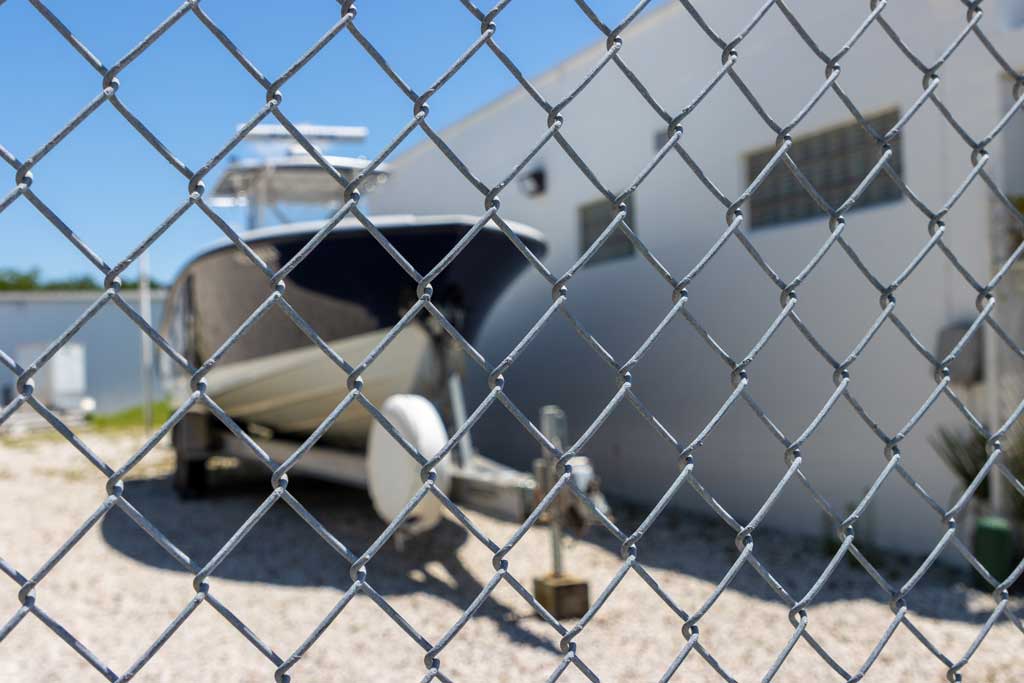
A LOT OF TEXAS ANGLERS never really put the boat away. Crappie and stripers keep biting through winter, and you can still find redfish along the coast in January. But between trips, that boat has to go somewhere. Maybe the HOA won’t allow a trailer in the driveway, or the garage already has two cars in it.
The cheapest storage lot in town isn’t much use if the gate is locked when you’re heading out for a 5 a.m. launch.
Store near home or near the water?
If you fish different lakes, a fenced lot close to home is usually simplest. You can hook up the trailer and head to Sam Rayburn one weekend and Toledo Bend the next. But if you fish the same lake every Saturday, storage closer to the ramp can save a long drive before sunrise.
For Lake Travis, compare storage options around Austin and ask how far each place is from the ramp you use. Anglers who spend more time on Lake Conroe or Galveston Bay can start with storage facilities around Houston. Don’t assume a lot takes boats just because it stores RVs. Ask before driving over.
A marina slip or dry-stack service may be convenient if you use one body of water regularly. But check when they’ll launch or retrieve your boat. Not every operation works on an angler’s schedule.
Open, covered, or indoors?
An uncovered space is usually the budget choice. In Texas, though, the sun is hard on seats, gel coat, and trailer tires, so a well-fitted cover is worth having. Check under it occasionally for trapped water.
Covered parking gives you a roof over the boat, a useful upgrade in hail-prone parts of North Texas. It won’t stop windblown rain. Indoor storage offers more protection, but only if the doors and turning space can handle your trailer and outboard.
Four questions to ask before you rent
First, what are the gate hours, not just the office hours? A facility that’s open seven days a week might still keep the gate closed overnight. If you leave for the lake before dawn, get a clear answer.
Second, will the whole rig fit? Measure from the trailer tongue to the farthest point behind the motor. A 20-foot boat can easily need a longer space. Check width, height, and whether there’s room to back in.
Third, what’s on site? Cameras, lighting, a locked gate, and recent customer reviews are more useful than a vague promise of “secure storage.” Ask about insurance requirements and any introductory-rate increases too. Don’t rely on a facility’s lowest advertised rate without checking what it covers.
Fourth, can you rinse the boat or charge the batteries? A wash bay is especially handy after saltwater trips, while an outlet can help with a battery tender. Don’t assume either is included.
Before you leave it parked
Rinse salt from the boat, trailer, and exposed hardware, take home the electronics and tackle, and check the trailer tires and bearings. For longer storage, follow your engine maker’s fuel and battery instructions. North and West Texas can freeze hard, so don’t skip proper winterization just because you’re in Texas.
Finding a place that works
Start with locations close to home or your usual launch and narrow the list by storage type, size, and access hours. RV Storage HQ’s Texas directory lets you compare published facility details by city, including prices where available. It’s free to browse. Call the storage lot to confirm it accepts your boat and has a space that fits.
—by RV Storage HQ