
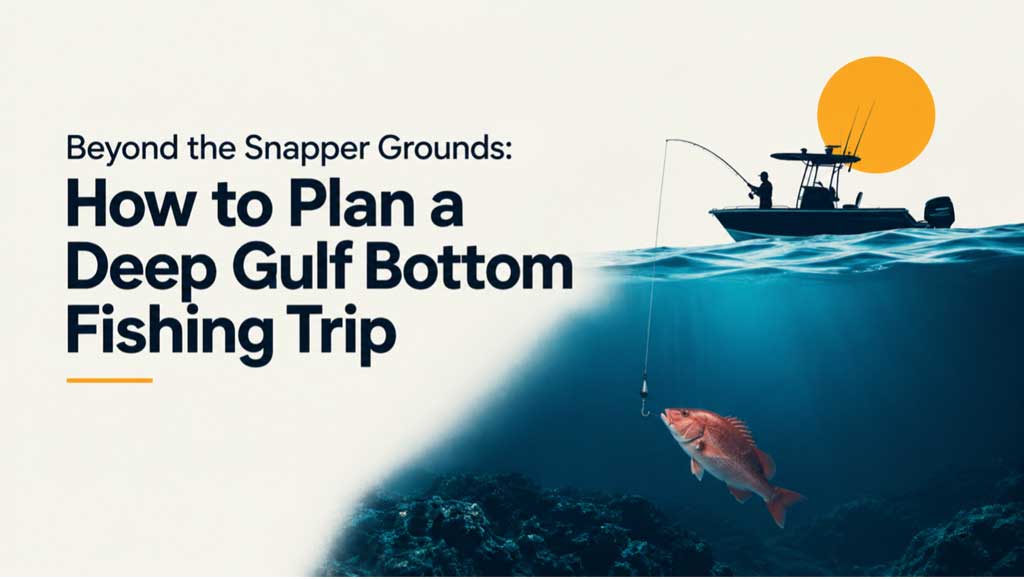
IF YOU FISH THE GULF, you probably know the routine by heart. You run out to a rig or a hard-bottom bank, drop a cut-bait rig, and wait for the rod tip to bow. It works, and it fills plenty of coolers every season. But here’s the thing: the farther you run from the coast, the more bottom fishing changes. The water gets deeper, the current gets pushier, and the fish down there aren’t the ones you’d meet on the nearshore banks.
Quick Summary
Deep Gulf bottom fishing is a step up from the typical offshore day. You’ll deal with deeper water, stronger current and longer runs, so heavier gear, electric reels and a crew that knows the grounds make all the difference. Pulley Ridge mixes shallow structure and true deep-drop water in one area, which is why it draws anglers chasing grouper, tilefish, snapper and wahoo. Below, we’ll cover the gear, the species, the trip planning and the rules, so you know what to expect before you go.
What changes when you fish deeper
Most offshore bottom fishing happens somewhere between 60 and 200 feet. Once you push past the edge of the shelf, you’re playing a different game. Deep-drop water starts a few hundred feet down and can stretch past 1,000 feet, and that depth changes almost everything about how you rig and fish.
Current is the first thing you’ll notice. Moving water pushes your line away from the bottom, so you need heavier lead and thin braided line that cuts through the flow instead of bellying out behind the boat. Good boat positioning matters just as much as the rod in your hand, which is why a captain who knows the water is worth every penny.
Then there’s the lift. Cranking a heavy weight and a big fish up from 500 feet by hand wears out even strong anglers, so many deep-drop crews rely on electric reels. If you’ve never fished one, don’t worry. A good mate will show you how to drop and set, and then the motor does the heavy work.
Two ways to fish the same bottom
Experienced crews often split a long-range day into two zones, and each one fishes differently.
The shallow zone (200 to 300 feet)
This zone holds vermilion snapper, yellowtail snapper, triggerfish, almaco jack and several kinds of grouper. Standard heavy conventional gear with fresh cut bait or a jig usually covers it well, and the bites come fast once you find the structure.
The deep zone (400 to 1,200 feet)
This is true deep-drop territory, and it is where tilefish, strawberry grouper and warsaw grouper live. Rigs here are simple and heavy, with stout leaders, big circle hooks and enough lead to reach bottom quickly. The bites can feel subtle, and the fight is often more of a long, heavy lift than a run, but landing a fish that has never seen daylight is a thrill all its own.
Where Pulley Ridge fits in
One of the best-known places to fish both zones is Pulley Ridge, a remote stretch of deep reef in the Gulf of Mexico, west of the Florida Keys and northwest of the Dry Tortugas. Because shallow structure and deep-drop water sit relatively close together, a crew can switch depths without making another long run. Many boats also troll for wahoo or tuna on the way, so the day tends to offer a bit of everything. Fishing there is generally productive through much of the year, though weather windows and seasonal rules still shape your plans.
Getting there
Getting there takes commitment. Some boats run well over 100 miles one way, and the long transit is part of the experience. If that sounds like your kind of adventure, Pulley Ridge fishing trips typically run as multi-day long-range trips from Key West and Marco Island, though some fast private boats make long single-day runs.
Gear that handles the depth
You don’t need a boat full of tackle, but you do need the right pieces. Braided line is the standard because it has little stretch and slices through current. Pair it with a heavy fluorocarbon or monofilament leader, circle hooks matched to your target species, and a handful of lead weights in different sizes, since current changes what holds bottom. Many captains supply the heavy deep-drop gear, so ask before you buy anything expensive.
Don’t forget the comfort items. Gloves, a fighting belt or harness for the big drops, sun protection, rain gear and warm layers for the ride out and back make a long day far more enjoyable. A cooler or ice plan for the fish you intend to keep is worth sorting out ahead of time as well.
Choosing the right trip and crew
Trip length and group size
Before you book, think about the kind of trip you want. Most Pulley Ridge trips are multi-day, long-range runs with overnight time on the water, though some fast private boats manage long single-day trips. Small groups fish more comfortably, because deep drops tangle fast when too many lines go down at once. Ask what’s included, too, such as bait, ice, tackle, meals and fish cleaning, so there are no surprises at the dock.
What it costs
Cost deserves an honest conversation. Many long-range trips sell individual spots per person, while private charters are priced per boat. A private charter often runs into the thousands of dollars because of fuel, crew time and the length of the trip, so splitting it with a group makes the numbers easier to manage. Buying individual spots is a good way to try a long-range trip without booking the whole boat.
Weather, seasickness and safety
Long-range trips depend on the forecast, and a good captain will move or cancel a trip rather than push through bad seas. Keep your dates flexible if you can. Seasickness catches many people off guard on a long run, so take your preventive medication early, not after the first big wave. Stay hydrated, eat light, and tell the crew if you start feeling off. They’ve seen it all, and they’d rather know.
Caring for the fish and following the rules
Deep fish are vulnerable when they come up fast. Rapid pressure changes injure many reef species, so release tools such as descending devices matter if you plan to let fish go. Rules for Gulf reef fish change often, including seasons, size limits, bag limits and release-gear requirements. Check current federal and state regulations before you go, and ask your captain what gear will be on board. A little preparation protects the fishery that makes these trips worth taking.
Conclusion
If you’re ready to move beyond the usual snapper banks, a long-range Gulf trip is one of the most rewarding ways to spend a day on the water. It takes more planning, and it asks for patience on the ride out, but the fishing on the other end is a different game altogether. Do your homework, choose a crew you trust, and get ready for the heaviest drops of your life.
Frequently Asked Questions
Where is Pulley Ridge?
Pulley Ridge is a deep reef system in the Gulf of Mexico, west of the Florida Keys and northwest of the Dry Tortugas. Boats reach it from Key West and Marco Island, and the run can exceed 100 miles one way.
What fish can you catch there?
Anglers commonly target vermilion snapper, yellowtail snapper, triggerfish, almaco jack, strawberry grouper, warsaw grouper, tilefish and wahoo. The mix depends on the depth you fish and the gear you use.
How deep is the water?
You can fish shallower structure at roughly 200 to 300 feet, or drop deeper into 400 to 1,200 feet for true deep-drop species. Many crews work both zones in the same trip.
How long do these trips last?
Most are multi-day, long-range trips with overnight time on the water. Some fast private boats make long single-day runs instead.
Do I need experience to go?
Not necessarily. A good crew will teach you how to handle electric reels and deep-drop rigs. That said, the long run and heavy gear are easier if you’re comfortable on the water and in decent shape.
When is the best time to go?
Fishing is generally productive through much of the year, so weather matters more than the calendar. Keep your dates flexible, and check current regulations for any seasonal closures on the species you want.