

Where to Hunt Ducks in the Piney Woods
Feature Story by MATT WILLIAMS
LISTEN: (8 minutes, 4 seconds)
WE’RE ON THE CUSP of another duck season in Texas and Clay Shipes is anxious to see how things shake out on lakes and rivers across the Pineywoods.
Shipes knows a thing or two about ducks and duck hunting. He is Texas Parks and Wildlife’s Regional Migratory Game Bird Specialist for East Texas.
The 35-year-old biologist began his career with a well spent four-year stint at the 25,000-acre JD Murphree Wildlife Management Area, a wintering waterfowl wonderland near Port Arthur, then hired on with Ducks Unlimited overseeing multiple states across the southeast. Shipes returned to Texas in 2020 and he’s been riding shotgun over eastern Texas ever since.
The biologist spends a wealth of time afield throughout the year. Come fall and winter, his 20 gauge is always close by. When he isn’t duck hunting, he’s thinking about it.
“Duck hunting is pretty much my passion,” says Shipes. “I do most of my hunting on public waters.”
Shipes says there is no shortage of sweet spots across the Pineywoods for duck hunters to stage a decoy spread. Experience has taught him the best hunting prospects always happen when the right conditions are present.
The biologist said the most important factors to consider are water conditions, food and hunting pressure. Some of the best shoots occur when there are plenty of groceries available in the shallows to attract birds and hold them when they pass through the area. This is especially true for dabblers like early teal, mallards, shovelers, pintail and gadwall.
Dabblers feed primarily in the shallows, often in water so skinny it can barely float a decoy.
The birds will eat insects and other invertebrates, but they love to munch on new growth terrestrial vegetation and seeds they can easily reach in a feeding posture that sometimes puts their heads beneath the surface and their butts in the air.
Mud flats ripe with flooded vegetation on any number of public reservoirs can be magnets for migrant teal looking for a spot to loaf and recharge for their journey south. The same is true for second growth rice fields spurred to life by timely rains.
“One thing to note is ducks are usually most attracted to new water and new food sources when areas are freshly flooded,” Shipes said. “In the Pineywoods region, we are really dependent on water and landscape scale flooding that opens up large areas of habitat for ducks.”
There was certainly no shortage of water in eastern Texas as late spring gave way to summer. Some reservoirs were several feet above normal in late June after big storms in late April and May caused major flooding in parts of the region.
How last spring’s high water will stack up for fall hunting prospects depends on what happened in the months that followed. Shipes said the best case scenario would be if the summer turned off dry enough that sunbaked shorelines were able to grow some dense stands of successional seed producing plants. Then, come fall and winter, we start getting steady rains that flood these areas and set a dinner buffet ripe with goodies.
“The good news about that is we have water, and hopefully it helped grow some good stands of submerged aquatic vegetation during the summer,” he said. “The problem is that we had very little to no early successional seed producing plants, because all of our wetlands were standing in water. Last year we struggled with water and there was little to no habitat available for birds.
Most likely the rain stopped at some point this summer, Shipes added. “With the wet conditions we had going into summer, it shouldn’t take too much moisture in the fall to provide water and habitat for ducks in our region come fall/winter. Hunters should be sure to focus on areas where there is food available, especially if it’s newly flooded. They also need to look at areas where they will be able to hide. That’s one of the biggest mistakes I see — not doing a good job of hiding from incoming ducks.”
Top 5 Picks
As earlier mentioned, there are a number of good duck hunting lakes in eastern Texas, but some have much richer histories than others. In the following segments, Shipes highlights his Top 5 Pineywoods duck hunting waters:
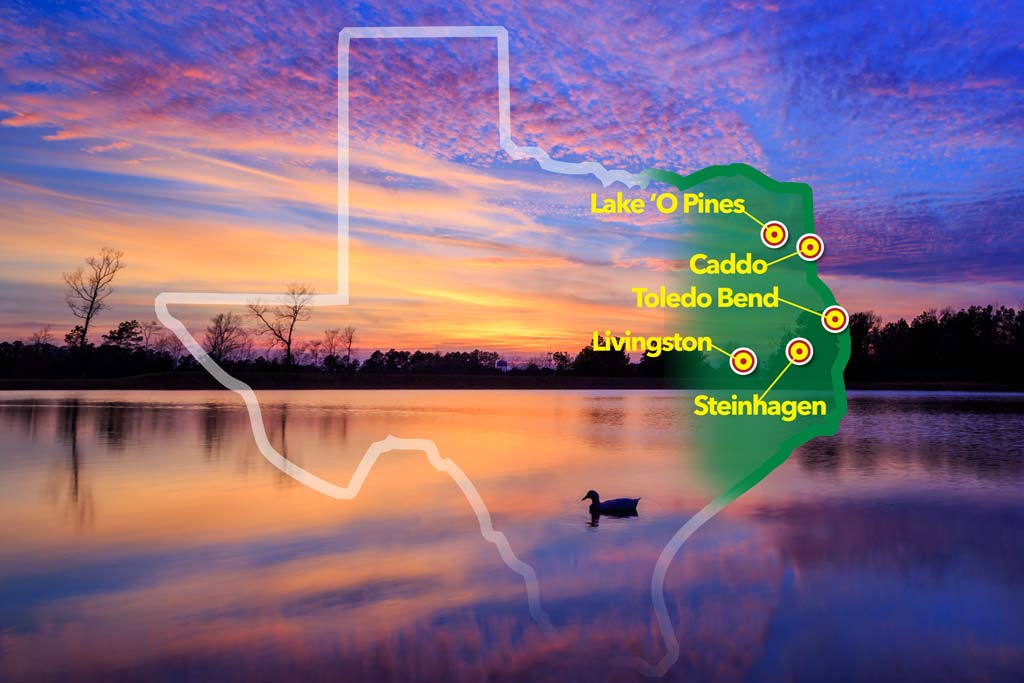
NO. 1: LAKE O’ THE PINES
Size: 18,700 acres
Controlling Authority: U.S. Army Corps of Engineers
Comments: It’s a large reservoir with plenty of submerged aquatic vegetation in certain years. The best hunting typically occurs at the lake’s shallower upper reaches around expanses of hydrilla and other aquatic vegetation. The lake is known for supporting large numbers of diving ducks like scaup, buffle heads, when the conditions are right.
NO. 2: TOLEDO BEND
Size: 181,600 acres
Controlling Authority: Sabine River Authority
Comments: It’s a massive reservoir where good hunting can be found in large expanses of cypress swamps creeks and backwater areas up and down the lake on both the Texas and Louisiana sides; some of the best at the shallow northern reaches. The North Toledo Bend Wildlife Management Area is a well-known hotspot when not overrun with giant salvinia. Hunters must have an Annual Public Hunting Permit to access the area. Shipes says swamps and backwaters are prone to holds large numbers of gadwall, and it’s not uncommon the see rafts of divers in big, open water areas.
NO. 3: B.A. STEINHAGEN (Dam B)
Size: 10,647 acres
Controlling Authority: U.S. Army Corps of Engineers
Comments: Downstream from Sam Rayburn on the Neches River, it’s a shallow reservoir with an abundance of aquatic vegetation like hydrilla, American lotus and non-beneficial water hyacinth and giant salvinia. Good hunting also awaits upstream in flooded oxbows. Hunters with dogs should be cautious, especially during the early teal season, as alligators are present. Shipes says Dam B has a rich history of holding large numbers of divers, primarily canvasbacks.
NO. 4: CADDO LAKE
Size: 26,800 acres
Controlling Authority: U.S. Army Corps of Engineers
Comments: It’s a shallow, natural lake shared between Texas and Louisiana. Large expanses of bald cypress span the scenic water body, along with abundant native and non-native aquatic vegetation. It holds plenty of resident wood ducks and attracts good numbers of canvasbacks, scaup, wigeon, teal, gadwall and mallards when the weather elements set up right. Shipes says waterfowl use hinges heavily on the giant salvinia. It’s usually best in seasons following floods that flush the noxious plants downstream.
NO. 5: LAKE LIVINGSTON
Size: 90,000 acres
Controlling Authority: Trinity River Authority
Comments: Texas’ second largest reservoir is built on the Trinity River, which acts as a major corridor for migrant waterfowl winging their way south for the winter. Shipes says there are a number of large, shallow flats and creeks at the lake’s upper reaches that can hold large numbers of puddle duck when the conditions are right. Teal, gadwall and mallards will fill most straps.
Best Lakes for Early Teal: Blue-winged teal are the predominant species found on Pineywoods waters during the early season. Shipes says naming the region’s best teal lakes is difficult because the birds are very unpredictable, prone to move through the area very quickly and usually don’t use the same areas from year to year.
“You hear a lot about people killing teal on several different lakes, but the ones I hear the most about are Toledo Bend and Caddo,” Shipes said. “This has to do with location and depends highly on the food available from year to year.”
—story by MATT WILLIAMS
• • •
DIGITAL BONUS: TEAL YAKITORI
FROM TPWD: Wild duck is the ultimate free-range bird. Each year millions of ducks migrate to Texas from the northern great plains, a feast for the eyes and ears as well as the table. Regional cooking expert Jesse Griffiths, author of “Afield: A Chef’s Guide to Preparing and Cooking Wild Game and Fish,” demonstrates an easy recipe for grilling duck to complement its natural flavor.
